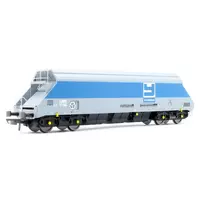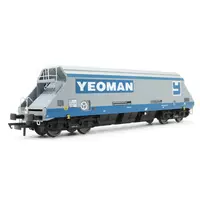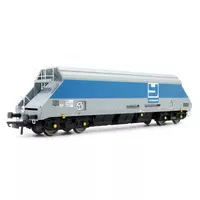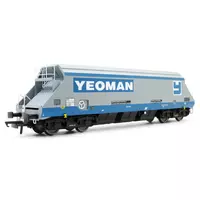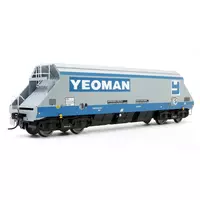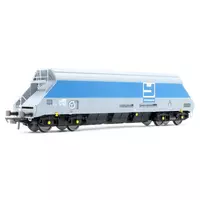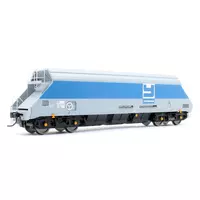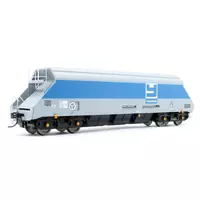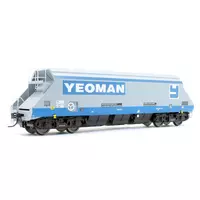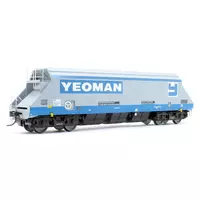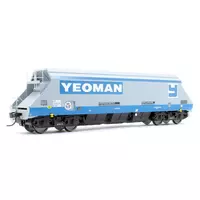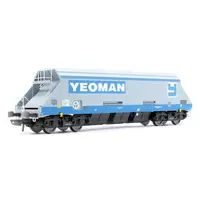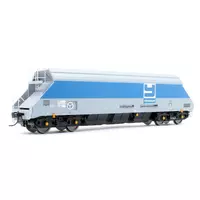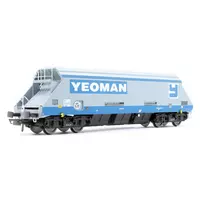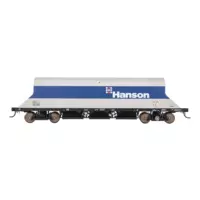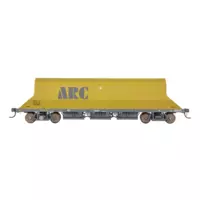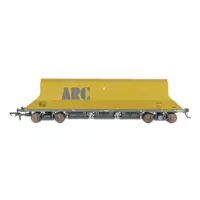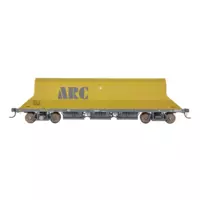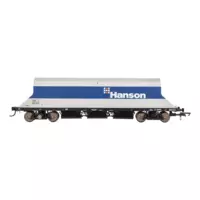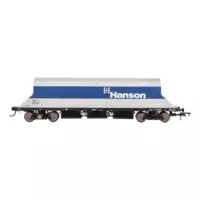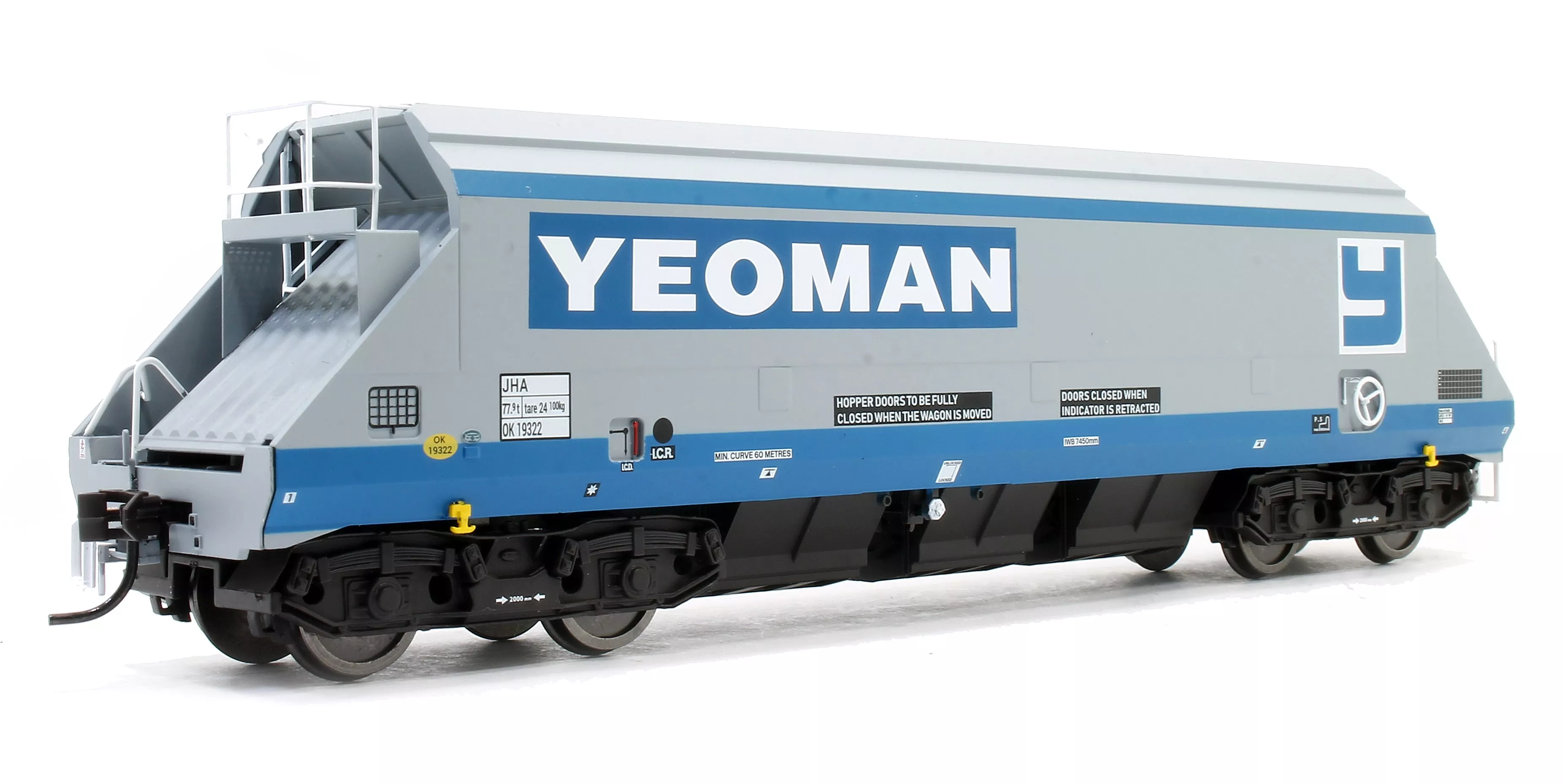
Manufacturer catalogue image - please note that pre-release images may be CAD renders or CGI/AI images rather than photographs
Prototype Eras
Era 9 (1995 to 2004) Initial Privatisation
Era 10 (2005 to 2015) Rebuilding of the Railways
Era 11 (2016 to 2026) The Last Days of Privatisation
The O&K JHA hoppers were built by Orenstein & Koppel to coincide with the introduction of the Class 59’s in the UK for aggregate haulage by Foster Yeoman. They remain in service to date with Mendip Rail Ltd. A rake of these wagons consist of two outer wagons and a number of inner wagons.
The notable feature is that the two outer wagons have screw link couplings and buffers on the outer most edge of the train, whilst the connection between inner wagons is a buckeye style coupling allowing closer coupling and hence an overall reduction in length of the train which was considered an important design aim.
Supplier links are provided for your convenience and do not guarantee that the product is currently available. RailwayModels.uk is not a representative of these suppliers, but may receive a commission when purchases are made through links on this page.
Dapol
4F-050-108
O&K JHA (Middle Hopper) Foster Yeoman Early 19325
Dapol
4F-050-004
O&K JHA (End Hopper) Foster Yeoman 19313
Dapol
4F-050-005
O&K JHA (End Hopper) Foster Yeoman Early 19302
Dapol
4F-050-007
O&K JHA (End Hopper) Foster Yeoman Late 19317
Dapol
4F-050-006
O&K JHA (End Hopper) Foster Yeoman Early 19307
Dapol
4F-050-112
O&K JHA (Middle Hopper) Foster Yeoman Late 19391
Dapol
4F-050-110
O&K JHA (Middle Hopper) Foster Yeoman Late 19354
Dapol
4F-050-111
O&K JHA (Middle Hopper) Foster Yeoman Late 19375
Dapol
4F-050-008
O&K JHA (End Hopper) Foster Yeoman Late 19319
Dapol
4F-050-109
O&K JHA (Middle Hopper) Foster Yeoman Early 19330
Dapol
4F-050-003
O & K JHA (end hopper) OO Foster Yeoman 19306
Dapol
4F-050-106
O &K JHA (middle hopper) OO Foster Yeoman 19398
Dapol
4F-050-104
O & K JHA (middle hopper) OO Foster Yeoman 19361
Dapol
4F-050-103
O & K JHA (middle hopper) OO Foster Yeoman 19349
Dapol
4F-050-101
O & K JHA (middle hopper) OO Foster Yeoman 19335
Dapol
4F-050-102
O & K JHA (middle hopper) OO Foster Yeoman 19337
Dapol
4F-050-002
O & K JHA (end hopper) OO Foster Yeoman 19303
Dapol
4F-050-105
O & K JHA (middle hopper) OO Foster Yeoman 19370
Dapol
4F-050-001
O & K JHA (end hopper) OO Foster Yeoman 19300
Dapol
4F-081-105
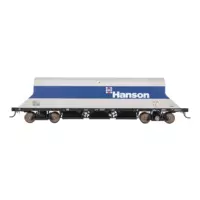
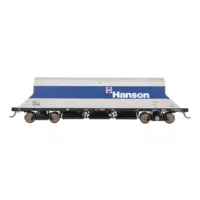
P&D JHA (Middle Hopper) Hanson 19811
Dapol
4F-081-102
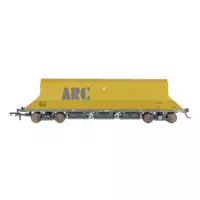
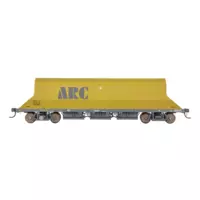
P&D JHA (Middle Hopper) ARC 19841
Dapol
4F-081-001
P&D JHA (End Hopper) ARC 17912
Dapol
4F-081-106
P&D JHA (Middle Hopper) Hanson 19833
Dapol
4F-081-101
P&D JHA (Middle Hopper) ARC 19823
Dapol
4F-081-104
P&D JHA (Middle Hopper) Hanson 19802
Dapol
4F-081-002
P&D JHA (End Hopper) ARC 17918
Dapol
4F-081-103
P&D JHA (Middle Hopper) ARC 19853
Dapol
4F-081-003
P&D JHA (End Hopper) Hanson 17913
Dapol
4F-081-004
P&D JHA (End Hopper) Hanson 17922
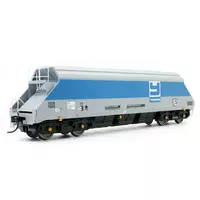
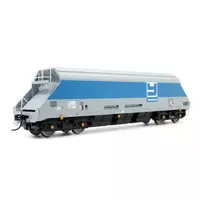
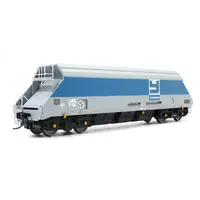
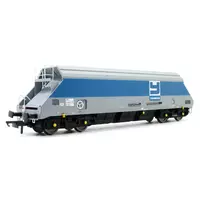
The Dapol O & K JHA middle hopper model is a representation of a Foster Yeoman wagon, built to OO gauge standards. The model is available in two versions: inner and outer wagons.
The inner wagons feature buckeye couplings and no buffers, while the outer wagons have lamp fittings, sprung buffers and a standard OO model coupling with a NEM pocket at one end, and buckeye couplings at the other. The model has a diecast chassis, profiled wheels and a close coupling mechanism that allows it to operate on a minimum radius of 438mm.
The model features a high level of detail, with many separately added details. The outer most wagon end has a working rear lamp, which is controlled by a DC directional system with a 6 pin DCC socket.
The O & K JHA hoppers were built by Orenstein & Koppel in 1988-1989 to coincide with the introduction of the Class 59 locomotives in the UK for aggregate haulage by Foster Yeoman. The wagons are still in service with Mendip Rail Ltd. The models are designed from original works drawings.
The wagons are designed to be operated in rakes, with two outer wagons and a number of inner wagons. The two outer wagons have screw link couplings and buffers on the outer most edge of the train, while the connection between inner wagons is a buckeye style coupling, allowing for closer coupling and a reduction in the overall length of the train.