Accurascale ACC2885-DCC
8750 Class - 9741 - British Railways Green - DCC Sound Fitted
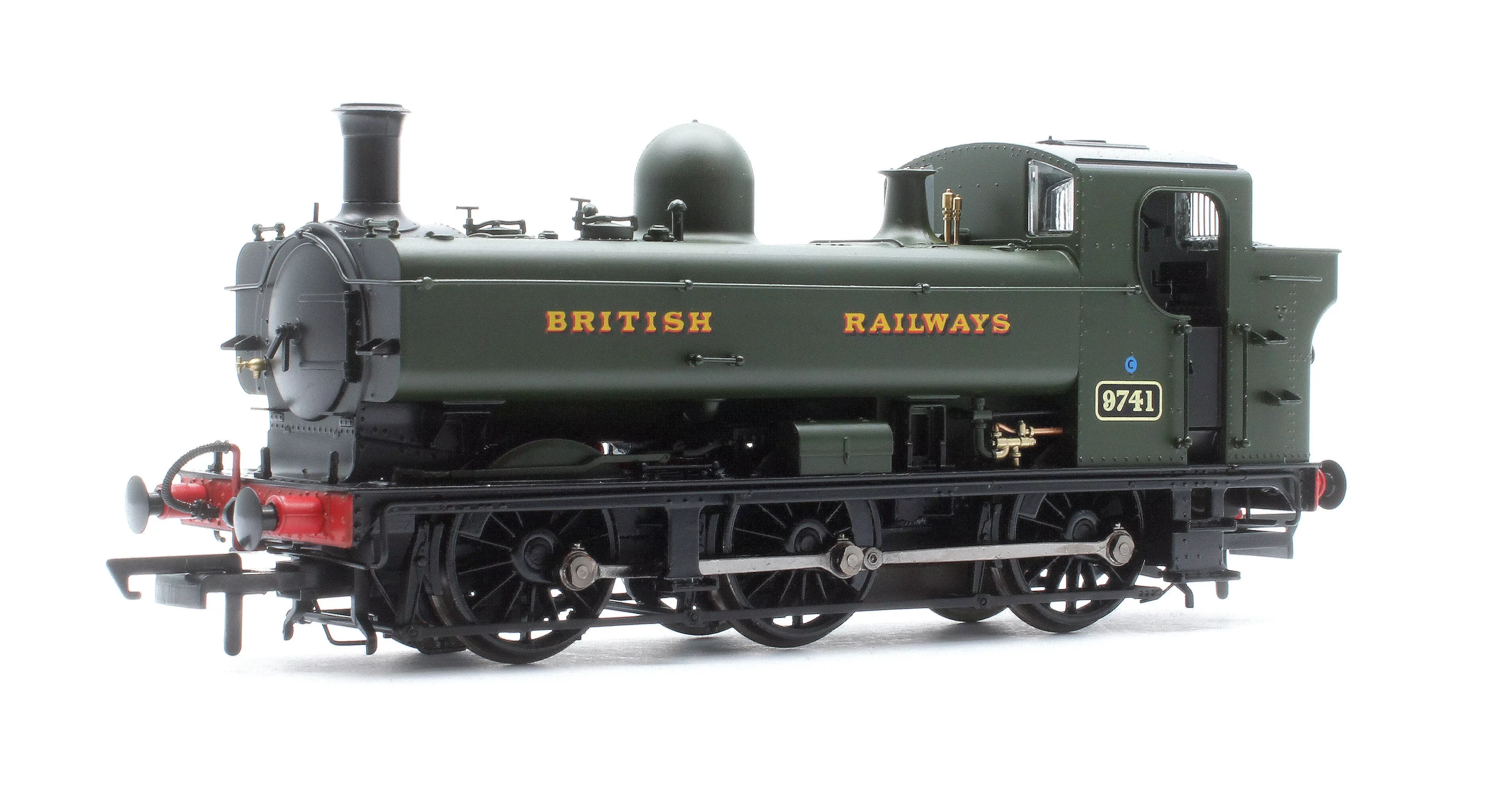
Manufacturer catalogue image - please note that pre-release images may be CAD renders or CGI/AI images rather than photographs
Prototype Eras
Era 4 (1948 to 1956) British Railways Early Crest
Era 5 (1956 to 1966) British Railways Late Crest
Manufacturer description
9741. British Railways Green Livery
With the introduction of what became the “8750” variations, this 1935 built locomotive emerged from Swindon works carrying a new enlarged cab but still retained some of the earlier style parts such as water fillers and backplate feed. Its initial allocation was Stafford Road shed (Wolverhampton) and can be seen here as it was outshopped in the early British Railways livery lettered livery with GWR "Egyptian" typeface. It was withdrawn from Wellington shed in 1962 before being scrapped
Features: No top feed, 8750 style cab, Bunker steps fitted, Injector overflow routed through running plate.
Catalogue listing
Model details
Prototype information
Armstrong Whitworth
W.G. Bagnall
Beyer, Peacock & Co.
Kerr Stuart
North British Locomotive Co.
Yorkshire Engine Co.
British Railways
National Coal Board
London Transport
Stephenson Clarke Ltd.
* Class names often change over the lifespan of a locomotive, so this is not necessarily the class name used by the operator in the period modelled.
Supplier Links


Supplier links are provided for your convenience and do not guarantee that the product is currently available. RailwayModels.uk is not a representative of these suppliers, but may receive a commission when purchases are made through links on this page.
Related products
-
Accurascale
ACC2874
8750 Class - 9741 - British Railways Green
-
Accurascale
ACC2875
8750 Class - 8763 - Early Emblem Lined Black
-
Accurascale
ACC2876
8750 Class - 9681 - Late Crest Black
-
Accurascale
ACC2877
5700 Class - 7714 - Early Emblem Black
-
Accurascale
ACC2884-DCC
5700 Class - 7755 - Shirtbutton Green - DCC Sound Fitted
-
Accurascale
ACC2881-DCC
5700 Class - 5754 - Great Western Green - DCC Sound Fitted
-
Accurascale
ACC2972-DCC
5700 Class - 5741 - GWR Green - DCC Sound Fitted
-
Accurascale
ACC2879-EXL
5700 Class - 7754 - NCB Green
-
Accurascale
ACC2870
5700 Class - 5754 - Great Western Green
-
Accurascale
ACC2873
5700 Class - 7755 - Shirtbutton Green
-
Accurascale
ACC2971
5700 Class - 5741 - GWR Green
-
Accurascale
ACC2882-DCC
6700 Class - 6743 - Great Western Green - DCC Sound Fitted
-
Accurascale
ACC2887-DCC
8750 Class - 9681 - Late Crest Black - DCC Sound Fitted
-
Accurascale
ACC2888-DCC
5700 Class - 7714 - Early Emblem Black - DCC Sound Fitted
-
Accurascale
ACC2890-EXLDCC
5700 Class - 7754 - NCB Green - DCC Sound Fitted
-
Accurascale
ACC2871
6700 Class - 6743 - Great Western Green
-
Accurascale
ACC2886-DCC
8750 Class - 8763 - Early Emblem Lined Black - DCC Sound Fitted
-
Accurascale
ACC2878
5700 Class - L91 - London Transport Maroon
-
Accurascale
ACC2880-EXL
5700 Class - L94 - London Transport Maroon
-
Accurascale
ACC2889-DCC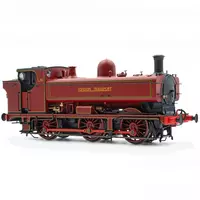
5700 Class - L91 - London Transport Maroon - DCC Sound Fitted
-
Accurascale
ACC2891-EXLDCC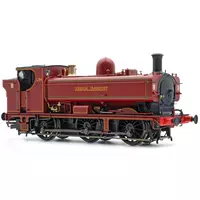
5700 Class - L94 - London Transport Maroon - DCC Sound Fitted
-
Accurascale
ACC3236
GWR 57xx/67xx/8750 Pannier Crew- Driver/Fireman-BR
-
Accurascale
ACC3235
GWR 57xx/67xx/8750 Pannier Crew- Driver/Fireman-GWR
-
Accurascale
ACC3551-DCC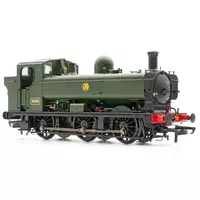
8750 Class - 3608 - GWR Green Shirtbutton - DCC Sound Fitted
-
Accurascale
ACC3552-DCC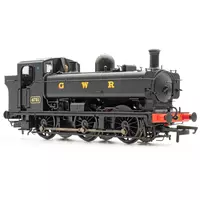
8750 Class - 8751 - GWR Black - DCC Sound Fitted
-
Accurascale
ACC3550-DCC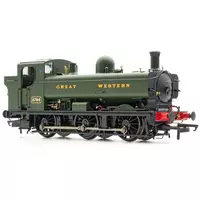
8750 Class - 8764 - Great Western Green - DCC Sound Fitted
-
Accurascale
ACC3548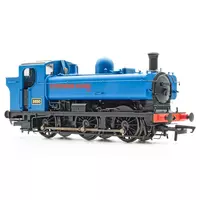
8750 Class - 3650 - Stephenson Clarke Blue
-
Accurascale
ACC3546
5700 Class - 7774 - BR Black Later Crest
-
Accurascale
ACC3545
5700 Class - 5753 - BR Black Early Emblem
-
Accurascale
ACC3544
8750 Class - 8751 - GWR Black
-
Accurascale
ACC3543
8750 Class - 3608 - GWR Green Shirtbutton
-
Accurascale
ACC3542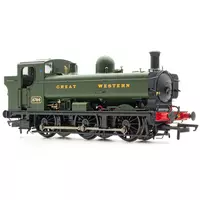
8750 Class - 8764 - Great Western Green
-
Accurascale
ACC3557-DCC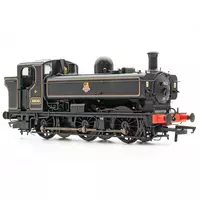
8750 Class - 9600 - BR Lined Black Early Emblem - DCC Sound Fitted
-
Accurascale
ACC3549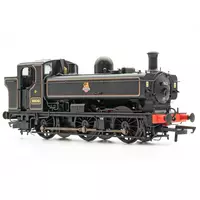
8750 Class - 9600 - BR Lined Black Early Emblem
-
Accurascale
ACC3556-DCC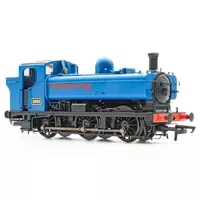
8750 Class - 3650 - Stephenson Clarke Blue - DCC Sound Fitted
-
Accurascale
ACC3554-DCC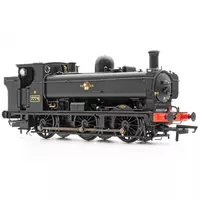
5700 Class - 7774 - BR Black Later Crest - DCC Sound Fitted
-
Accurascale
ACC3553-DCC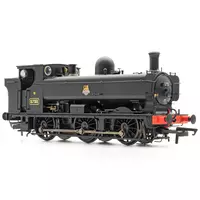
5700 Class - 5753 - BR Black Early Emblem - DCC Sound Fitted
The Accurascale 8750 Class Pannier Tank is a highly detailed 0-6-0PT model of a British Railways locomotive. The model features a DCC sound system and is available in BR green livery with an early emblem.
The 8750 class was a type of pannier tank locomotive designed by Charles B Collett for the Great Western Railway. The first 100 locomotives were built between 1929 and 1933, with a further 300 locomotives being constructed between 1933 and 1949. The class was designed to be a standard, lightweight and powerful tank locomotive that could handle a variety of tasks on the Great Western Railway.
The locomotives were built by several manufacturers, including the North British Locomotive Company, Bagnall, Beyer-Peacock, Kerr-Stuart, Armstrong Whitworth and Yorkshire Engine Co. The class was divided into several sub-classes, including the 5700, 6700, 6750 and 8750, each with slightly different features.
The pannier tanks were used extensively on the Great Western Railway and later on the British Railways network, where they were classified as 'blue' locomotives due to their low axle loading. They were used for a variety of tasks, including passenger services, freight trains and shunting operations.
The first withdrawals of the class began in 1956 and continued until 1966, when the locomotives were removed from regular service. However, some locomotives were preserved and are still operational today, with four having been re-certified for mainline use.