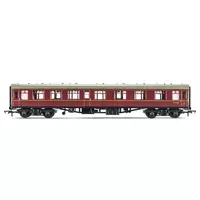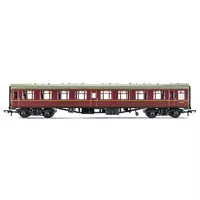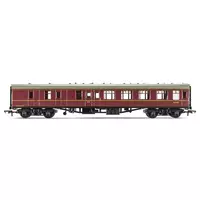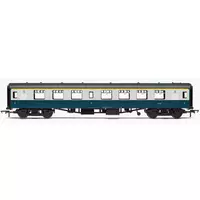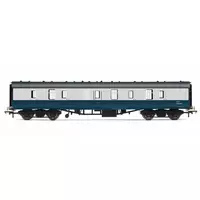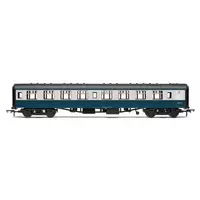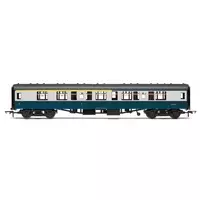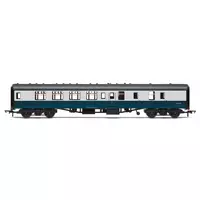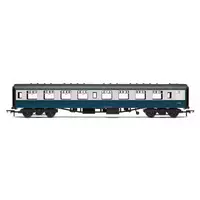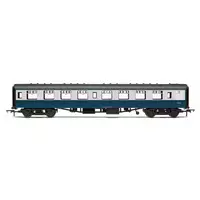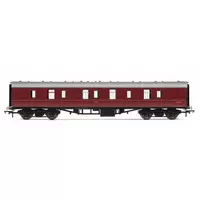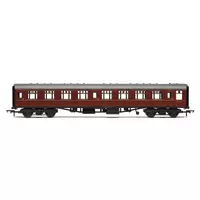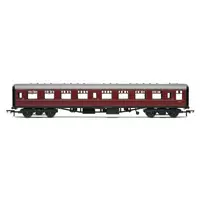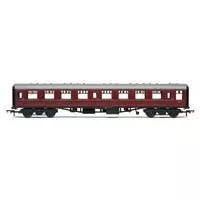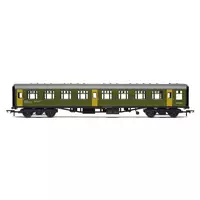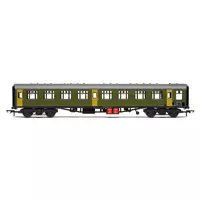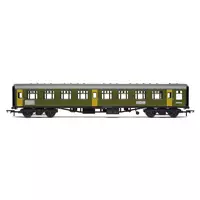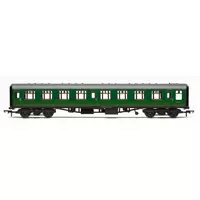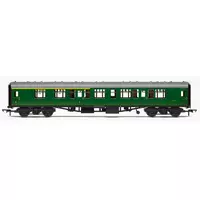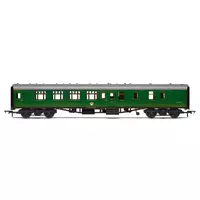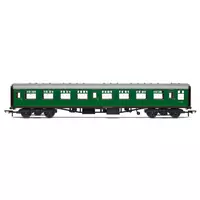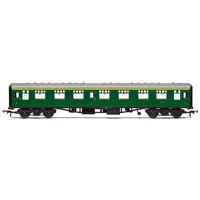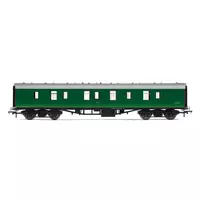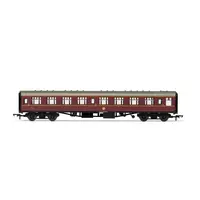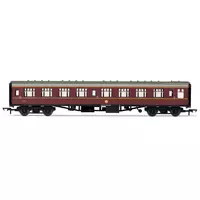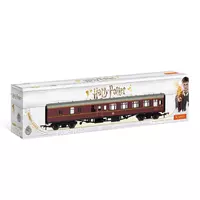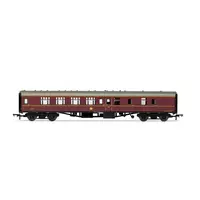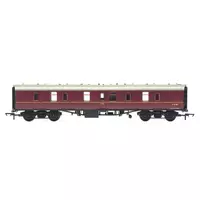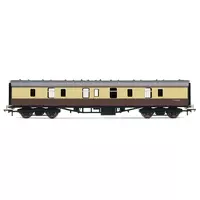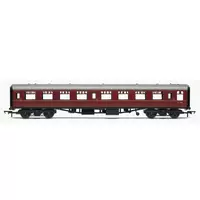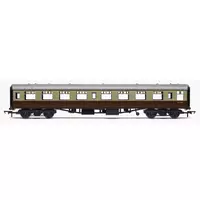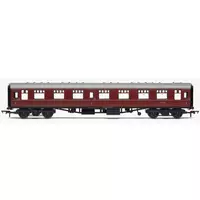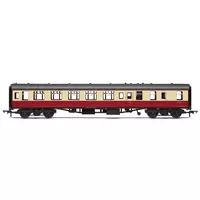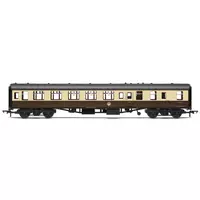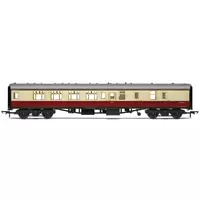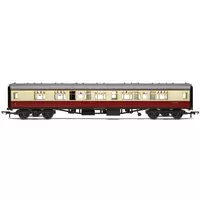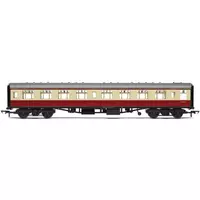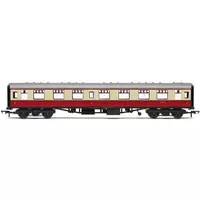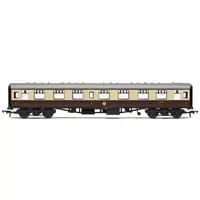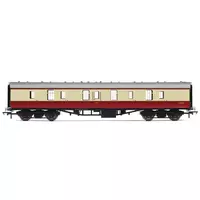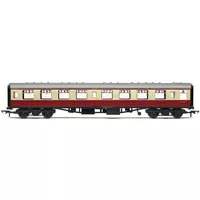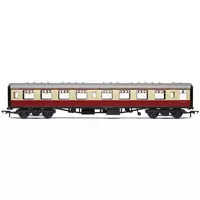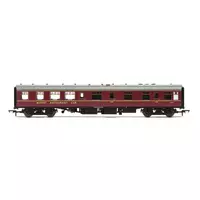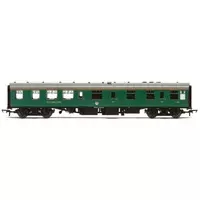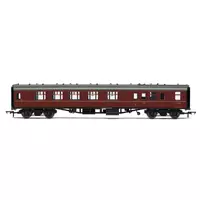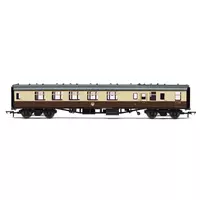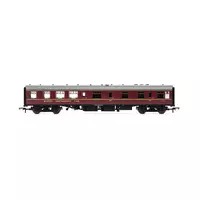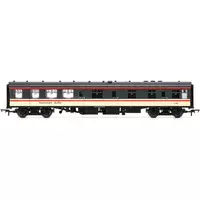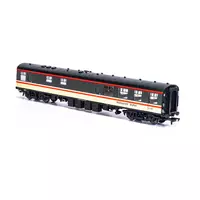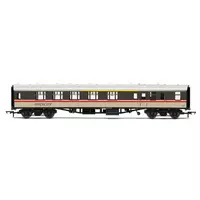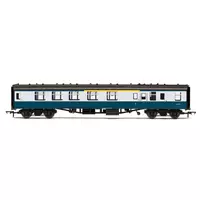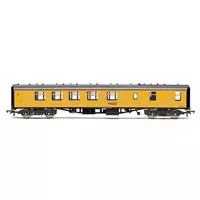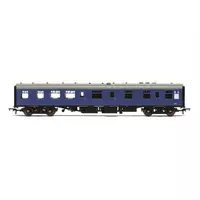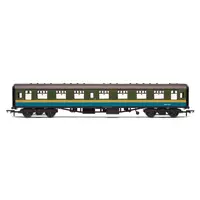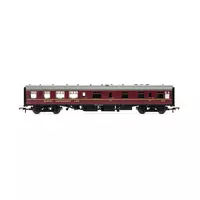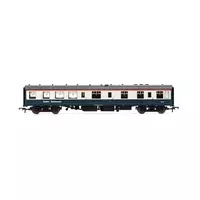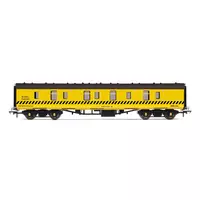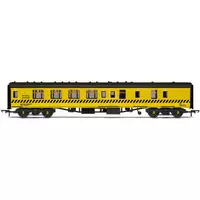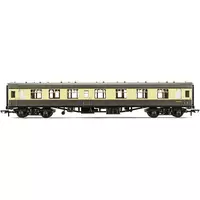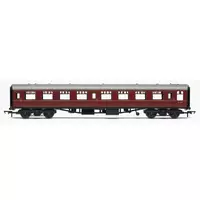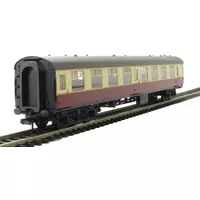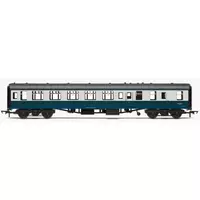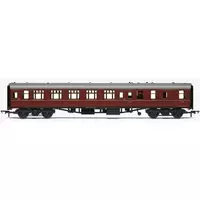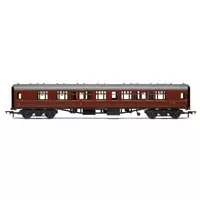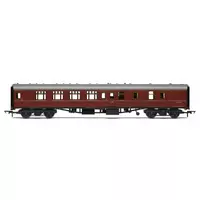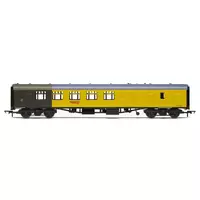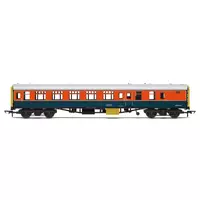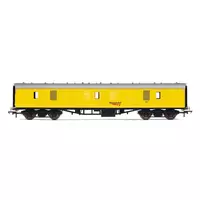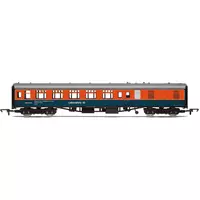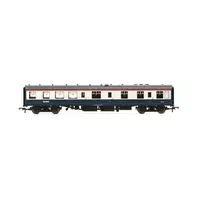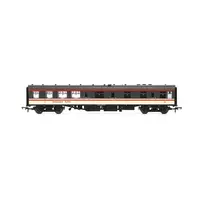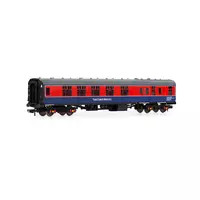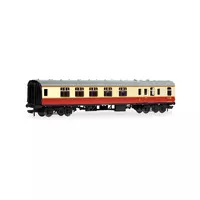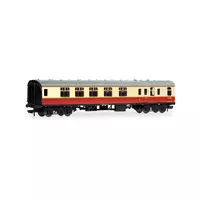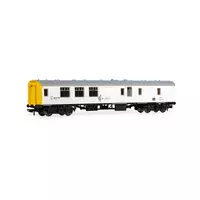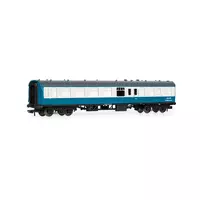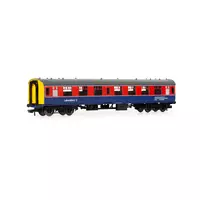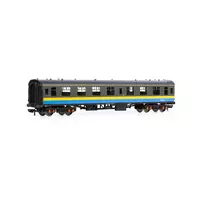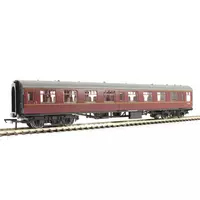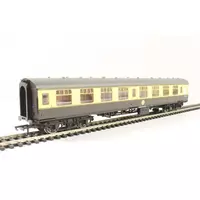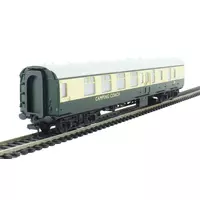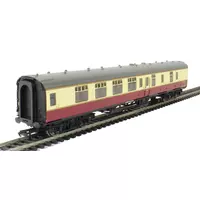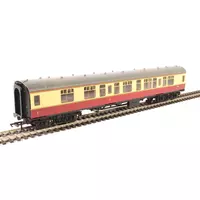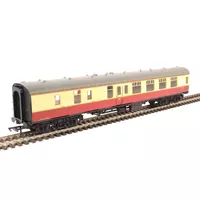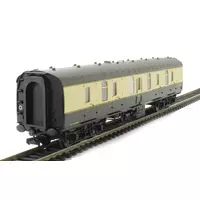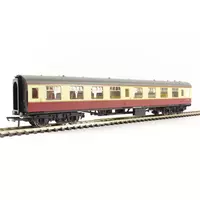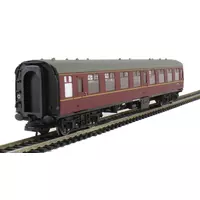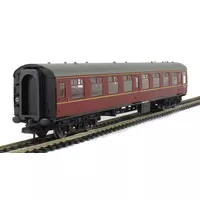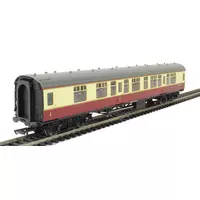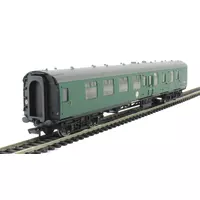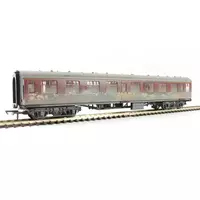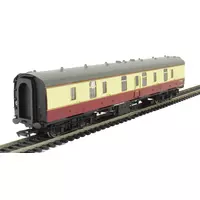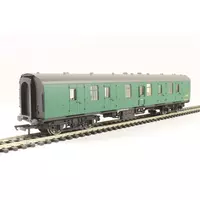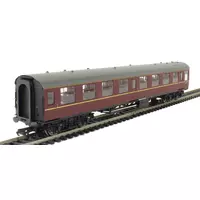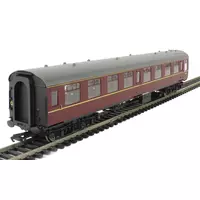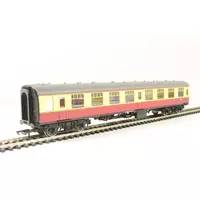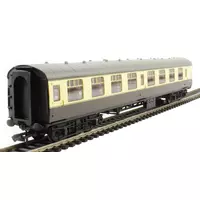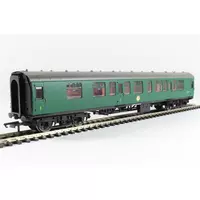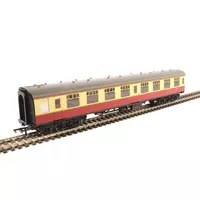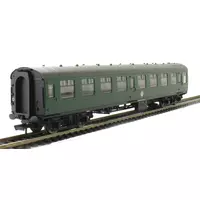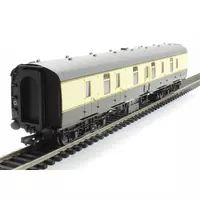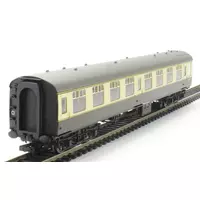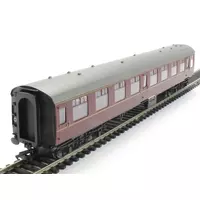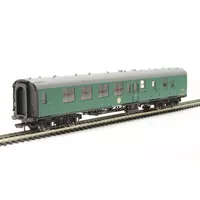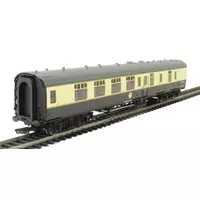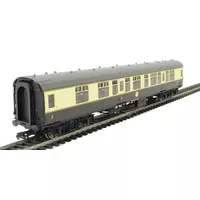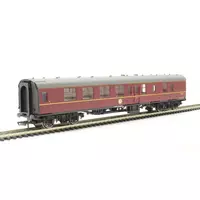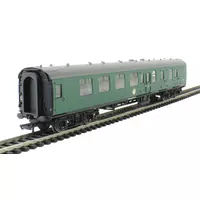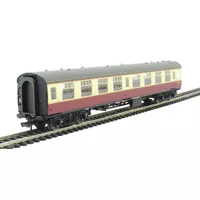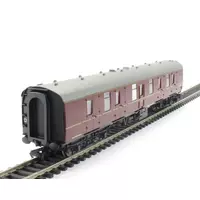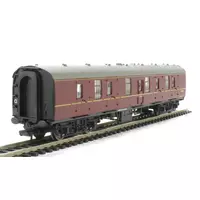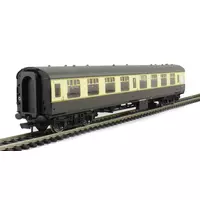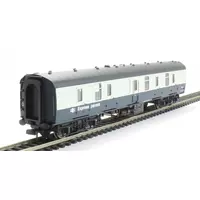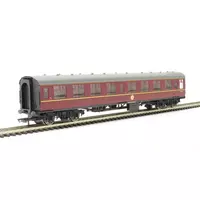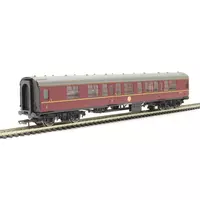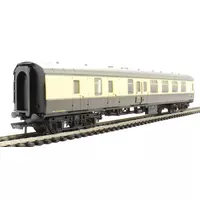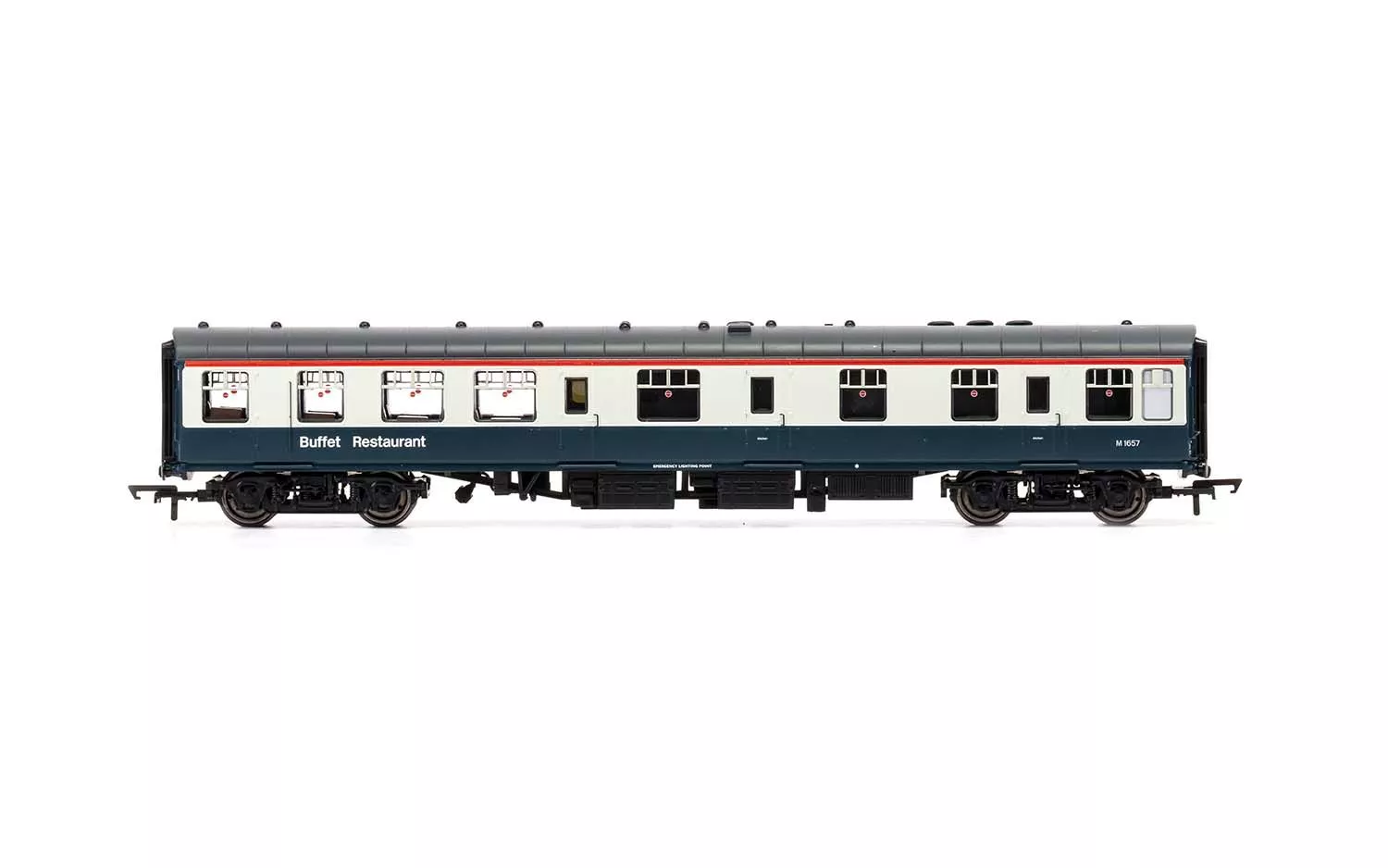
Manufacturer catalogue image - please note that pre-release images may be CAD renders or CGI/AI images rather than photographs
Prototype Era
Era 7 (1972 to 1982) British Rail Blue (TOPS)
Manufacturer description
The first phase of building British Railways' Mark 1 catering vehicles followed the traditional pattern of dining that had been catered for since Edwardian times, with large Kitchen Cars preparing multiple course dining for consumption in both First and Third Class Dining Cars. However, during the early 1950s it became apparent that social patterns regarding rail travel catering were changing as a direct consequence of WWII attitudes towards dining.
The catering department of British Railways was experiencing a demand from travellers for cheaper and lighter meals as well as an increase in social drinking that was not related to dining. This change in dining patterns meant that the use of a Buffet vehicle, rather than a full Kitchen Car/Dining Car combination, was sometimes a better option and the third phase 1957-62 Mk.1 building program provided many of BR's vehicles with buffet facilities. Not just in addition to full meal provision, but also replacing it. Three prototype catering vehicles were built by Eastleigh to basic requirements set out by the Hotels and Catering Services Department of British Railways, with each stage of construction incorporating feedback from restaurant car staff- these being M1546 Kitchen-Buffet (RKB), W1900 Unclassed Restaurant (RU) and E1700 Buffet-Restaurant (RB).
The RB kept the same kitchen, staff area and seating type as the other two vehicles, but by sacrificing ten seats, the pantry was extended, and a new service counter was introduced for the serving of light refreshments. Propane gas units were introduced for gas cooking. This meant reducing the reliance on electric power which allowed for a smaller dynamo and battery. Access to the water tanks was also improved, along with door access for the catering staff; the single 24Ó doors being replaced with a 'door and a third' arrangement that offered a second 9Ó wide door alongside the main door.
The prototypes were a success and 128 vehicles were ordered, built in four lots between 1960 and 1962 by Pressed Steel and Birmingham RC&W. But in a change from the prototype, some of the window sizes were altered and the serving area was rotated through 90 degrees to become longitudinal.
By 1977, British Rail had come to realise that the existing Mk.1 catering stock would have to be retained for a longer period on long haul services than originally anticipated, especially as the APT and HST programs were behind schedule. The catering fleet was suffering as vehicle availability decreased and services increased, leading to a lack of morale among catering staff and an increase in public dissatisfaction with on-train catering.
In 1960, 850 catering vehicles covered 794 daily booked services but by 1977 this had dropped to 460 vehicles covering over a thousand daily services. Following a high profile public opinion survey, BR realised that catering needed to become part of the corporate InterCity image and an accelerated program of refurbishment ensued. The onboard equipment and interior layout needed to be standardised to ensure that spares were readily available to keep the vehicles in services and that serving patterns were consistent across the fleet to improve working conditions for staff.
The resulting fleet refurbishment of all catering vehicles was based on alterations to the diagram 24 vehicles and was grouped under diagram 33 RB(R). Doors were installed between bars, pantries and kitchens which allowed for manning by fewer staff and interiors were improved by raising illumination levels through fluorescent lighting and removing bulkheads, using brighter colours and having 'wipe-clean' surfaces and seating.
With no Mk.2 catering cars being built from new, Mk.1 restaurants and buffet vehicles were included in Mk.3 rakes on the major main lines until the Mk.3 catering coaches became available. Certain services continued to use them into the early 1990s; The Clansman and the Holyhead trains had RBRs in 1990/1991 and Norwich services still had them in 1993 according to the coaching stock book. Once the Mk.2f RFBs were fully in service, especially on Intercity cross country services, there was no further need for Mk.1 stock and the vehicles were relegated to charter stock.
Catalogue listing
Model details
Prototype information
Cravens
Gloucester Railway Carriage & Wagon Company
(BR1, BR2, Commonwealth or B4 types used)
Network Rail
Royal Mail
Regional Railways
First Great Western
West Coast Railway Co
Various heritage & mainline charter operators
Mail & Parcels
Departmental
(Charter trains & departmental only)
* Class names often change over the lifespan of a locomotive, so this is not necessarily the class name used by the operator in the period modelled.
Supplier Links


Supplier links are provided for your convenience and do not guarantee that the product is currently available. RailwayModels.uk is not a representative of these suppliers, but may receive a commission when purchases are made through links on this page.