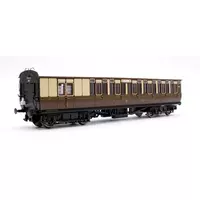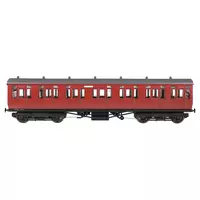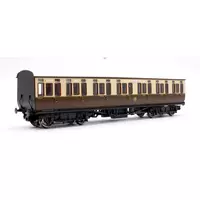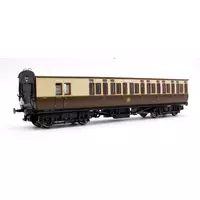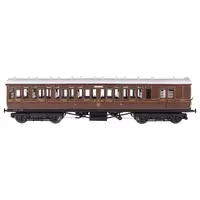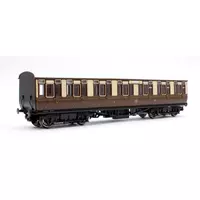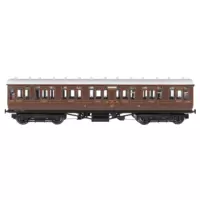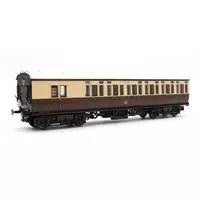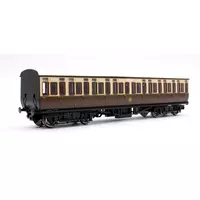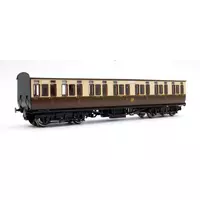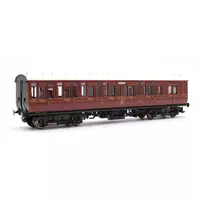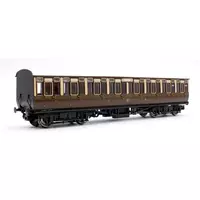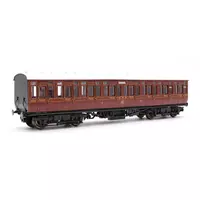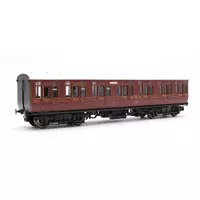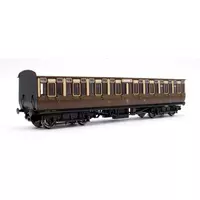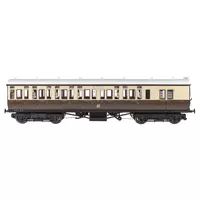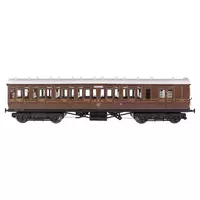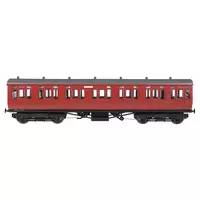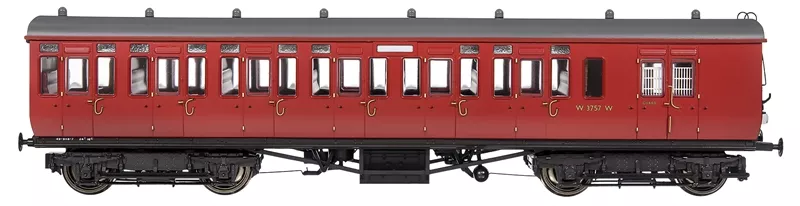
Dapol 4P-020-501

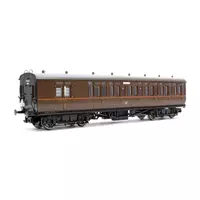
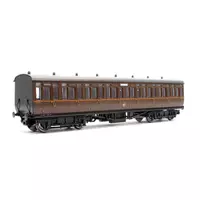
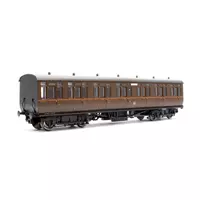
GWR Toplight M/Line City BR Maroon Second Brake 3757 Set 6

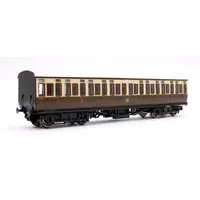
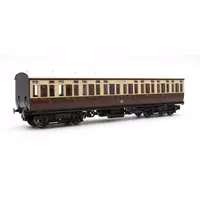
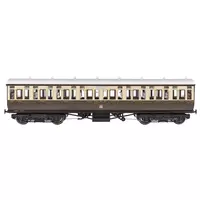
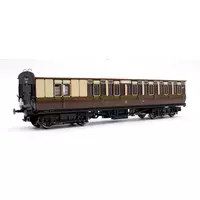
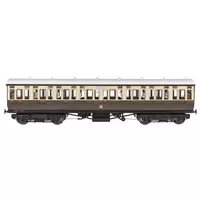
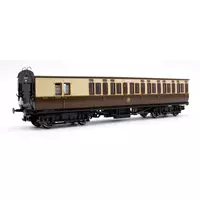
Manufacturer catalogue image - please note that pre-release images may be CAD renders or CGI/AI images rather than photographs

Prototype Era
Era 4 (1948 to 1956) British Railways Early Crest

Manufacturer description

General Specification

聽Dapol have produced an all third, composite and brake third coaches which are the perfect companion to the Dapol 61xx Prairie 2-6-2

The Dapol OO Gauge GWR Toplight Mainline City coaches聽 have the following features and details:聽

路聽Highly accurate injection moulded body with bolection window mouldings and frosted Toplight windows.

路聽Separate metal door and commode handles

路聽Wire end hand rails and separately applied end communication details

路聽Correct number of roof ventilators depending on the prototypical period being modelled

路聽Highly detailed chassis with vacuum tanks, battery boxes and brake linkages all to a high degree of fidelity

路聽9ft bogie bolster with dicast side frames and split axles for electrical pick up

路聽Highly detailed interior with period specific decorations being applied

Technical Specification

Technical Specification:聽

聽路聽Kinematic couplings with NEM pockets including special coupling bar to give close coupling

路聽Coaches are capable of negotiating R2 radius curves

路聽Sprung metal buffers

路聽Heavy Diecast chassis

路聽Internal lighting and directional tail lamp. Can be optionally DCC fitted with a six pin decoder such as the Dapol Imperium 5.

Catalogue listing

Brand
Dapol
Product Code
4P-020-501
GTIN
5016927057220
RRP
£64.80
Release date
January 2024

Model details

Scale
OO Gauge (1:76 Scale)
Livery
BR maroon
Power pickup
All wheels
Coupling
NEM / Tension lock
DCC status
DCC 6
Coupling type
Tension lock
Chassis construction
Diecast
Tooling date
2023
Coupling mount
NEM pockets
Finish
Pristine
Running number
3757

Prototype information

Main duties
Suburban passenger
Branchline passenger
In service until
Late 1950s
Builder
Swindon Works
Type of vehicle
Coach
Wheel configuration
2 x Bogies
Operated by
Great Western Railway
British Railways
Build dates
1920 to 1921
Coach type
GWR Churchward Toplight City
TOPS classification
(BS) Brake Second
Wheel arrangement
2 x Bogies
Built
1920 to 1921
Built by
Swindon Works

Supplier Links

Dapol website


Search on Amazon


Search on eBay

Supplier links are provided for your convenience and do not guarantee that the product is currently available. RailwayModels.uk is not a representative of these suppliers, but may receive a commission when purchases are made through links on this page.

Related products

Dapol is set to produce a new range of OO gauge GWR Toplight Mainline City coaches, designed to complement the recently released Dapol 61xx Prairie 2-6-2 locomotive. The coaches will be available in BR maroon livery and will feature a number of accurate details and features.

The coaches will have highly accurate injection moulded bodies with bolection window mouldings and frosted Toplight windows. Separate metal door and commode handles will be included, as well as wire end handrails and separately applied end communication details. The coaches will also feature correct number of roof ventilators depending on the prototypical period being modelled.

The highly detailed chassis will include vacuum tanks, battery boxes and brake linkages, all made to a high degree of fidelity. The coaches will have 9ft bogie bolsters with diecast side frames and split axles for electrical pickup. The interior of the coaches will feature highly detailed period-specific decorations.

The technical specification of the coaches is impressive, with features including kinematic couplings with NEM pockets, sprung metal buffers, internal lighting and directional tail lamps. The coaches will be capable of negotiating R2 radius curves and will have heavy diecast chassis.

The first order for the coaches was placed in 1915, but due to World War I they were not built until 1920 and 1921. Six sets of coaches were produced, each comprising six coaches. The coaches were close coupled and constructed with a steel body, and were 7 inches lower than other contemporary carriages to accommodate the loading gauge of the London Underground tunnels.

The coaches were originally used for commuter traffic from Reading and Windsor into the City of London, but their service was curtailed at the start of World War II. After the war, they were used on services further afield. The coaches were eventually removed from revenue earning service in December 1956, with all coaches having been withdrawn by December 1957. One significant change was made to the design during their lifetime, with the removal of one roof ventilator from each compartment.

In 1958, two brake third coaches and one all third coach were converted into workmen's coaches for the miners' service between Glyncorrwg and North Rhondda Halt. The main changes were the addition of an extra window in the end of the guards' luggage area and the fitting of a gong to the same end of the coach.

RailwayModels.uk is a Good Stuff website.

Page generated in 1.57 seconds
216.73.217.22
Wed, 10 Jun 2026 15:08:40 +0100
Exceptional Excessiveness