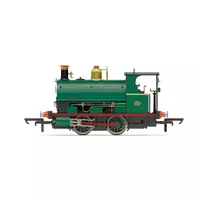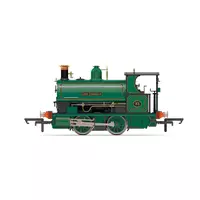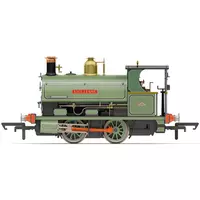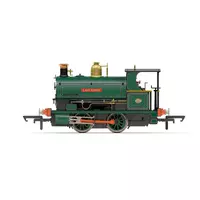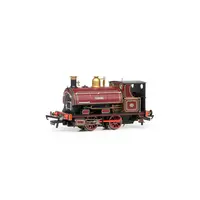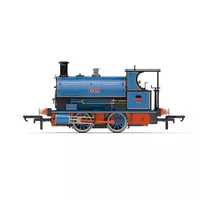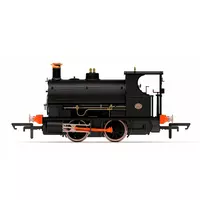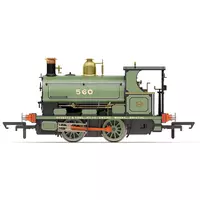
Manufacturer catalogue image - please note that pre-release images may be CAD renders or CGI/AI images rather than photographs
Prototype Eras
Era 2 (1875 to 1923) Pre-grouping
Era 3 (1923 to 1947) The Big Four (LNER, LMS, GWR and SR)
Era 4 (1948 to 1956) British Railways Early Crest
The Peckett W Class was a classic, late Victorian, four-coupled, medium range, industrial saddletank that comprised six separate variations, from the W2 of 1884 to the W7 of 1938. Locomotives were built at the Atlas Engine Works in St. George, Bristol, Peckett & Sons Ltd having taken over the business established there by Fox, Walker & Company in 1880.
Peckett steam locos, noted for their fine rivet work on the cabs and tanks and the generous use of brass and copperwork, continued to be built at Atlas Works until June 12, 1958. Describing their core market as 'Colleries, Ironworks, Contractors Tinplate Works etc.' Peckett took pride in turning their locos out in a lined Works livery and utilized many standard components in their construction, however the nature of the locomotives' end use meant there were a number of alterations carried out, particularly as reduced height versions for operating in smelting works and collieries.
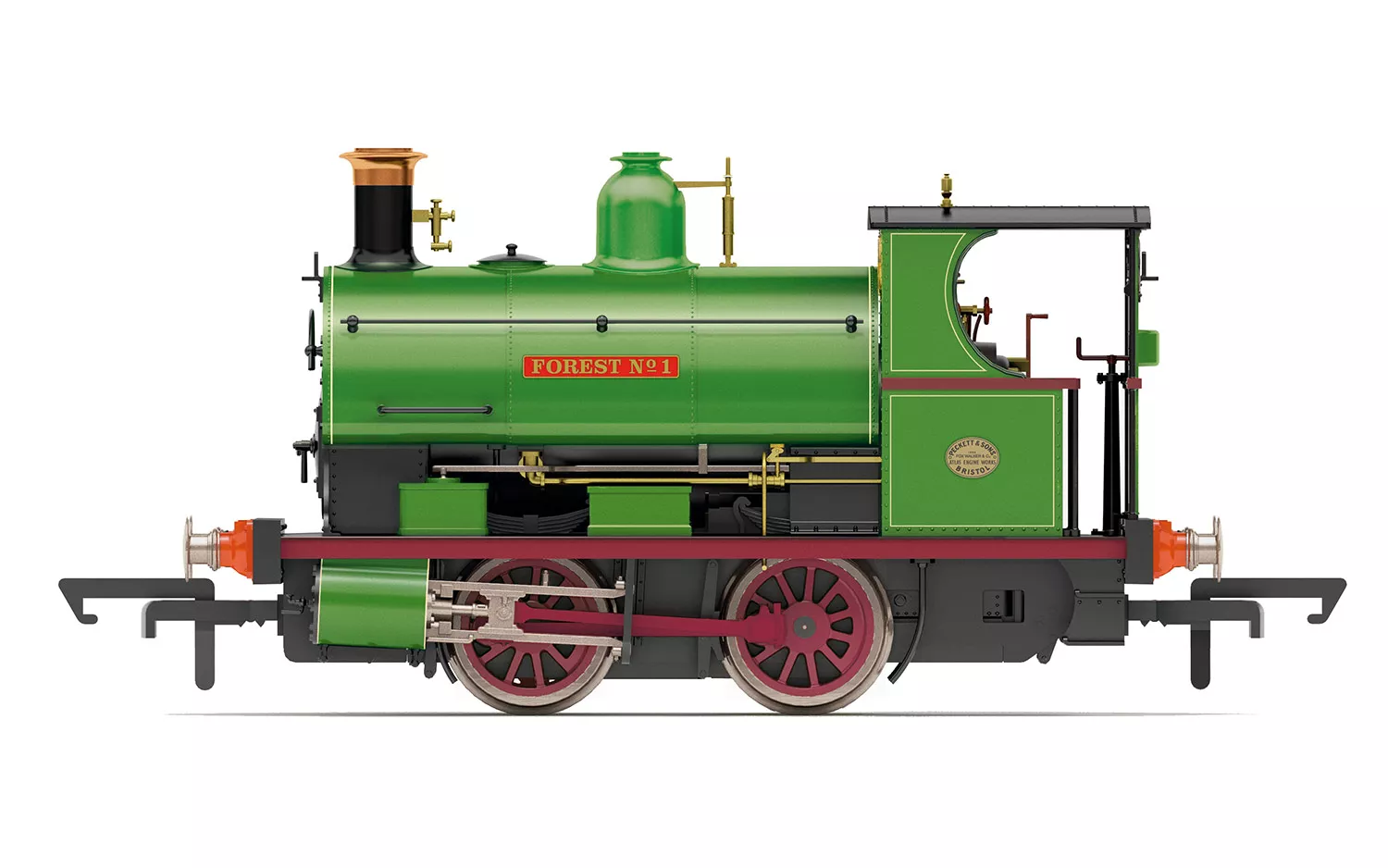
Peckett were eventually bought out by Reed Crane & Hoist Company during 1961, having produced 140 W4 locomotives between April 1885 and February 1906. Peckett Works No.484/1889 was built for William Williams & Co. of Morriston in Glamorgan, for use at the Upper Forest and Worcester Steel & Tinplate Works. Sold on via J.F Wake's dealership to Stanley Brothers Ltd's Charity Colliery, Forest No.1 continued in service until 1924 when the colliery closed.
* Class names often change over the lifespan of a locomotive, so this is not necessarily the class name used by the operator in the period modelled.
Supplier links are provided for your convenience and do not guarantee that the product is currently available. RailwayModels.uk is not a representative of these suppliers, but may receive a commission when purchases are made through links on this page.
Hornby
R3825
Peckett 614, Centenary Year Limited Edition - 2017
Hornby
R3868
Crawshay Brothers, Peckett W4 Class, 0-4-0ST, 490/1890 - Era 2
Hornby
R3869
Dowlais Ironworks, Peckett W4 Class, 0-4-0ST, 33 'Lady Cornelia' - Era 2
Hornby
R3640
PO, Willans and Robinson, Peckett W4 Class, 0-4-0ST, 882 'Niclausse' - Era 2
Hornby
R3761
PO, Earl of Dudley's Round Oak Works, Peckett W4 Class (Open Back Cab), 0-4-0ST, 'Lady Edith' - Era 2
Hornby
R3702
PO, Tytherington Stone Co, Peckett W4 Class, 0-4-0ST, 'Daphne' - Era 2
Hornby
R3703
S&KLR, Peckett W4 Class (Open Back Cab), 0-4-0ST, 'Bear' - Era 7/8
Hornby
R3550
Peckett 0-4-0ST '883' Lilleshall Co.
Hornby
R3615
Peckett Works Livery No.560/1893 0-4-0ST - Era 2
Hornby
R3679
Port of London Authority, Peckett W4 Class, 0-4-0ST, No. 74 - Era 3/4
Hornby
R30409
Manchester Ship Canal - Peckett W4 'Jaffa'
Hornby
R3686
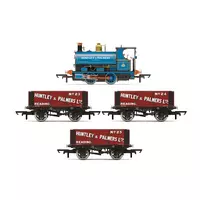
Huntley & Palmers, Peckett W4 Works Freight Pack - Era 2
Hornby
R3429
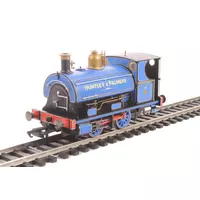
Class W4 Peckett 0-4-0ST D in Huntley & Palmers blue
Hornby
R3427
Class W4 Peckett 0-4-0ST 563 Dodo in Peckett leaf green
Hornby
R3428
Class W4 Peckett 0-4-0ST 11 in Manchester Ship Canal green
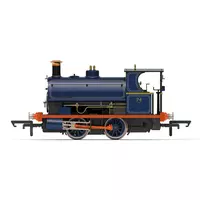
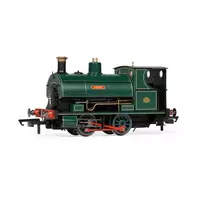
Hornby PO model of the Peckett W4 0‑4‑0ST locomotive ‘Forest No 1’, representing the Charity Colliery engine. The model is ready for DCC operation with a 4‑pin socket, runs on OO gauge track and is powered by a 5‑pole skew‑wound motor. It has a pristine finish in lined green livery, a running number of 1 and a length of 84 mm. The minimum curve radius is the 1st radius (371 mm). All wheels provide power pickup and the locomotive uses NEM couplings with a tension‑lock system. It is supplied as part number R3680 and carries the era‑2 designation.
The prototype was a steam saddle‑tank built by Peckett & Sons at the Atlas Engine Works, Bristol, between April 1885 and February 1906, with 140 examples of the W4 class produced. The locomotive, works number 484 of 1889, was originally supplied to William Williams & Co. for the Upper Forest and Worcester Steel & Tinplate Works, later passing via J.F. Wake’s dealership to Stanley Brothers Ltd’s Charity Colliery, where it operated as Forest No 1 until the colliery closed in 1924. Peckett specialised in industrial locomotives for collieries, ironworks and tinplate works, often finished in lined works livery and built with standard components, some adapted for reduced‑height applications. The company ceased locomotive production in June 1958 and was acquired by Reed Crane & Hoist Company in 1961.