Dapol 4S-043-011S
43xx 2-6-0 Mogul 4377 GWR Shirtbutton (DCC-Sound)
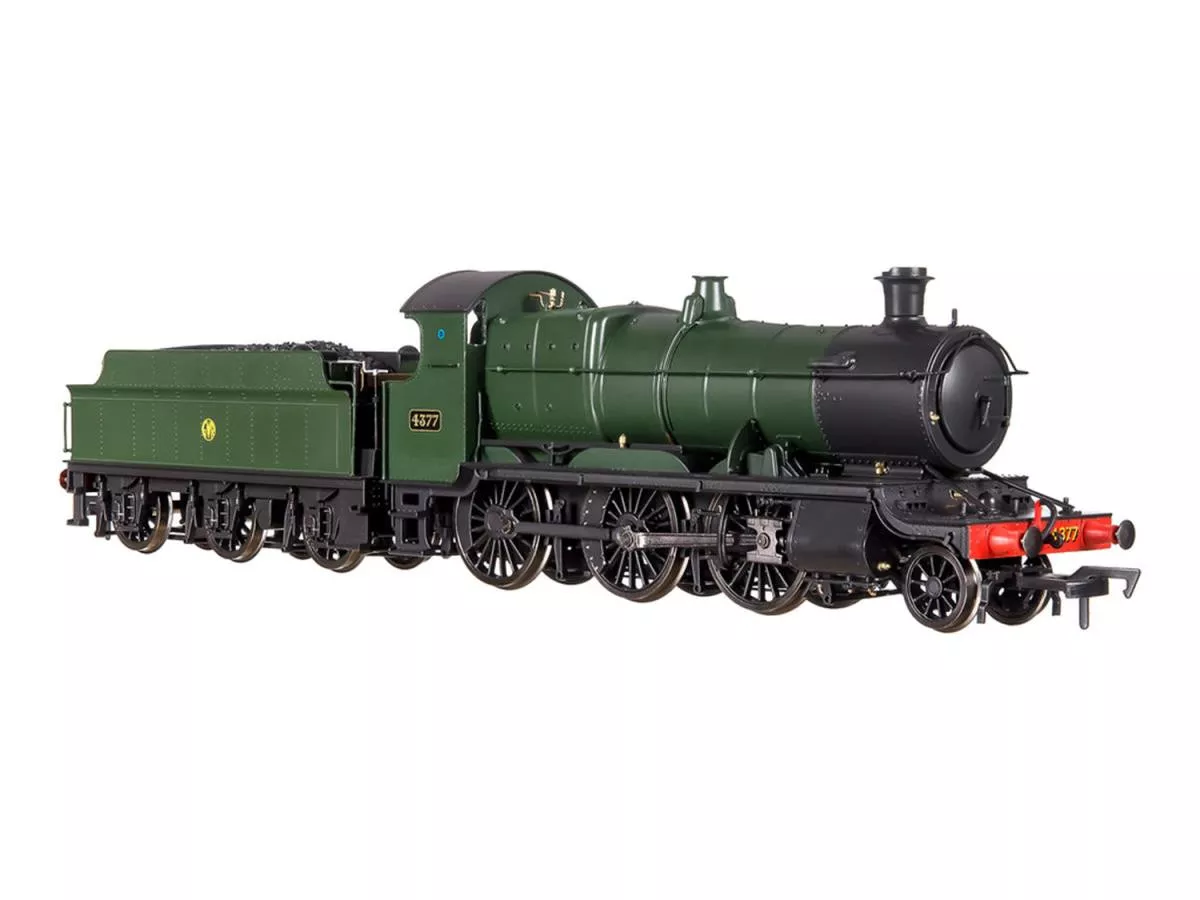
Manufacturer catalogue image - please note that pre-release images may be CAD renders or CGI/AI images rather than photographs
Prototype Era
Era 3 (1923 to 1947) The Big Four (LNER, LMS, GWR and SR)
Manufacturer description
In 1906 Churchward fitted a more powerful Standard No. 4 boiler to his successful 3100 Class 2-6-2T to create the GWR 3150 Class. The 3150’s proved themselves to be capable locomotives but their weight and water capacity meant that they were typically restricted to suburban passenger traffic. Churchward was looking forward to the replacement of various of his predecessor’s 4-4-0 and 0-6-0 goods engines.
In 1911 the draughtsman Harry Holcroft was instructed to incorporate as many standard parts as possible in the outside cylinder design including the No.4 boiler to produce a tender version of the 3150 class. No prototype was built as the design had in theory already proven itself. The new 2-6-0s were a success right from the start being powerful enough for heavy goods work and fast and steady enough to work heavy excursion and similar passenger trains.
These new locomotives were produced more or less continuously in a series of batches between 1911–1923. Two further lots were built in 1925 and 1932 by Churchward's successor, Charles Collett. The prototypes of the models that Dapol will be producing are from the following Lots. Production occurred prior to, during and after WW1. Lots 193, 194 and 198 were built at Swindon and delivered into service between June 1913 and May 1914 with WW1 impeding production.
These locomotives (and all subsequent examples) had their frames lengthened by 9 inches at the rear, making maintenance easier as well as giving the crews more room in the cab. Lots 202, 204, 208 and part of 209 up to 5383 in July 1920 complete this build before the motion bracket was changed forming the 63xx and 73xx classes. Eleven examples of the class were transported to France, in the service of the Railway Operating Division of the British Army (Numbers: 5319–5326 and 5328–5330).
One survives in preservation. Production continued after the war with Lots 209, 211-212, 216 and 230 being produced. The first three of these lots were for seventy locomotives built between June 1919 and July 1921 (Nos. 5370-99 and 6300-6341). Lot 216 was for a further 28 locomotives (6342–6369) but Swindon works was then unable to keep pace with the demand for them and only the first twenty were completed after delay, between March and December 1923. The remainder (6362-9 and 7320/1) were later built under lot 230 in 1925.
Number 6320 was converted to oil firing between 1947 and the equipment was removed in 1949. The 43xx “Moguls” were engaged in many different duties on the GWR network and later the Western Region of British Railways. Employing a Standard number 4 boiler and the support struts similar to those fitted to the '2800' class, the class very quickly earned an excellent reputation in its ability to handle most types of traffic, from local stopping goods to main line expresses. According to O.S. Nock they "could handle the heavy goods work as well as the 'Aberdares' and could run up to 70 mph with passenger trains, in other words they were the ideal mixed traffic locomotive.
Although the class continued to be very useful and the final batch were still relatively new, 100 of the earlier examples were withdrawn between 1936 and 1939 and the wheels and motion of eighty were used for the Grange Class and twenty for Manor Class engines. It was intended to replace the whole class in this way but the advent of the Second World War in 1939 brought a temporary halt to withdrawals and the programme was never revived. Further withdrawals resumed in 1948 under British Railways ownership, but the last six examples survived until 1964. Joined Up Thinking The tooling package for the original batch of Moguls was from its very inception designed to allow Dapol to produce the other versions of the prototype.
Catalogue listing
Model details
Prototype information
Robert Stephenson & Co.
British Railways
* Class names often change over the lifespan of a locomotive, so this is not necessarily the class name used by the operator in the period modelled.
Supplier Links


Supplier links are provided for your convenience and do not guarantee that the product is currently available. RailwayModels.uk is not a representative of these suppliers, but may receive a commission when purchases are made through links on this page.
Related products
-
Dapol
4S-043-008D
43xx 2-6-0 Mogul 5322 Khaki (DCC-Fitted)
-
Dapol
4S-043-013S
43xx 2-6-0 Mogul 5370 BR Lined Early Black (DCC-Sound)
-
Dapol
4S-043-009D
43xx 2-6-0 Mogul 4321 GW Lined/Lettered (DCC-Fitted)
-
Dapol
4S-043-016D
43xx 2-6-0 Mogul 5330 BR Lined Late Green (DCC-Fitted)
-
Dapol
4S-043-011
GWR 43xx 2-6-0 Mogul 4377 GWR Shirtbutton
-
Dapol
4S-043-010S
43xx 2-6-0 Mogul 5350 GW (DCC-Sound)
-
Dapol
4S-043-013D
43xx 2-6-0 Mogul 5370 BR Lined Early Black (DCC-Fitted)
-
Dapol
4S-043-015D
43xx 2-6-0 Mogul 4358 BR Lined Early Green (DCC-Fitted)
-
Dapol
4S-043-014S
43xx 2-6-0 Mogul 5377 BR Early Black (DCC-Sound)
-
Dapol
4S-043-012D
43xx 2-6-0 Mogul 5320 GWR (DCC-Fitted)
-
Dapol
4S-043-011D
43xx 2-6-0 Mogul 4377 GWR Shirtbutton (DCC-Fitted)
-
Dapol
4S-043-015
GWR 43xx 2-6-0 Mogul 4358 BR Lined Green Early Crest
-
Dapol
4S-043-010D
43xx 2-6-0 Mogul 5350 GW (DCC-Fitted)
-
Dapol
4S-043-012S
43xx 2-6-0 Mogul 5320 GWR (DCC-Sound)
-
Dapol
4S-043-008
GWR 43xx 2-6-0 Mogul 5322 Khaki
-
Dapol
4S-043-015S
43xx 2-6-0 Mogul 4358 BR Lined Early Green (DCC-Sound)
-
Dapol
4S-043-009S
43xx 2-6-0 Mogul 4321 GW Lined/Lettered (DCC-Sound)
-
Dapol
4S-043-012
GWR 43xx 2-6-0 Mogul 5320 GWR
-
Dapol
4S-043-009
43xx 2-6-0 Mogul 4321 GW Lined/Lettered
-
Dapol
4S-043-014D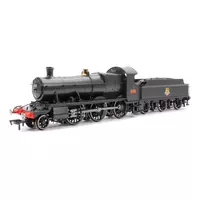
43xx 2-6-0 Mogul 5377 BR Early Black (DCC-Fitted)
-
Dapol
4S-043-016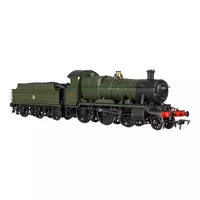
GWR 43xx 2-6-0 Mogul 5330 BR Lined Green L/C
-
Dapol
4S-043-013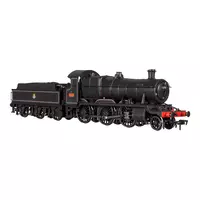
GWR 43xx 2-6-0 Mogul 5370 BR Lined Black Early Crest
-
Dapol
4S-043-016S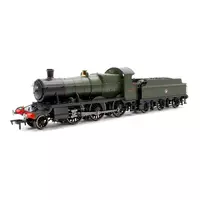
43xx 2-6-0 Mogul 5330 BR Lined Late Green (DCC-Sound)
-
Dapol
4S-043-010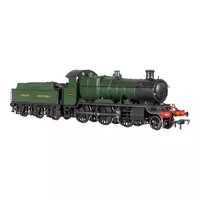
GWR 43xx 2-6-0 Mogul 5350 Great Western
-
Dapol
4S-043-008S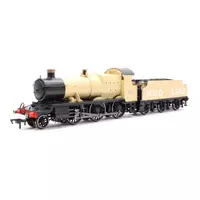
43xx 2-6-0 Mogul 5322 Khaki (DCC-Sound)
-
Dapol
4S-043-014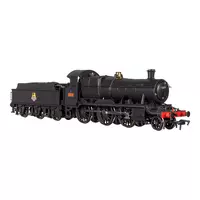
GWR 43xx 2-6-0 Mogul 5377 BR Black Early Crest
-
Dapol
4S-043-006S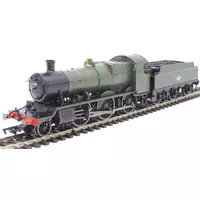
GWR Mogul 2-6-0 Locomotive #7310 in Lined Green with Late Crest (BR) - DCC Sound Fitted
-
Dapol
4S-043-001S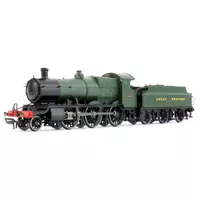
GWR Mogul 2-6-0 Locomotive #6336 in Green, lettered "Great Western" - DCC Sound Fitted
-
Dapol
4S-043-003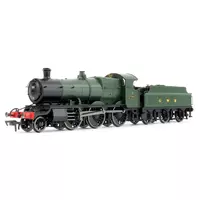
GWR Mogul 2-6-0 Locomotive Green with GWR & BR Smoke Box Number Plate #7301
-
Dapol
4S-043-003D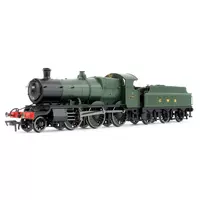
GWR Mogul 2-6-0 Locomotive Green with GWR & BR Smoke Box Number Plate #7301 - DCC Fitted
-
Dapol
4S-043-004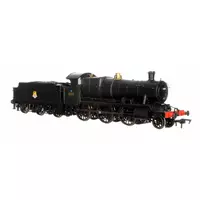
D 2-6-0 Mogul 6324 Black Early Crest DCC Fitted
-
Dapol
4S-043-005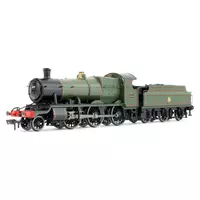
GWR Mogul 2-6-0 Locomotive #6364 in Lined Green with early Lion & Wheel Crest (BR)
-
Dapol
4S-043-005D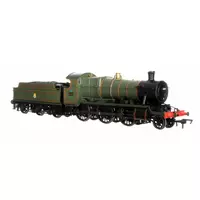
4S-043-005S 2-6-0 Mogul 6364 Green Early Crest DCC Sound Fitted
-
Dapol
4S-043-002D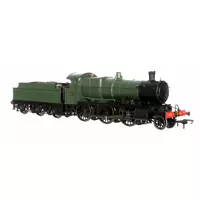
GWR Mogul 2-6-0 Locomotive #6385 Green with Shirt Button Roundel - DCC Fitted
-
Dapol
4S-043-002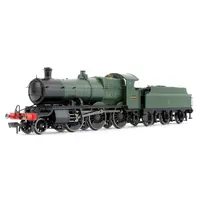
GWR Mogul 2-6-0 Locomotive #6385 Green with Shirt Button Roundel
-
Dapol
4S-043-003S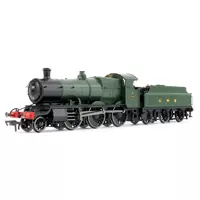
GWR Mogul 2-6-0 Locomotive Green with GWR & BR Smoke Box Number Plate #7301 - DCC Sound Fitted
-
Dapol
4S-043-002S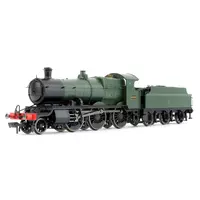
GWR Mogul 2-6-0 Locomotive #6385 Green with Shirt Button Roundel - DCC Sound Fitted
-
Dapol
4S-043-006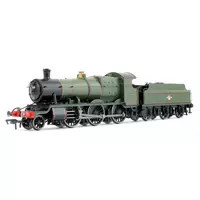
GWR Mogul 2-6-0 Locomotive #7310 in Lined Green with Late Crest (BR)
-
Dapol
4S-043-001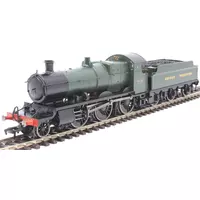
Class 43xx Mogul 2-6-0 6336 in GWR green with Great Western lettering
-
Dapol
4S-043-001D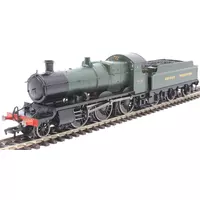
Class 43xx Mogul 2-6-0 6336 in GWR green with Great Western lettering - DCC fitted
-
Dapol
4S-043-004D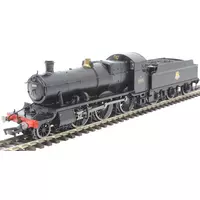
Class 43xx Mogul 2-6-0 6324 in BR black with early emblem - DCC fitted
-
Dapol
4S-043-004S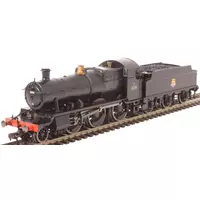
Class 43xx Mogul 2-6-0 6324 in BR black with early emblem - DCC sound fitted
-
Dapol
4S-043-005S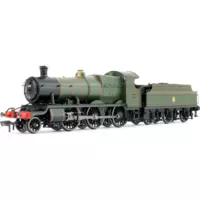
Class 43xx Mogul 2-6-0 6364 in BR lined green with early emblem - DCC sound fitted
-
Dapol
4S-043-006D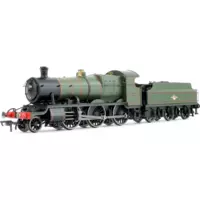
Class 43xx Mogul 2-6-0 7310 in BR lined green with late crest - DCC fitted
The Dapol GWR 43xx 2-6-0 Mogul locomotive model, number 4377, is a highly detailed and accurate representation of a classic GWR steam locomotive. The model is finished in GWR green livery and features a number of authentic details, including a die-cast compensated chassis, new cab with higher and shorter roof, and porthole cab windows above the firebox.
The locomotive has a wheel arrangement of 2-6-0 and was built at GWR Swindon Works between 1911 and 1932. The model features a NEM coupling and tension lock, allowing for smooth operation on curves as small as R2. The tender is designed to be smooth-sided where appropriate, with Churchward tapered and Collet straight shank buffers and main footplate with prototypical overhang.
The model is DCC sound equipped, with a slide-in PCB allowing for easy installation of a NEXT-18 DCC decoder and a 'no-solder' speaker connection. The tender to locomotive drawbar includes reliable electrical connections, eliminating the need for wired plugs and unreliable wiper style connections. The model has 12 wheels with electrical pick-up, including a sprung centre driving wheel, and features a proven slow speed mechanism and high torque five pole skew wound motor.
The GWR 43xx class was a popular and long-serving locomotive, operating during the period known as the Big Four (LNER, LMS, GWR and SR). The model represents this era, with many original GA drawings used in its development to ensure accuracy and authenticity.