Dapol 4D-025-001
Class 21 D6121 BR GREEN (with Headcode Discs) Diesel Locomotive
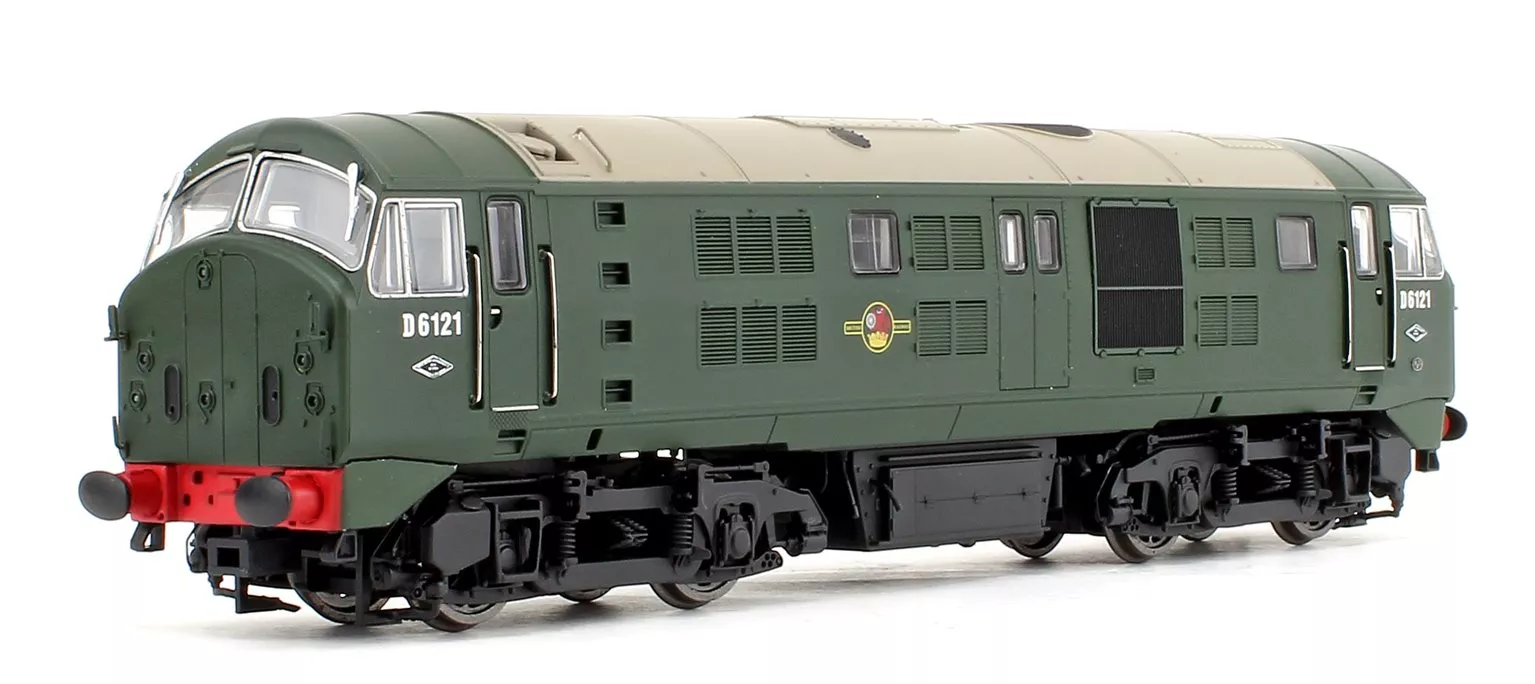
Manufacturer catalogue image - please note that pre-release images may be CAD renders or CGI/AI images rather than photographs
Prototype Eras
Era 4 (1948 to 1956) British Railways Early Crest
Era 5 (1956 to 1966) British Railways Late Crest
Manufacturer description
The BR Class 29 is a type of Bo-Bo diesel-electric locomotive designed for both freight and passenger use. Although outwardly similar to the Class 22, they actually share no mechanical parts and in fact were a modified Class 21 with a replacement Paxman engine with improvements to power output.
These modifications were carried out between 1963 and 1965 mainly at the Polmadie Traction & Rolling Stock Depot in Glasgow. After the rebuild, the locomotives returned to Scottish duties until their withdrawal in 1971. No Class 29 locomotives survive preservation. Dapol have managed to provide for the Class 21 also in the tooling and this will be made concurrently with the Class 29.
The first EP’s have arrived and are currently being evaluated by the design team and a series of corrective measures will be made to each of the models to ensure that they are as true to the prototype as possible.
MODEL
These great little models feature lots of details including etched grills, directional lighting, and finely printed external logos and numbering.
FEATURES
- Detailed body with etched grilles and separately fitted handrails
- Finely detailed cast wheels
- Metal sprung buffers
- 5 pole Super creep motor with twin brass fly wheels for controlled pulling power and incredible slow running speed
- All wheel drive and pick up
- Independent directional and cab lighting
- Includes magnetic couplings and traditional couplings
- Accessory bag with optional fitted components
SPECIFICATIONS
- CLASS 21
- LIVERY BR Green
- ERA 5 (1957 - 1966)
- WHEEL CONFIGURATION Bo-Bo
- DCC TYPE DCC Ready
- TRACK SUPPLY 12V DC
- FINISH Pristine
MEASUREMENTS
- LENGTH OVER BUFFER 206mm
- WIDTH 34mm
- HEIGHT 49mm
Catalogue listing
Model details
Pickup in tender
Interior lighting
Prototype information
* Class names often change over the lifespan of a locomotive, so this is not necessarily the class name used by the operator in the period modelled.
Supplier Links


Supplier links are provided for your convenience and do not guarantee that the product is currently available. RailwayModels.uk is not a representative of these suppliers, but may receive a commission when purchases are made through links on this page.
Related products
-
Dapol
4D-025-001D
Class 21 D6121 BR GREEN (with Headcode Discs) Diesel Locomotive - DCC fitted
-
Dapol
4D-025-002
Class 21 D6120 BR Green
-
Dapol
4D-025-002D
Class 21 D6120 BR Green (DCC-Fitted)
-
Dapol
4D-025-003D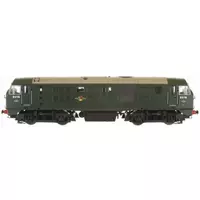
Class 21 D6116 BR Green SYP DCC
-
Dapol
4D-025-004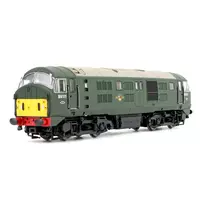
Class 21 D6111 BR Green (Small Yellow Panels) Diesel Locomotives
-
Dapol
4D-025-004D
Class 21 D6111 BR Green (Small Yellow Panels) Diesel Locomotives DCC Fitted
-
Dapol
4D-025-004S
Class 21 D6111 BR Green (Small Yellow Panels) Diesel Locomotives DCC Sound Fitted
-
Dapol
4D-025-003S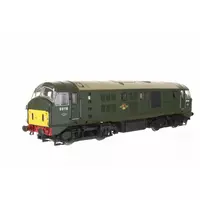
Class 21 D6116 BR Green SYP DCC Sound Fitted
-
Dapol
4D-025-001S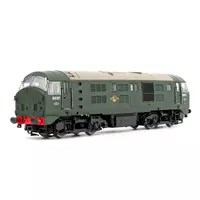
Class 21 D6121 BR GREEN (with Headcode Discs) Diesel Locomotive - DCC sound fitted
-
Dapol
4D-025-005D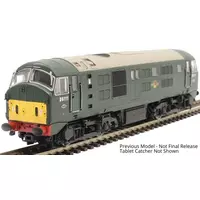
Class 21 D6140 BR Green SYP with Tablet Catcher (DCC-Fitted)
-
Dapol
4D-025-006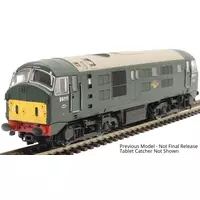
Class 21 D6151 BR Green SYP with Tablet Catcher
-
Dapol
4D-025-006D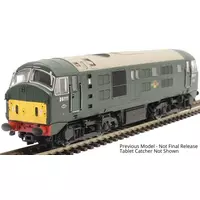
Class 21 D6151 BR Green SYP with Tablet Catcher (DCC-Fitted)
-
Dapol
4D-025-002S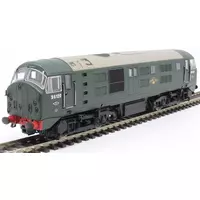
Class 21 D6120 BR Green (DCC-Sound)
-
Dapol
4D-025-006S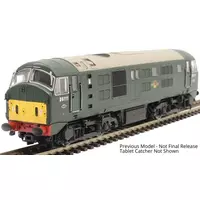
Class 21 D6151 BR Green SYP with Tablet Catcher (DCC-Sound)
-
Dapol
4D-025-005S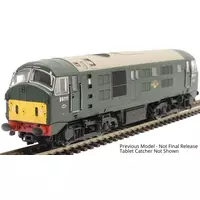
Class 21 D6140 BR Green SYP with Tablet Catcher (DCC-Sound)
-
Dapol
4D-025-005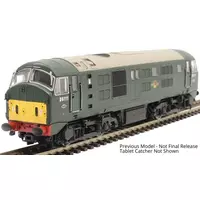
Class 21 D6140 BR Green SYP with Tablet Catcher
-
Dapol
4D-025-003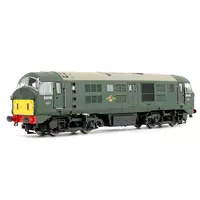
Class 21 D6116 BR Green with small yellow panels Diesel Locomotive
Dapol Class 21 D6121 is a 4 mm OO gauge model of a British Rail Class 21 diesel locomotive, finished in pristine condition and painted in the original BR green livery with the early crest. The model carries headcode discs, bears the running number D6121 and is supplied with a 21‑pin DCC‑ready socket.
The locomotive is built to a length of 206 mm, width 34 mm and height 49 mm. The wheel arrangement is Bo‑Bo and all wheels are powered, providing pickup from the entire wheelbase. It runs on 12 V DC track supply and incorporates a 5‑pole Super‑creep motor with twin brass flywheels for smooth, controlled pulling and very slow running speeds. Directional and cab interior lighting are fitted, and both magnetic and traditional NEM couplings are included.
Key specifications are: gauge OO, finish pristine, livery BR green, era 5 (1957‑1966), DCC ready with a 21‑pin socket, power type diesel, maximum speed 75 mph (prototype), built by North British Locomotive Co., and manufacturer part number 4D‑025‑001. The model also features etched grilles, separate handrails, cast wheels, metal sprung buffers and an accessory bag containing optional components.
The prototype locomotive was built between 1958 and 1960, with a total of 58 units produced. It was used by British Railways, had a minimum curve radius of the 2nd radius (438 mm) and a wheelbase capable of all‑wheel drive pickup. This model is intended to represent the early‑crest period of British Railways.