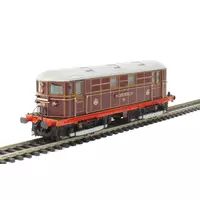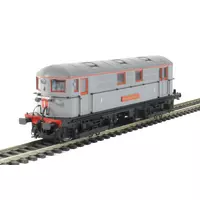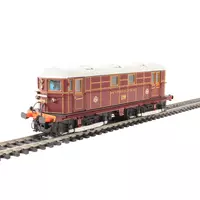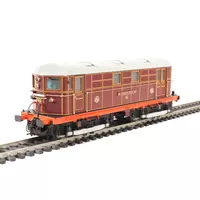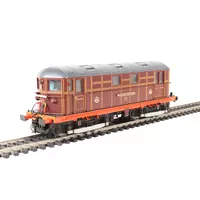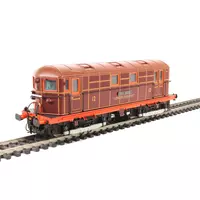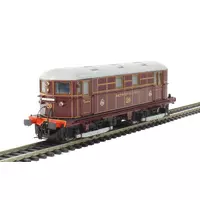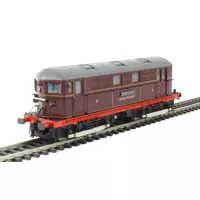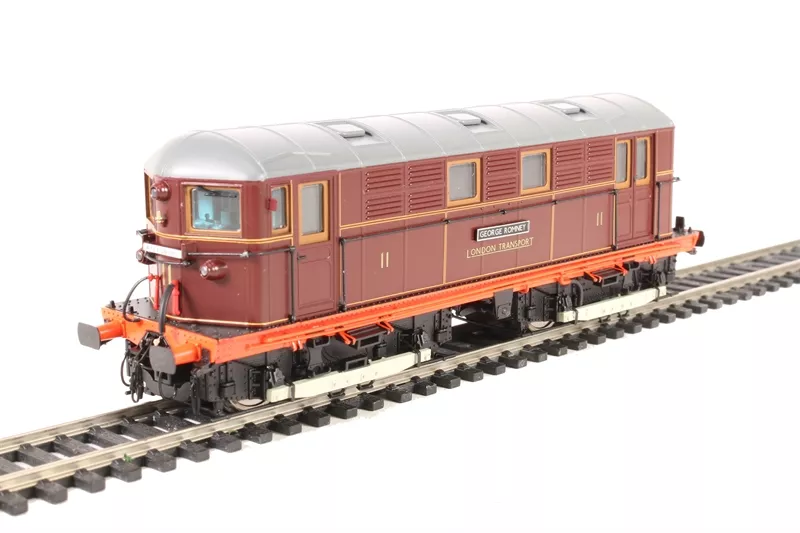
Manufacturer catalogue image - please note that pre-release images may be CAD renders or CGI/AI images rather than photographs
Prototype Eras
Era 3 (1923 to 1947) The Big Four (LNER, LMS, GWR and SR)
Era 4 (1948 to 1956) British Railways Early Crest
Era 5 (1956 to 1966) British Railways Late Crest
Manufacturer description
Catalogue listing
Brand
Heljan
Product Code
9007
RRP
£139.95
Release date
November 2016
Model details
DCC status
DCC Ready 21-pin socket
Gauge
OO
Livery
London Transport
Power pickup
All wheels
Scale
OO Gauge (1:76 Scale)
Name
George Romney
Minimum radius curve
2nd Radius (438mm)
Coupling
NEM
Finish
Pristine
Tooling date
2015
Chassis construction
Plastic & metal
Coupling mount
NEM pockets
Coupling type
Tension lock
Minimum radius
Radius 2
Running number
11
Features
Directional lighting
Prototype information
Locomotive type
Electric
Builder
Metropolitan-Vickers
Build dates
1922 to 1923
Total built
20
Tractive effort
Unknown
Wheel configuration
Bo-Bo
Operated by
Metropolitan Railway
London Underground
London Underground
Main duties
Passenger Services
Shunting
Shunting
In service until
1962
Locomotive class*
Metropolitan-Vickers Bo-Bo Electric
Motive power
Electric
Wheel arrangement
Bo-Bo
Built
August 1948
Built by
Metropolitan-Vickers
Total produced
20
* Class names often change over the lifespan of a locomotive, so this is not necessarily the class name used by the operator in the period modelled.
Supplier Links


Supplier links are provided for your convenience and do not guarantee that the product is currently available. RailwayModels.uk is not a representative of these suppliers, but may receive a commission when purchases are made through links on this page.