Heljan 1728
Class 17 Clayton 17007 Railfreight 'Red Stripe' Locomotive
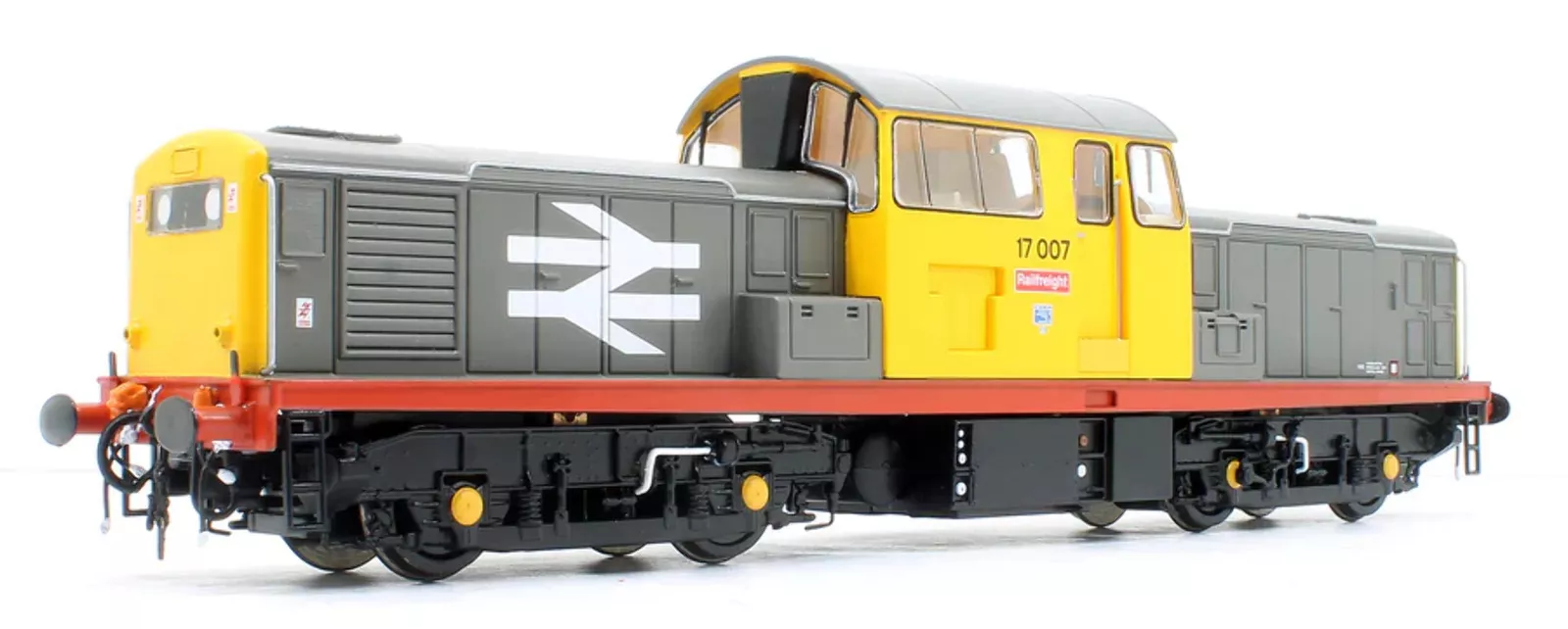
Manufacturer catalogue image - please note that pre-release images may be CAD renders or CGI/AI images rather than photographs
Prototype Era
Era 8 (1983 to 1994) British Rail Sectorisation
Manufacturer description
Experience with the early Type 1 diesels revealed a need for better visibility for loco crews and the result was the Clayton Type 1 with its characteristic centre cab. Unfortunately, the twin-engined design proved to be unreliable and despite 117 examples being built, the class managed less than a decade in service.
FEATURES
- 8 Pin DCC Interface
- Working Lights
- NEM Couplings
- Sprung Buffers
SPECIFICATIONS
- BUILT BY Clayton/Beyer Peacock
- NUMBER BUILT 117
- NUMBER SERIES D8500-D8616
- SERVICE CAREER 1962-71(BR), 1972-82 (Industrial)
- PURPOSE Light Goods and Passenger
MEASUREMENTS
- LENGTH 203mm
Catalogue listing
Model details
Prototype information
* Class names often change over the lifespan of a locomotive, so this is not necessarily the class name used by the operator in the period modelled.
Supplier Links


Supplier links are provided for your convenience and do not guarantee that the product is currently available. RailwayModels.uk is not a representative of these suppliers, but may receive a commission when purchases are made through links on this page.
Related products
-
Heljan
1722
Class 17 Clayton 8546 in BR green with full yellow ends
-
Heljan
1723
BR Blue D8534 Class 17 With Full Yellow Ends Diesel Locomotive
-
Heljan
1724
Class 17 - BR Blue (Small Yellow Panels) - D8568 - OO Scale
-
Heljan
1726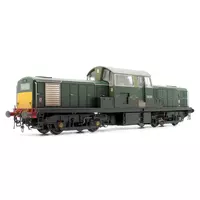
Class 17 - BR Green - D8599 - OO Scale - Weathered
-
Heljan
1727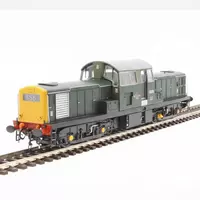
Class 17 - BR Green (Full Yellow Ends) - D8539 - OO Scale
-
Heljan
1729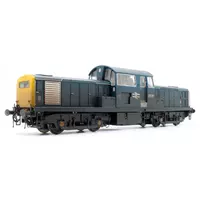
Class 17 - BR Blue - 8538 - OO Scale - Weathered
-
Heljan
1725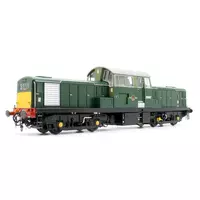
Class 17 - BR Green - D8607 - OO Scale
-
Heljan
1700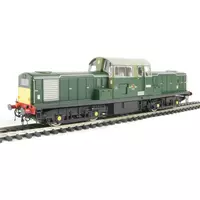
Class 17 Clayton diesel D8568 in BR green with small yellow panels (as preserved)
-
Heljan
1701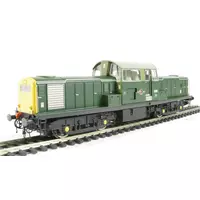
Class 17 Clayton diesel 8561 in BR green with full yellow ends
-
Heljan
1702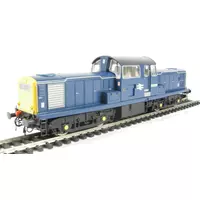
Class 17 Clayton BR Blue With Full Yellow Ends D8529 Diesel Locomotive
-
Heljan
1703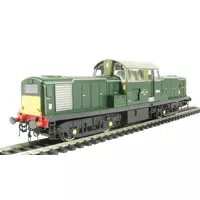
Class 17 Clayton diesel D8603 BR green with small yellow panel
-
Heljan
1704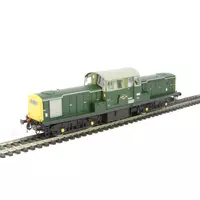
Class 17 Clayton diesel 8592 BR green with large yellow panel.
-
Heljan
1705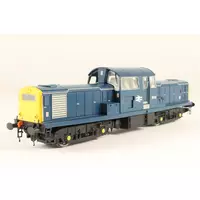
Class 17 Clayton diesel 8545 BR Blue with large yellow panel
-
Heljan
1706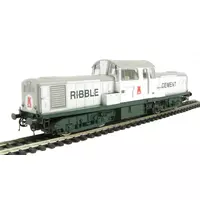
Class 17 Clayton diesel Ribble Cement (ex-D8568). Limited edition of 1000
-
Heljan
1707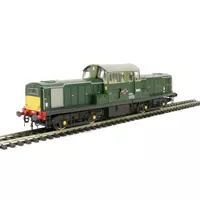
Class 17 Clayton diesel D8612 BR green with small yellow panels
-
Heljan
1708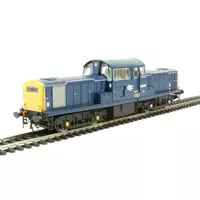
Class 17 Clayton diesel D8507 BR Blue with large yellow panels.
-
Heljan
1710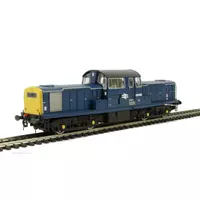
Class 17 Clayton diesel D8606 BR Blue with large yellow ends
-
Heljan
1709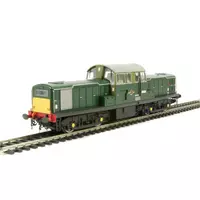
Class 17 Clayton diesel D8500 BR Green with small yellow panels
-
Heljan
1711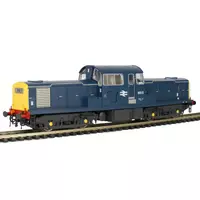
Class 17 Clayton Diesel D8512 in blue with full yellow ends. Derby RTC Research variant
-
Heljan
1712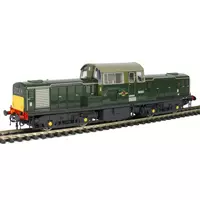
Class 17 Clayton diesel D8501 BR Green with small yellow panels
-
Heljan
1713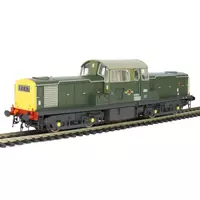
Class 17 Clayton diesel 8601 BR Green with full yellow panels.
-
Heljan
1714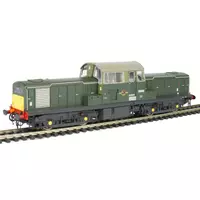
Class 17 Clayton diesel D8600 BR Green with small yellow panels.
-
Heljan
1715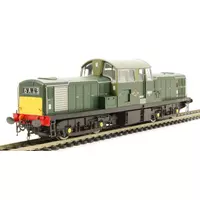
Class 17 diesel D8511 in green with small yellow panels
-
Heljan
1716
Class 17 diesel D8585 in green with small yellow panels
-
Heljan
1717
Class 17 diesel D8606 in green with full yellow ends
-
Heljan
1799
Class 17 Clayton D8574 in BR Blue - Limited Edition of 250 Produced Exclusively for Modelfair.com
-
Heljan
1718
Class 17 D8523 in blue with full yellow ends
-
Heljan
1719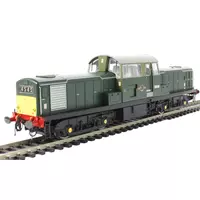
Class 17 D8558 in BR green with small yellow panels
-
Heljan
1720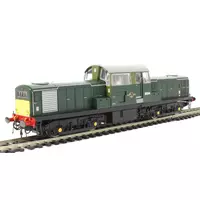
Class 17 D8594 in BR green with small yellow panels
-
Heljan
1798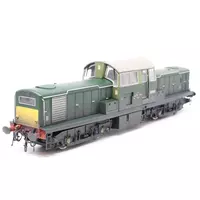
Class 17 Clayton D8599 in BR Green - Limited Edition of 250 Produced Exclusively for Modelfair.com
-
Heljan
1721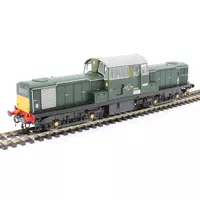
Class 17 BR Green D8502 with Small Yellow Panels Diesel Locomotive
The Heljan Class 17 Clayton 17007 Railfreight 'Red Stripe' Locomotive is a model train that represents a British Rail Class 17 diesel locomotive.
The model features a length of 203mm and is finished in Railfreight grey with a red stripe. It is DCC ready, with an 8-pin socket, and has a minimum radius curve of 1. The locomotive has a total of 117 examples were built, with the first entering service in 1962 and the last in 1965. The original Class 17s were used for both light goods and passenger services.
The model includes a range of features, including an 8-pin DCC interface, working lights, NEM couplings, and sprung buffers. The model is built by Heljan, in collaboration with Clayton and Beyer Peacock, the original manufacturers of the Class 17.
The Class 17 was a twin-engined diesel locomotive with a Bo-Bo wheel arrangement, and was designed to improve visibility for loco crews. However, the class had a relatively short service life, with most examples being withdrawn from service by the early 1980s. The model is designed to represent the period of British Rail Sectorisation.