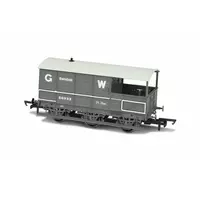
Manufacturer catalogue image - please note that pre-release images may be CAD renders or CGI/AI images rather than photographs
Prototype Era
Era 3 (1923 to 1947) The Big Four (LNER, LMS, GWR and SR)
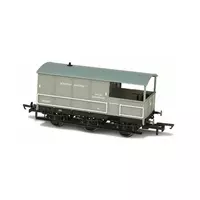
Introduced in 1900, the only 6 wheel Brakes built by the GWR. These are coded AA1 and were braked on all wheels. Suited for 22 tons - or later 24 tons. They were ideal for the heavy coal trains operated over parts of the network in that period.
Later the lower planking on the bodies was covered by metal sheathing - our model will reproduce both Planked and Plated variants. Many vehicles survived through to BR days and were not withdrawn until the 1950's.
Supplier links are provided for your convenience and do not guarantee that the product is currently available. RailwayModels.uk is not a representative of these suppliers, but may receive a commission when purchases are made through links on this page.
Oxford
OR76TOA001
GWR Toad Brake GWR 6 Wheel Planked early Swindon
Oxford
OR76TOA003
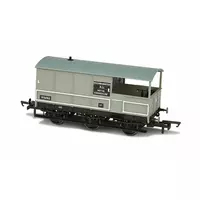
BR 6 Wheel Plated Bordesley Junction
Oxford
OR76TOA004
BR 6 Wheel Plated Toad Wolverhampton 56962
Oxford
OR76TOB001
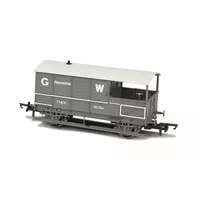
GWR 4 Wheel Planked (early) Paddington
Oxford
OR76TOB002
GWR 4 Wheel Plated (late) Acton 56034
Oxford
OR76TOB003
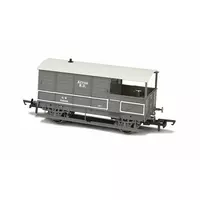
BR Toad 4 Wheel Basingstoke 35717
Oxford
OR76TOB004
BR Toad 4 Wheel Bala 56449
£37.99 at eBay (New)
Oxford Rail OO Gauge Wagons BNIB Please Choose From the List
£31.90 at eBay (New)
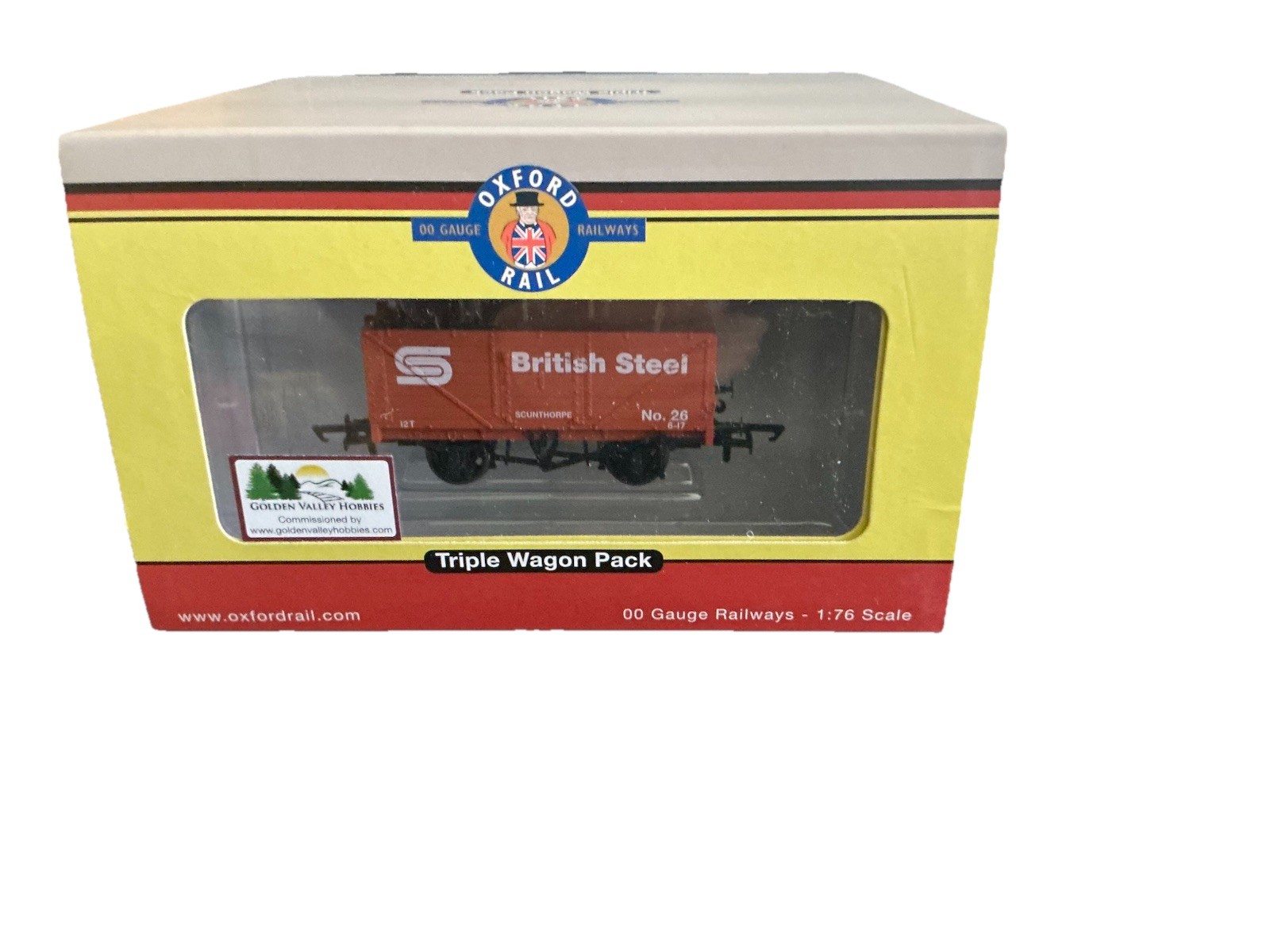
OXFORD RAIL GV2013 PACK THREE 7 PLANK WAGONS BRITISH STEEL LIVERY. NEW.
Online offers are generated automatically based on brand name and product code, and may not necessarily be this precise item.
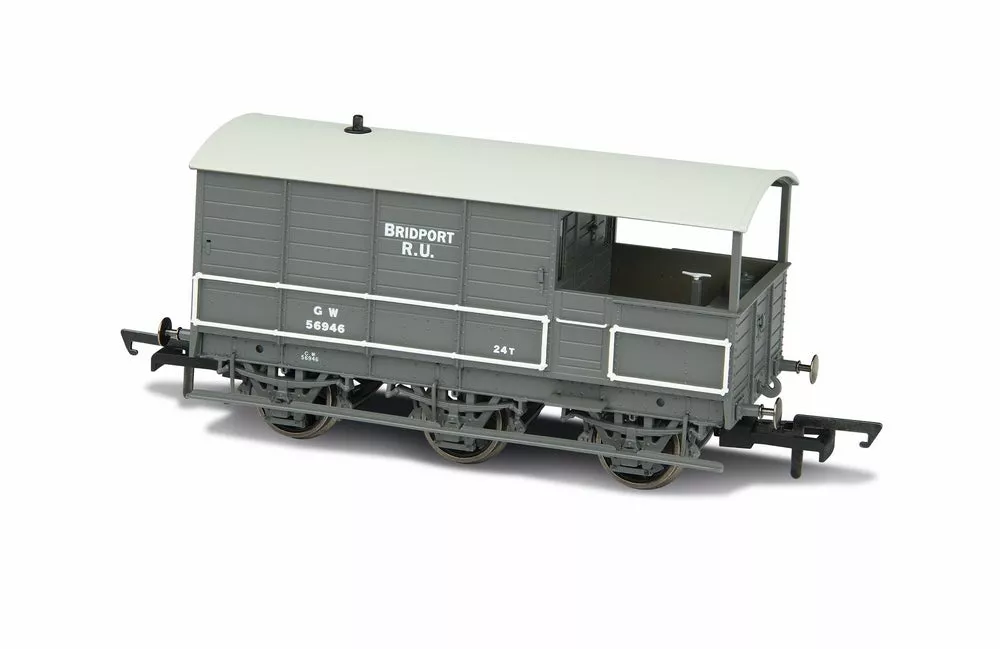
Oxford GWR Toad Brake – GWR 6‑wheel, late Bridport version.
The model is finished in GWR grey with a pristine paintwork and measures 107 mm in length. It is supplied by the manufacturer under part number OR76TOA002 and represents the period of the Big Four railway companies (LNER, LMS, GWR and SR).
The real brake, introduced in 1900, was the sole six‑wheel brake built by the Great Western Railway. Coded AA1, it featured brakes on all wheels and was rated for loads of 22 tons, later increased to 24 tons, making it suitable for the heavy coal trains of the era.
Both the original planked version and the later plated version – in which the lower planking was covered by metal sheathing – are reproduced. Many examples remained in service through the British Railways era and were not withdrawn until the 1950s.