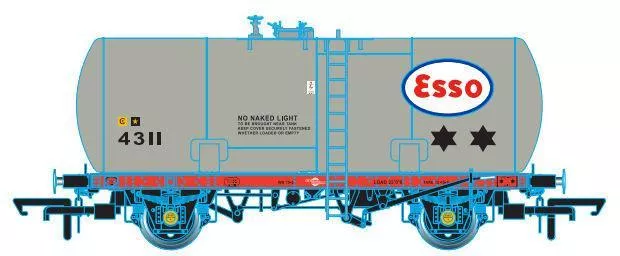
Manufacturer catalogue image - please note that pre-release images may be CAD renders or CGI/AI images rather than photographs
Prototype Eras
Era 6 (1967 to 1972) British Rail Blue (Pre-TOPS)
Era 7 (1972 to 1982) British Rail Blue (TOPS)
Manufacturer description
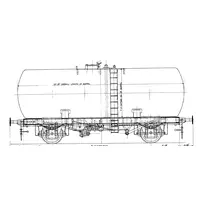
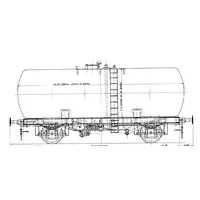
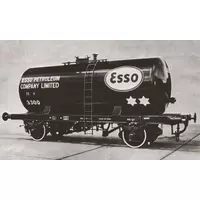
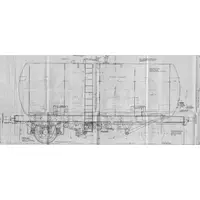
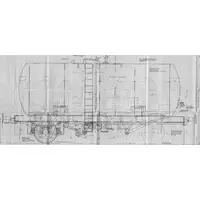
The 1955 British Railways modernisation plan recognised the fact that the UK rail system required a new high capacity tanker wagon to cater for the growing demand of petroleum products. Working with the Charles Roberts Railway Wagon Works and the Esso Petrol company a modern design capable of higher speeds was developed. Subsequently a large number of users operated the same vehicles - with their use lasting into the 1990's on commercial traffic and longer in engineers use. Our model will feature the Class A, and shorter Class B tanks . Class B tanks featuring a heater unit for heavier oils. Both original and upgraded suspension styles will be offered.
Catalogue listing
Model details
Prototype information
Private Owner
Supplier Links


Supplier links are provided for your convenience and do not guarantee that the product is currently available. RailwayModels.uk is not a representative of these suppliers, but may receive a commission when purchases are made through links on this page.