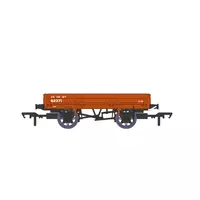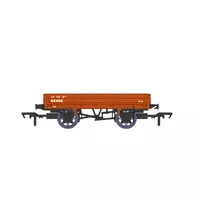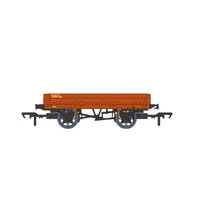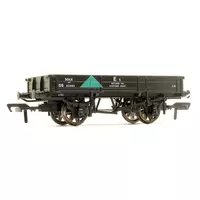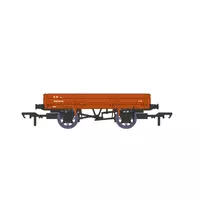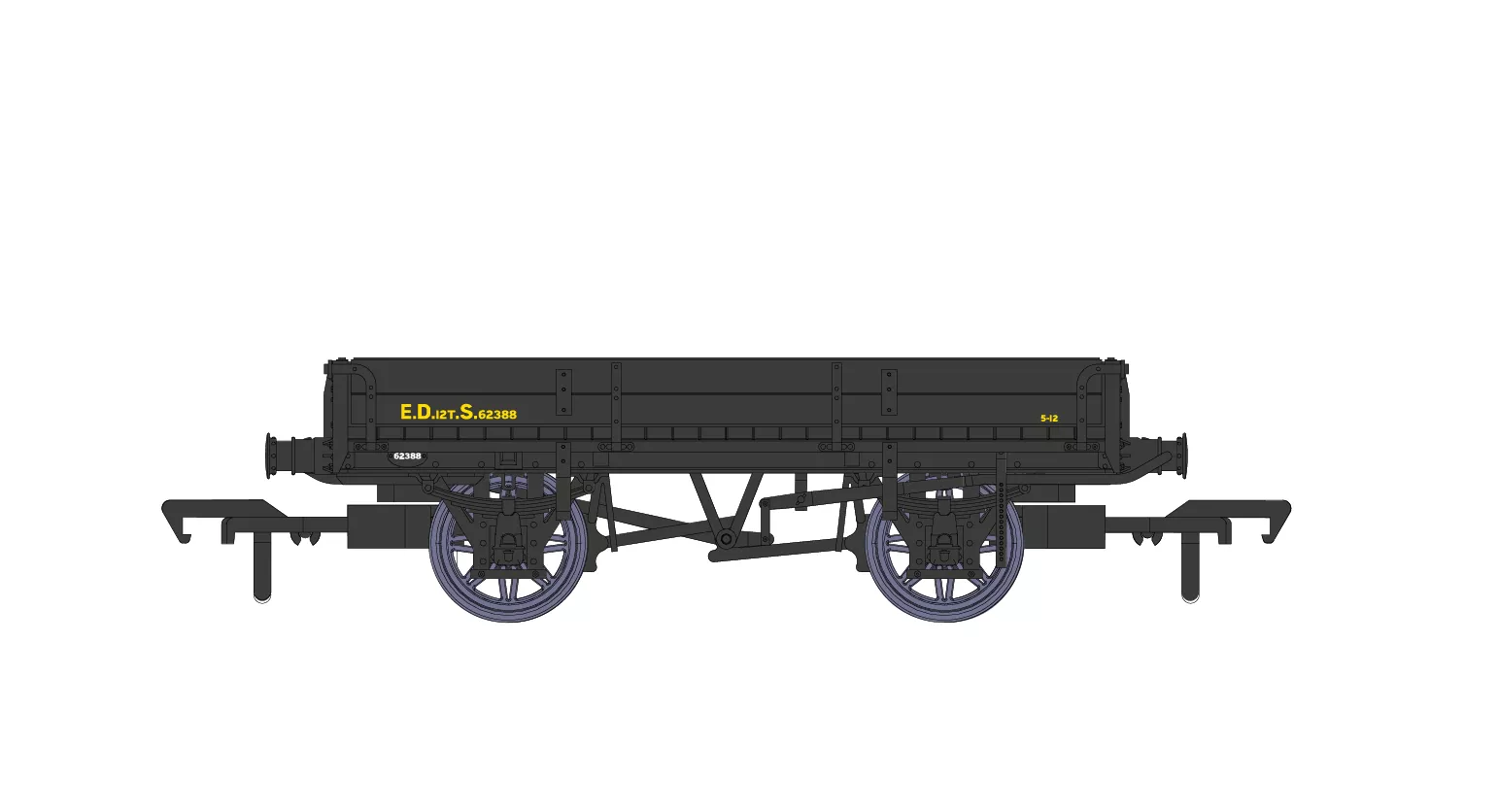
Manufacturer catalogue image - please note that pre-release images may be CAD renders or CGI/AI images rather than photographs
Prototype Eras
Era 4 (1948 to 1956) British Railways Early Crest
Era 5 (1956 to 1966) British Railways Late Crest
SECR Diagram 1744 2 plank ballast wagon
Straight-ended planks
Injection moulded construction with metal detailing parts
High level of detail above and below the floor line
Split-spoked wheels running in metal bearings
NEM coupler pockets
1:76 scale, (OO gauge)
Supplier links are provided for your convenience and do not guarantee that the product is currently available. RailwayModels.uk is not a representative of these suppliers, but may receive a commission when purchases are made through links on this page.
Rapido
928001
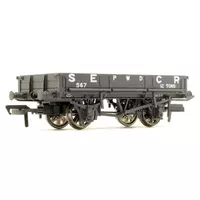
D1744 Ballast Wagon – SECR No.567
Rapido
928002
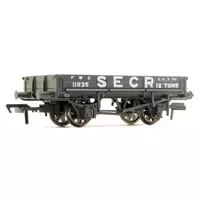
D1744 Ballast Wagon – SECR No.11835
Rapido
928003
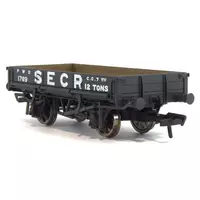
D1744 Ballast Wagon – SECR No.1789
Rapido
928004
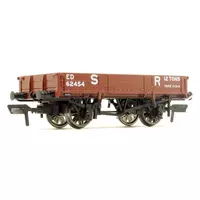
D1744 Ballast Wagon – SR No.62454
Rapido
928005
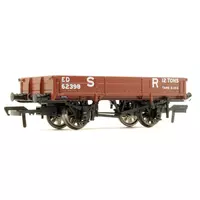
D1744 Ballast Wagon – SR No.62398
Rapido
928006
D1744 Ballast Wagon – SR (post 36) No.62371
Rapido
928007
D1744 Ballast Wagon – SR (post 36) No.62466
Rapido
928008
D1744 Ballast Wagon – BR Departmental 62444
Rapido
928009
D1744 Ballast Wagon – BR Departmental DS62402
Rapido
928010
D1744 Ballast Wagon – BR (S) No.S62433
The Rapido D1744 Ballast Wagon is a model of a British Railways ballast wagon, specifically representing the SECR Diagram 1744 2 plank ballast wagon. This model is part of the Rapido SECR 2 Plank Ballast Wagon collection and is designed for OO gauge model railways.
The model features injection moulded construction with metal detailing parts, allowing for a high level of detail above and below the floor line. The wagon also includes split-spoked wheels running in metal bearings, which adds to the overall realism of the model. Additionally, the model is designed with NEM coupler pockets, making it suitable for coupling with other models.
This model is intended to represent a British Railways ballast wagon from the early crest period, which would have been in use from the 1940s to the 1950s.