Hornby R3416
BR, J15 Class, 0-6-0, 65464 - Era 5
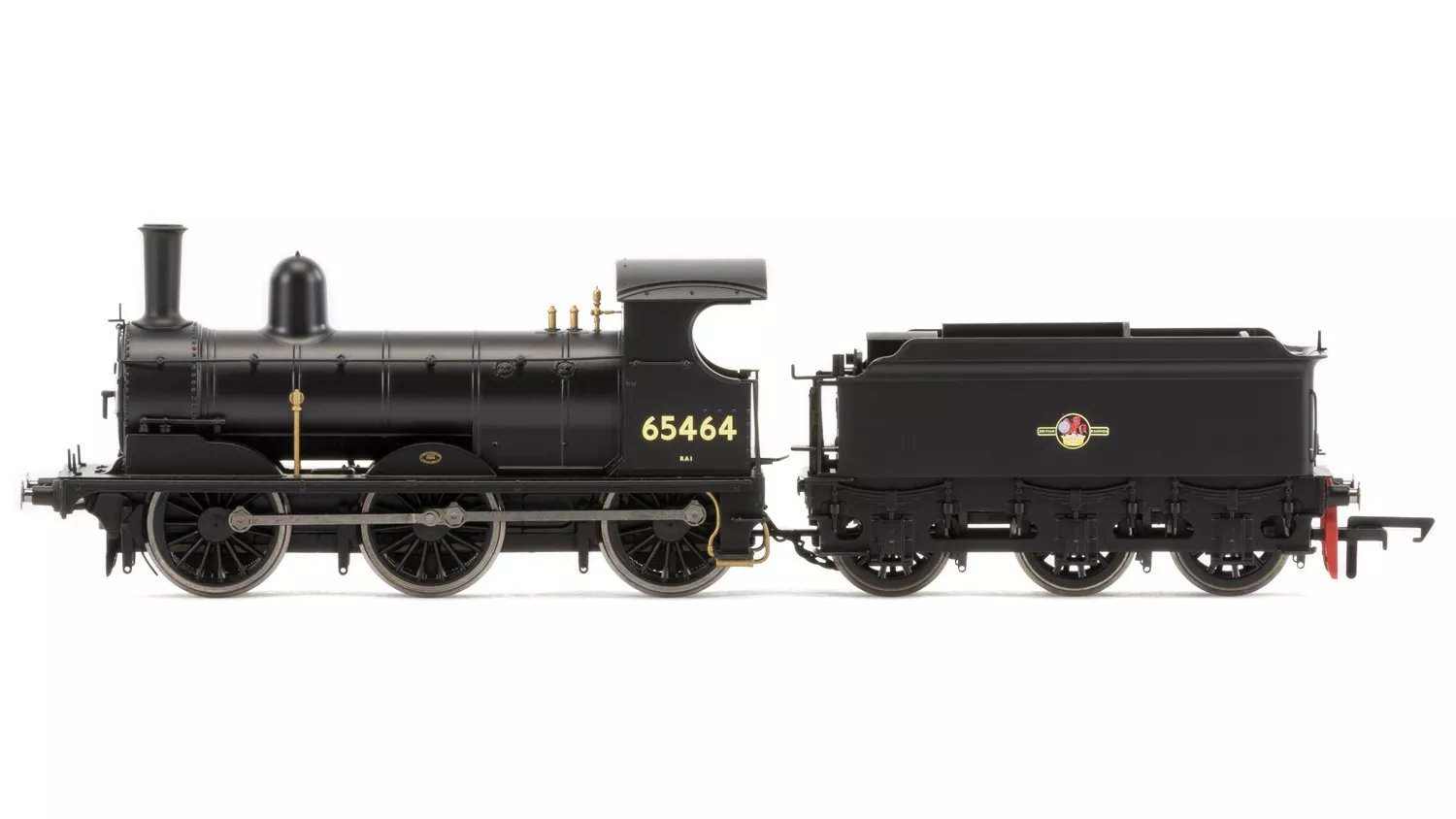
Manufacturer catalogue image - please note that pre-release images may be CAD renders or CGI/AI images rather than photographs
Prototype Eras
Era 4 (1948 to 1956) British Railways Early Crest
Era 5 (1956 to 1966) British Railways Late Crest
Manufacturer description
Designed by T.W Worsdell, the GER Class Y14 (LNER Class J15) was his solution to the lack of suitable freight locomotives available on the Doncaster route, following the opening of the GN&GE joint line. The first Y14s were built in July 1883, and they would go on to become the most numerous of the Great Eastern Railway's locomotive types, with a total of 259 being built in 27 batches.
One of the reasons for the type's success was their simple design and in 1891, the Great Eastern Railway set the world record for erecting a steam locomotive, No. 930 being assembled at Stratford in just 9 hours and 45 minutes, beating the previous record set at Crewe. The boiler design of the Y14 was to become Holden's standard, small engine boiler, the dome being placed well forward with a long stovepipe chimney. Hauling both freight and passenger stock and with a very low axle loading, they could run virtually anywhere on the Great Eastern's network, a trait that saw 43 engines loaned to the Government for service on the Western Front in the First World War.
Withdrawals from service started to take place during the early 1920s, seventeen disappearing before Grouping in 1923. The newly formed London North Eastern Railway re-designated the 272 remaining engines of the Y14 Class as J15 Class and as the numbers of locomotives reduced, the roles assigned to the J15s changed, local freight and cross-country passenger services being typical. Rarely allocated outside East Anglia, scrapping of the class recommenced in 1947 and just 127 locomotives were handed over to British Rail, by the LNER, in 1948. Seventy one engines made it through to British Rail re-numbering in the 60,000 number series, the last four being withdrawn from service on September 16, 1962.Locomotive 65464 was built at Stratford Works under Order B70 and entered traffic during March 1912 as NER No.566.
Renumbered to LNER No.7566 following Grouping, in January 1947 the locomotive was renumbered to 5464. The locomotive spent its life at Stratford Shed and at Nationalisation took the BR No.65464, finally being withdrawn on September 16, 1962 before being cut up at Cashmore's in May 1963.
Catalogue listing
Model details
Prototype information
Sharp, Stewart & Co
London & North Eastern Railway
British Railways
* Class names often change over the lifespan of a locomotive, so this is not necessarily the class name used by the operator in the period modelled.
Supplier Links



Supplier links are provided for your convenience and do not guarantee that the product is currently available. RailwayModels.uk is not a representative of these suppliers, but may receive a commission when purchases are made through links on this page.
Related products
-
Hornby
R3415
BR, J15 Class, 0-6-0, 65477 - Era 4
-
Hornby
R3529
LNER, J15 Class, 0-6-0, 7942 - Era 3
-
Hornby
R3530
BR, J15 Class, 0-6-0, 65469 - Era 4
-
Hornby
R3414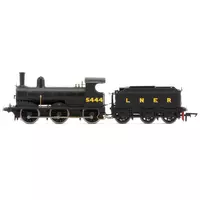
LNER, J15 Class, 0-6-0, 5444 - Era 3
-
Hornby
R30408
BR (Early) - Class J15 - 65465
-
Hornby
R30407
Great Eastern Railway - Class J15 - 564
-
Hornby
R3381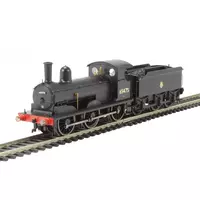
Class J15 0-6-0 65475 in BR black with early emblem
-
Hornby
R3230
Class J15 0-6-0 7524 in LNER Black
-
Hornby
R3232
Class J15 0-6-0 65445 in BR Black with late crest
-
Hornby
R3231
Class J15 0-6-0 65356 in BR Black with early emblem
-
Hornby
R3380
Class J15 0-6-0 7510 in LNER Black
Hornby BR J15 Class locomotive, model number 65464, is a ready‑to‑run OO‑scale representation of a British Railways 0‑6‑0 steam engine. The model is finished in pristine condition and carries the black livery with the Late Crest. It is fitted with a DCC‑ready 8‑pin socket and a 5‑pole motor with twin flywheel, driving all wheels. The locomotive uses a NEM coupling, a 2nd‑radius minimum curve of 438 mm and has a length of 218 mm.
The model is supplied by Sharp, Stewart & Co under Hornby part number R3416. It runs on OO gauge track, with power picked up from all wheels. The running number displayed is 65464, and the locomotive is presented in black colour with the British Railways Late Crest livery.
The prototype, originally designed by Thomas William Worsdell for the Great Eastern Railway as Class Y14, was built at Stratford Works between July 1883 and 1913. A total of 259 were produced in 27 batches, making it the most numerous GER freight type. The simple design allowed low axle loading, enabling operation across the network and even service on the Western Front during the First World War. After the 1923 Grouping the class became LNER J15, and later British Railways numbers in the 60 000 series.
Locomotive 65464 was built at Stratford under Order B70 and entered traffic in March 1912 as NER No 566. It was renumbered LNER 7566 after Grouping, then 5464 in January 1947, and finally BR 65464 on nationalisation. The engine spent its career at Stratford shed and was withdrawn on 16 September 1962, subsequently being scrapped at Cashmore’s in May 1963.