Dapol 4D-014-003D
Class 29 D6107 BR Blue Full Yellow Ends (DCC-Fitted)
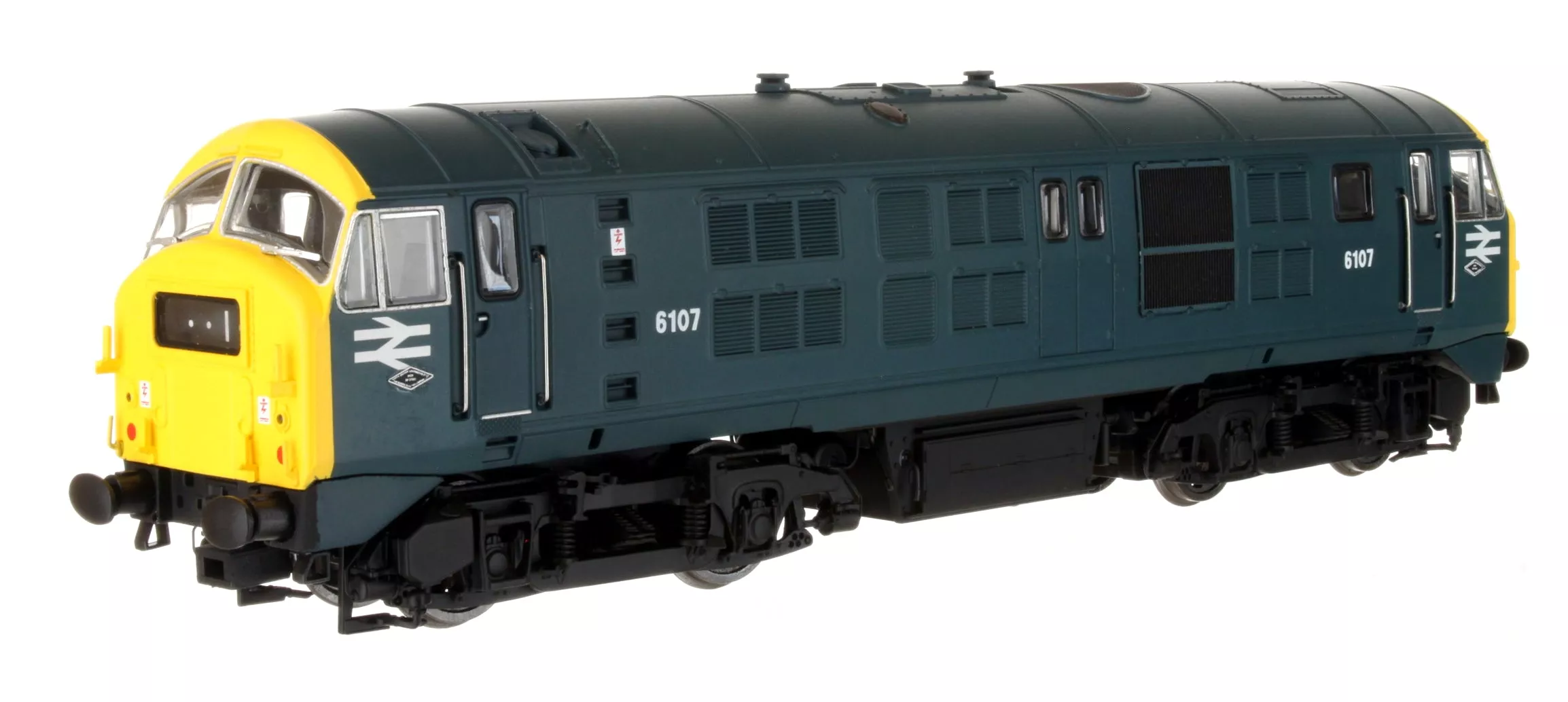
Manufacturer catalogue image - please note that pre-release images may be CAD renders or CGI/AI images rather than photographs
Prototype Eras
Era 4 (1948 to 1956) British Railways Early Crest
Era 5 (1956 to 1966) British Railways Late Crest
Era 6 (1967 to 1972) British Rail Blue (Pre-TOPS)
Manufacturer description
The BR Class 29 is a type of Bo-Bo diesel-electric locomotive designed for both freight and passenger use. Although outwardly similar to the Class 22, they actually share no mechanical parts and in fact were a modified Class 21 with a replacement Paxman engine with improvements to power output.
These modifications were carried out between 1963 and 1965 mainly at the Polmadie Traction & Rolling Stock Depot in Glasgow. After the rebuild, the locomotives returned to Scottish duties until their withdrawal in 1971. No Class 29 locomotives survive preservation. Dapol have managed to provide for the Class 21 also in the tooling and this will be made concurrently with the Class 29.
The first EP’s have arrived and are currently being evaluated by the design team and a series of corrective measures will be made to each of the models to ensure that they are as true to the prototype as possible.
Catalogue listing
Model details
Directional lighting
Prototype information
* Class names often change over the lifespan of a locomotive, so this is not necessarily the class name used by the operator in the period modelled.
Supplier Links


Supplier links are provided for your convenience and do not guarantee that the product is currently available. RailwayModels.uk is not a representative of these suppliers, but may receive a commission when purchases are made through links on this page.
Related products
-
Dapol
4D-014-002
Class 29 #D6129 BR Blue Full Yellow Warning Panel
-
Dapol
4D-014-002D
Class 29 #D6129 BR Blue Full Yellow Warning Panel - DCC Fitted
-
Dapol
4D-014-003
Class 29 D6107 BR Blue Full Yellow Ends
-
Dapol
4D-014-002S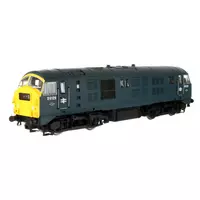
Class 29 D6129 BR Blue FYP DCC Sound Fitted
-
Dapol
4D-014-000
Class 29 6112 in BR green with full yellow ends
-
Dapol
4D-014-000D
Class 29 6112 in BR green with full yellow ends - DCC fitted
-
Dapol
4D-014-000S
Class 29 6112 in BR green with full yellow ends - DCC sound fitted
-
Dapol
4D-014-001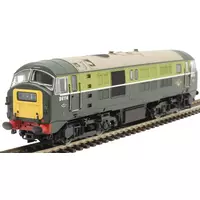
Class 29 D6114 in BR two tone green with small yellow panels
-
Dapol
4D-014-001D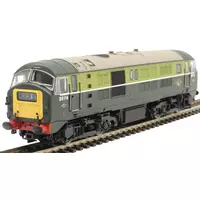
Class 29 D6114 in BR two tone green with small yellow panels - DCC fitted
-
Dapol
4D-014-001S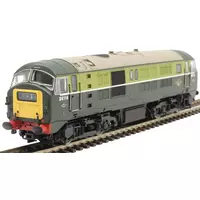
Class 29 D6114 in BR two tone green with small yellow panels - DCC sound fitted
-
Dapol
4D-014-004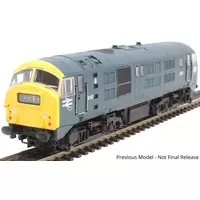
Class 29 D6100 BR Blue FYP
-
Dapol
4D-014-006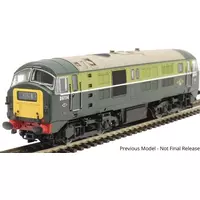
Class 29 D6132 BR Two Tone Green SYP
-
Dapol
4D-014-006D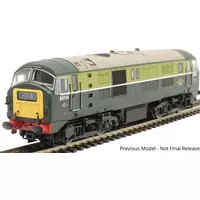
Class 29 D6132 BR Two Tone Green SYP (DCC-Fitted)
-
Dapol
4D-014-006S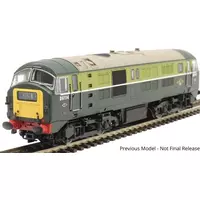
Class 29 D6132 BR Two Tone Green SYP (DCC-Sound)
-
Dapol
4D-014-004S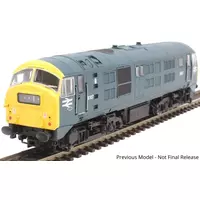
Class 29 D6100 BR Blue FYP (DCC-Sound)
-
Dapol
4D-014-005S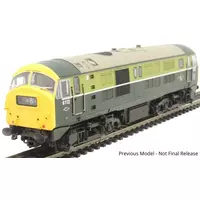
Class 29 6101 BR Two Tone Green FYE (DCC-Sound)
-
Dapol
4D-014-005D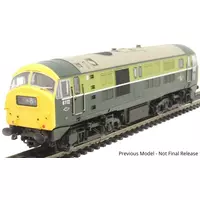
Class 29 6101 BR Two Tone Green FYE (DCC-Fitted)
-
Dapol
4D-014-005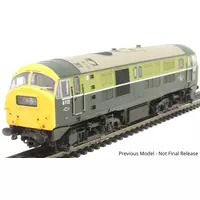
Class 29 6101 BR Two Tone Green FYE
-
Dapol
4D-014-004D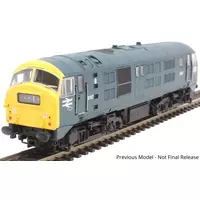
Class 29 D6100 BR Blue FYP (DCC-Fitted)
-
Dapol
4D-014-003S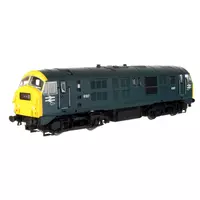
Class 29 D6107 BR Blue, Headcode Box (Full Yellow End) Diesel Locomotive DCC Sound
The Dapol Class 29 D6107 BR Blue, Headcode Box (Full Yellow End) Diesel Locomotive is a model of a British Rail Class 29 locomotive. This model is designed for OO gauge model railways and is fitted with a digital command control system.
The model features a number of details, including etched grilles, directional lighting, and finely printed external logos and numbering. The locomotive's body is made with detailed components and includes separately fitted handrails. The wheels are finely detailed and cast, while the buffers are made of metal and sprung.
The model is powered by a 5 pole super creep motor with twin brass flywheels, providing controlled pulling power and slow running speed. All four wheels have electrical pick-up and the model features independent directional and cab lighting.
The model is available in a BR Blue livery and is suitable for use with a 2 rail DCC system. The locomotive's specifications are as follows: gauge OO, DCC status DCC Fitted, finish pristine, livery blue, running number D6107, and interior and directional lighting.
The British Rail Class 29 is a type of Bo-Bo diesel-electric locomotive designed for both freight and passenger use. It was built by the North British Locomotive Co. between 1963 and 1967, with a total of 20 locomotives produced. The Class 29 was a modified version of the Class 21, with a replacement Paxman engine and improvements to power output. The locomotives were primarily used in Scotland and were withdrawn from service in 1971.
The Dapol model of the Class 29 is part of a forthcoming range of models, which will also include a model of the Class 21. The models are currently being evaluated by the design team and are expected to be released soon.