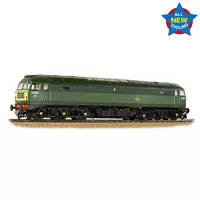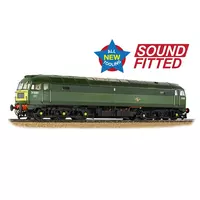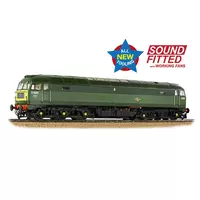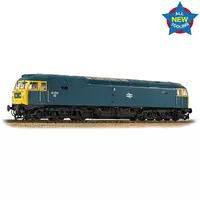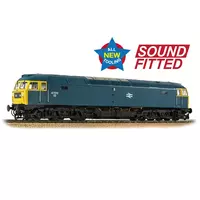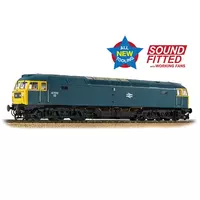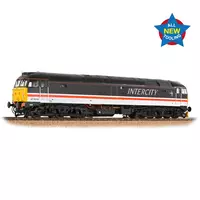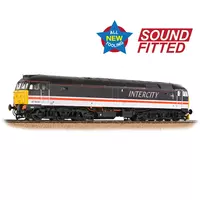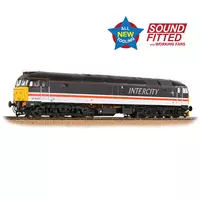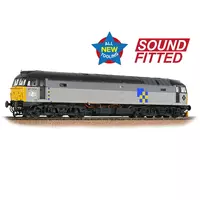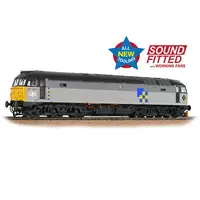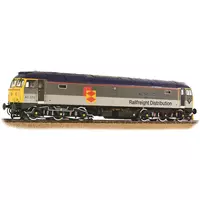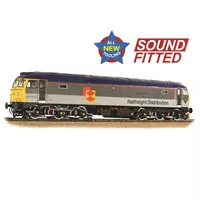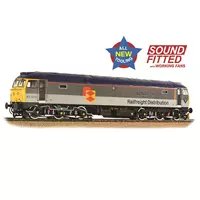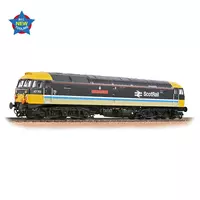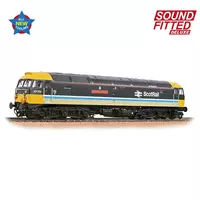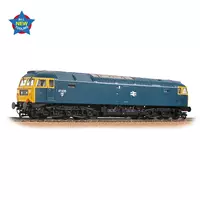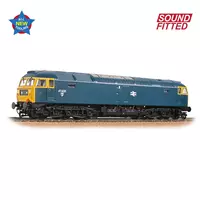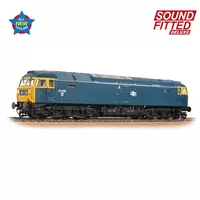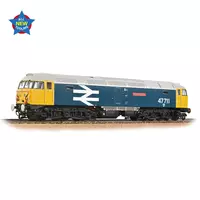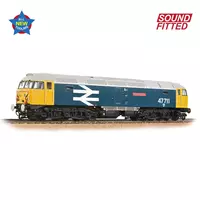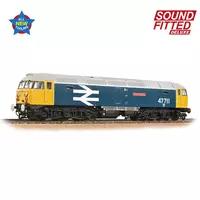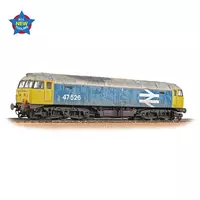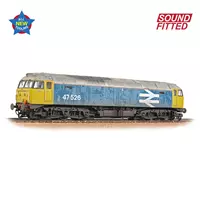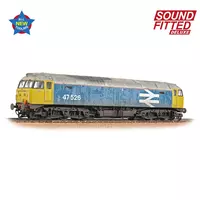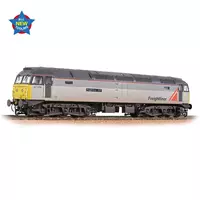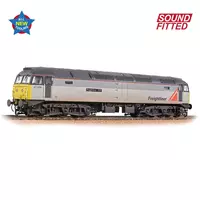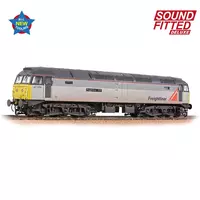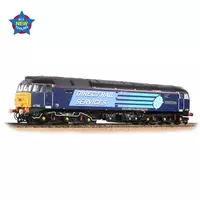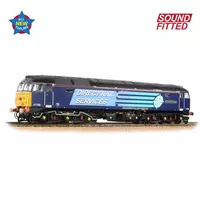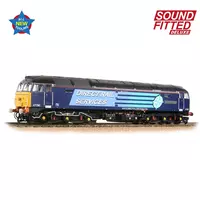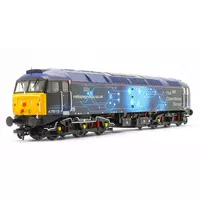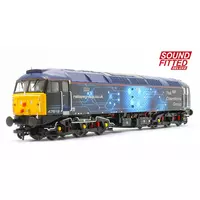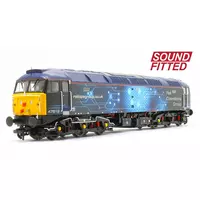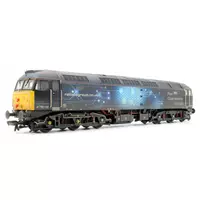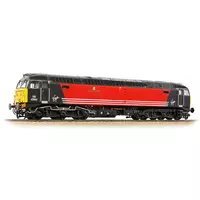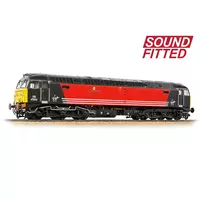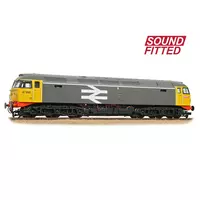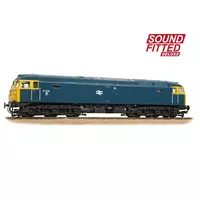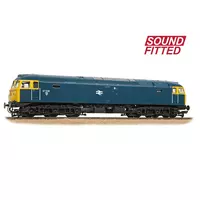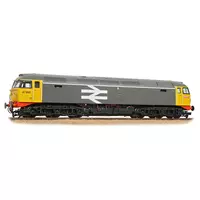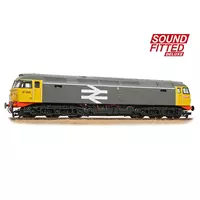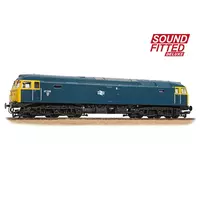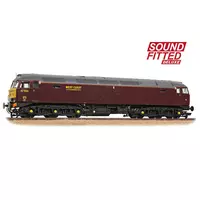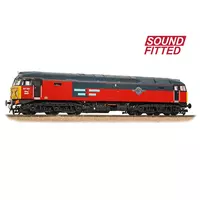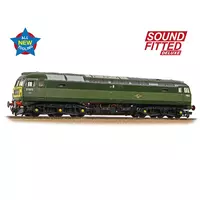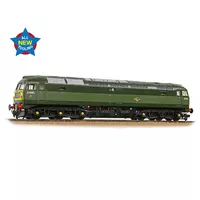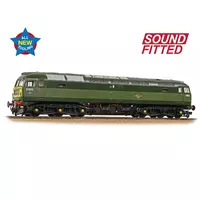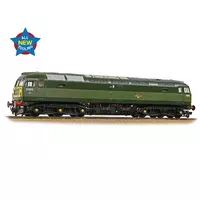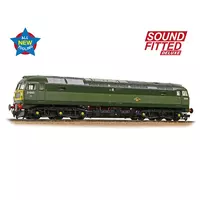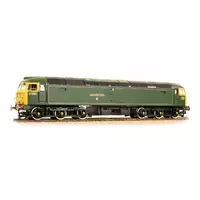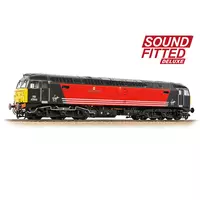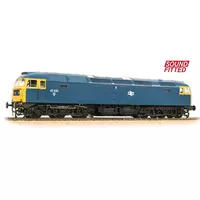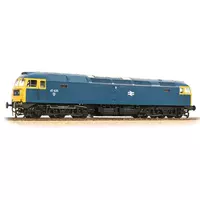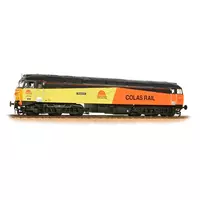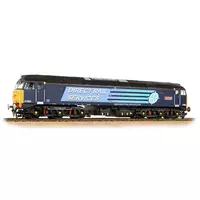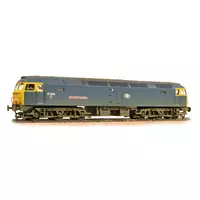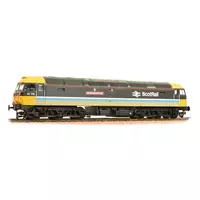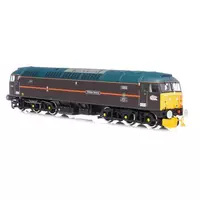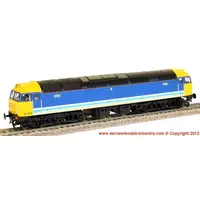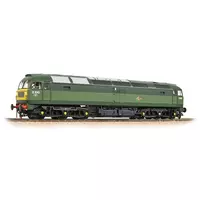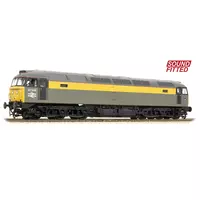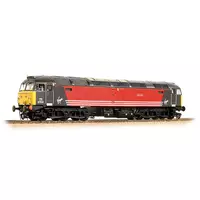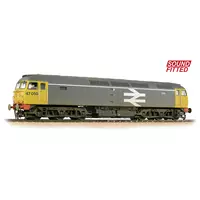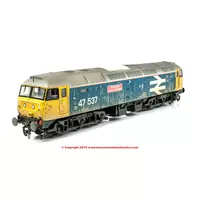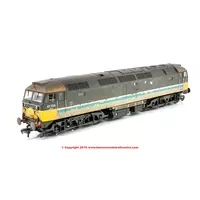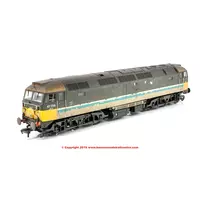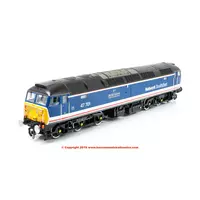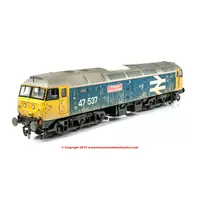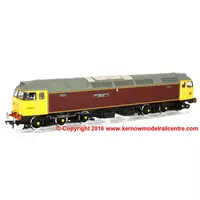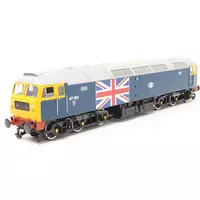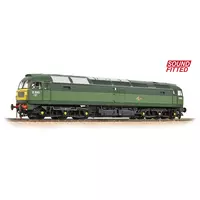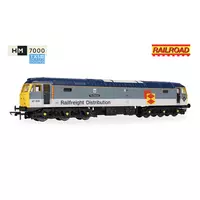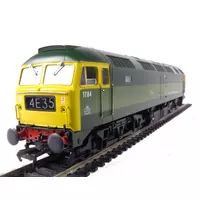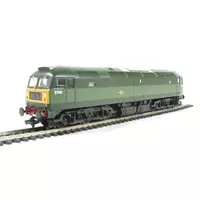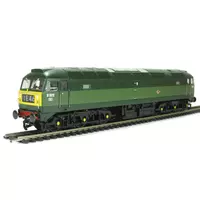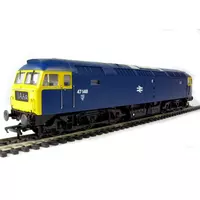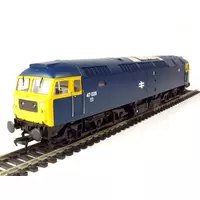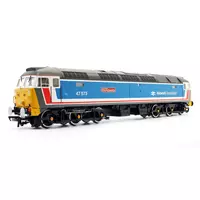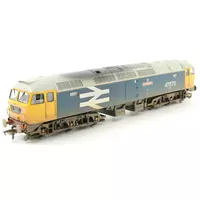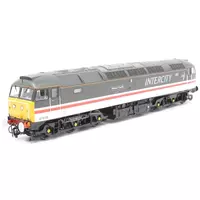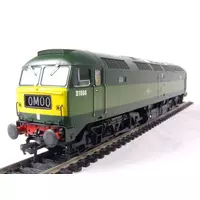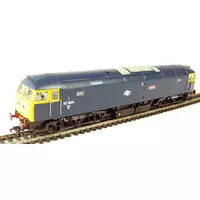
Manufacturer catalogue image - please note that pre-release images may be CAD renders or CGI images rather than photographs
Prototype Era
Era 8 (1983 to 1994) British Rail Sectorisation
Manufacturer description
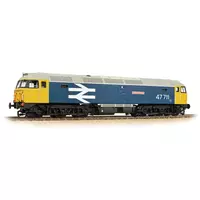
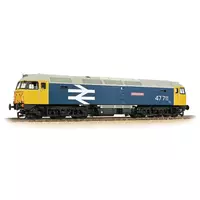
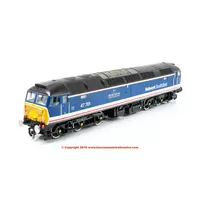
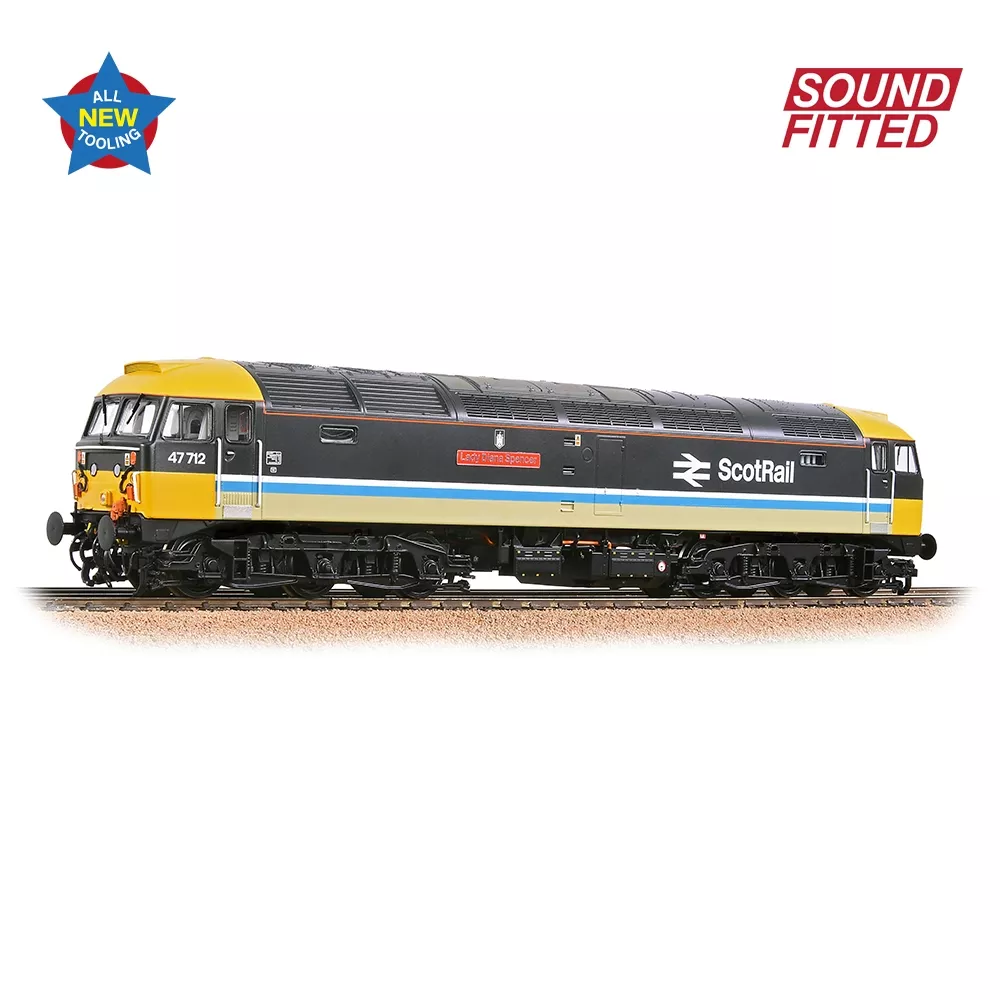
As part of our Spring 2022 British Railway Announcements, we are delighted to present the stunning new Bachmann Branchline Class 47/7 as No. 47712 'Lady Diana Spencer' in BR ScotRail livery.
Following the release of the first of the all-new Bachmann Branchline Class 47s in late-2021, this new addition brings BR ScotRail livery to the new Class 47 for the first time. With high fidelity mouldings, numerous separately fitted parts and countless tooling variations to capture the minutiae of the real locomotives throughout their lives - ensuring each model is faithful to its prototype – our new 47 is brought to life with an exquisite livery application using true-to-prototype colours, fonts and logos. Along with an unprecedented array of lighting features, our new Dual Fitted speaker system is fitted to all models, bringing to life our SOUND FITTED models. For the ultimate experience, choose our SOUND FITTED DELUXE models with their ground-breaking motorised radiator fans and authentic tinted windscreen glazing!
- Bachmann Branchline OO Scale
- Era 9
- Pristine BR ScotRail livery
- Named ‘Lady Diana Spencer’
- Running No. 47712
- Etched Nameplates included
- SOUND FITTED - Fitted with a ESU Loksound V5DCC Sound Decoder – See below for the function list
- Length 255mm
DETAIL VARIATIONS SPECIFIC TO THIS MODEL
- Plated Headcode Panel at No. 1 End and Sealed Beam Marker Lights at No. 2 End
- Single Bufferbeam Bracket denoting a Brush-built Machine
- Cab-Front-mounted ETH Equipment
- Scottish Jumper Cables
- Single Arm Windscreen Wipers
- High Intensity Headlights
- Round Buffers
- Kickplate below Cab Door
- Full Cab Roof Vents
- Serck Radiator Grilles
- Ribbed Exhaust Panels
- Blanked Roof Boiler Port
- Later Extended Range Fuel Tanks
- Battery Box Cooling Pipes
- Plated Bogie-mounted Cab Steps
- Slow Speed Speedo Drive (fitted at the No. 2 End)
MECHANISM:
- Five pole, twin shaft motor with two flywheels providing drive to both bogies
- All axle drive
- Electrical pickup from all wheels
- Separate metal bearings fitted to each axle
- Diecast metal chassis block and bogie towers
- Diecast metal gearboxes, with gearing arranged for prototypical running speeds and haulage capabilities
- 16.5mm (OO gauge) wheels to NEM310 & NEM311 standards with authentic profile and detailing
- Detachable coupling pockets to NEM362 standards fitted to each bogie
- Designed to operate on curves of second radius (438mm) or greater
DETAILING:
- Bogies constructed from multiple components featuring full relief detail
- Rotating radiator fans, driven by an independent motor and gearbox, operated via a DCC function, or randomised when operated as part of the sound project on DCC and Analogue control (SOUND FITTED DELUXE models only)
- Tinted windscreen glazing (SOUND FITTED DELUXE models only)
- Separately applied metal detail parts, including grab handles, windscreen wipers and etched fan grilles
- Sprung metal buffers
- Each model supplied with a full set of decorated, model-specific bufferbeam pipework and accessory parts
LIGHTING:
- Directional lighting, switchable on/off at either end on DCC or Analogue control
- Cab lighting*, assigned to two DCC functions for separate switching of each
- Separately switched Engine Room lighting* (*when used on DCC)
- Authentic light colours and temperatures selected for each model based on era and application
DCC:
- Plux22 DCC decoder interface
SOUND:
- Two quality speakers employed for optimum sound reproduction, fitted to every model as standard
- ESU Loksound V5DCC Sound Decoder fitted to SOUND FITTED and SOUND FITTED DELUXE versions
- Sound files produced specifically for the Bachmann Branchline Class 47 using recordings from real locomotives
- SOUND FITTED and SOUND FITTED DELUXE models operate on DCC and Analogue control as supplied. On Analogue, an authentic engine start up sequence, including the momentary dimming of all lights during engine start up, and running sounds are produced when power is applied
LIVERY APPLICATION:
- Authentic liveries applied to all models
- Multiple paint applications employed on each model using BR specification colours
- Logos, numerals and text added as appropriate using multi-stage tampo printing using authentic typefaces, logos and colours
SOUNDS
F0 - Directional Lights - On/Off (plus Light Switch Sound)
F1 - On - Warm Engine Start / On, Off - Failed Engine Start / On, Off, On - Cold Engine Start
F2 - Brake
F3* - Horn (Playable)
F4* - Two-Tone Horn
F5 - Heavy Load
F6 - Coasting (Manual notch Down if F22 On)
F7 - Maximum Revs (Manual notch Up if F22 On)
F8** - On - Coupling Up / Off - Uncoupling
F9 - Flange Squeal (Speed Related)
F10 - Fan Noise
F11 - Engine Room Lights On/Off (plus Light Switch Sound)
F12 - On - Guard’s Whistle / Off - Driver’s Response Horn
F13 - Cab Lights On/Off No. 1 (plus Light Switch Sound)
F14 - Cab Lights On/Off No. 2 (plus Light Switch Sound)
F15 - Auto Uncouple Cycle
F16 - AWS Horn
F17 - AWS Bell
F18 - On - Sound Fades Out / Off - Sound Fades In
F19 - Mute (Latch) / Volume Cycles 6 Levels (Trigger)
F20 - No. 1 End (Fan) Directional Lights Off
F21 - No. 2 End (non-Fan) Directional Lights Off
F22 - Manual Notching Logic On/Off (control with F6 & F7)
F23 - Spirax Valve
F24 - Station Announcement
F25 - On - Driver’s Door Open / Off - Driver’ Door Shut
F26 - Air Dump
*Alternative Horn sounds and behaviour can be selected via CV changes
** Alternative coupling sounds can be selected via CV changes
Analogue Users: Please note that normal load running sounds and any other automatic or randomised sounds will also operate when this model is used on analogue control (DC) straight from the box!
CLASS 47 HISTORY
Towards the end of the 1950s, British Railways began planning a new fleet of diesel locomotives and after investigating several prototypes, BR decided to place an order with Brush Engineering for 20 locomotives during February 1961. The resulting design became the iconic Brush Type 4 Diesel locomotive, a practical, versatile design with a very distinctive cab. Powered with a Sulzer engine and initially rated at 2,750hp, the locomotive could achieve a top speed of 75mph with a tractive effort of 55,000lb. Building commenced in January 1962 and the first locomotive No. D1500 appeared in late September of the same year with test runs on the London Midland Region and Western Region. The design was a success and BR went on to order a total of 512 with continuous production through to early 1967, forming the largest single class of main-line diesel locomotives in the UK.
During this time and subsequent years, several variations appeared with an increase in speed and tractive effort to 95mph and 62,000lb respectively. Originally fitted with four character train reporting head-codes, these changed to marker lights, with the addition of high intensity lights and roof aerials in the late 1980s. Other variations involved the fitting of different types of steam heating boiler for early BR coaching stock, later replaced with electric train heating for use with modern rolling stock. The numbering system started with four figures but changed to five with the introduction of the TOPS coding system which saw the locomotives classified as Class 47 Diesels with variations such as 47/0, 47/2, 47/3, 47/4 and 47/7. By the end of the 1990s, half of the Class 47 fleet had been withdrawn or scrapped, 33 have been converted into Class 57 locomotives and several have been preserved, including the original No. D1500, now numbered 47401.
Catalogue listing
Model details
Pickup in tender
Directional lighting
Prototype information
British Rail Crewe Works
Advenza Freight
Anglia
Caledonian Sleeper
Colas Rail
Cotswold Rail
Direct Rail Services
EWS
First Great Western
FM Rail
Fragonset
Freightliner
GB Railfreight
Harry Needle Railroad Co.
ONE
Porterbrook
Rail Operations Group
Riviera Trains
Victa Westlink Rail
Virgin Trains
Waterman Railways
West Coast Railway Co.
(Later derated to 2,580 hp)
* Class names often change over the lifespan of a locomotive, so this is not necessarily the class name used by the operator in the period modelled.
Supplier Links


Supplier links are provided for your convenience and do not guarantee that the product is currently available. RailwayModels.uk is not a representative of these suppliers, but may receive a commission when purchases are made through links on this page.