Bachmann 32-942SF
Class 150/2 2-Car DMU 150247 BR Provincial (Sprinter)
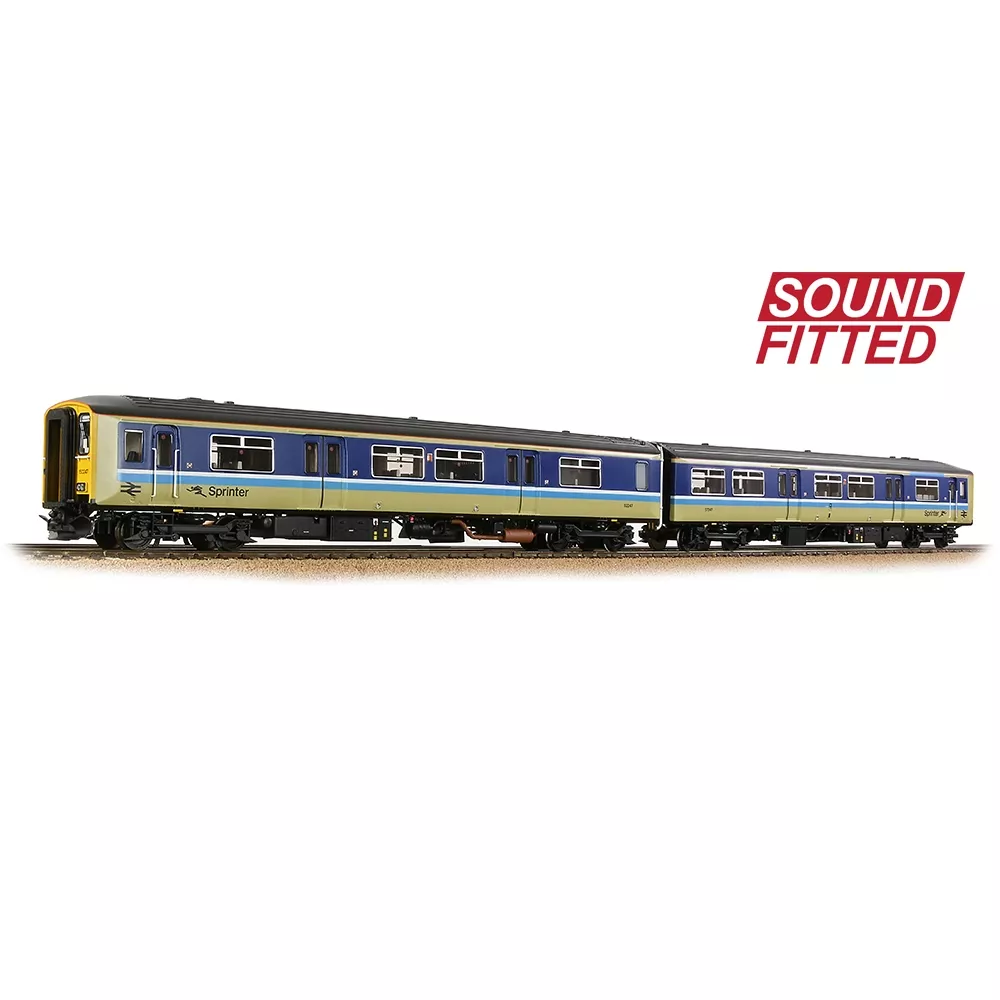
Manufacturer catalogue image - please note that pre-release images may be CAD renders or CGI/AI images rather than photographs
Prototype Era
Era 8 (1983 to 1994) British Rail Sectorisation
Manufacturer description
We are delighted to present the Bachmann Branchline Class 150/2 2-Car DMU in BR Provincial (Sprinter) livery as part of the Winter 2021 British Railway Announcements.
The Class 150/2 Diesel Multiple Units were characterised by the corridor connectors on the cab ends (as opposed to the flush ends of the 150/1s) and when first built the corridor doors had small windows, a feature not previously catered for on the Branchline model. However, following development of the tooling suite this feature can now be modelled authentically and is seen for the first time on this model of Class 150/2 No. 150247. Both vehicles that make up this two car unit are highly detailed on both the bodyshells and underframe, and the interiors are not overlooked either, all of which is enhanced by the exquisite livery application using authentic colours, graphics and logos. Powered by a five pole motor and with SOUND FITTED, you can enjoy the added dimension of realistic sound effects when operated on analogue control or DCC straight out of the box!
MODEL FEATURES:
- Bachmann Branchline OO Scale
- Era 8
- Pristine BR Provincial (Sprinter) livery
- Running No. 150247
- Comprises Car Nos. 52247 and 57247
- Destination blinds for Blackpool North and Manchester Victoria
- Accessory Pack
- NEM Coupling Pockets
- Powerful 5 Pole Motor with Flywheel
- Interior Detailing
- Interior Lighting
- Directional Lighting
- SOUND FITTED - Fitted with a ESU Loksound V5DDC Sound Decoder – See below for the function list
- Length 540mm
SOUNDS
F0 - Lights - On/Off (plus Light Switch Sound)
F1 - On - Warm Engine Start / On, Off - Failed Engine Start / On, Off, On - Cold Engine Start
F2* - Brake
F3 - Horn (Playable)
F4** - Double Toot Horn
F5 - Heavy Load
F6 - Coasting (Manual notch Down if F21 On)
F7 - Maximum Revs (Manual notch Up if F21 On)
F8*** - On - Coupling Up / Off - Uncoupling
F9 - Flange Squeal (Speed Related)
F10 - On - Carriage Doors Open / Off - Carriage Doors Shut
F11 - Spirax Valve
F12 - On - Guard’s Whistle / Off - Driver’s Response Buzzer & Horn
F13 - Compressed Air Let Off
F14 - Uncoupling Cycle
F15 - Air Build Up
F16 - Carriage Heating
F17**** - AWS
F18 - On - Sound Fades Out / Off - Sound Fades In
F19 - Mute (Latch) / Volume Cycles 6 Levels (Trigger)
F20 - Station Announcement
F21 - Manual Notching Logic On/Off (control with F6 & F7)
F22 - Sanding Valve
F23 - Fire Bell Test
* Alterative Brake sounds can be selected via CV changes
**Alternative Horn characteristics can be selected via CV changes
*** Alternative coupling sounds can be selected via CV changes
**** Alternative AWS sound can be selected via CV change
Analogue Users: Please note that normal load running sounds and any other automatic or randomised sounds will also operate when this model is used on analogue control (DC) straight from the box!
CLASS 150 DMU HISTORY
The British Rail Class 150 ‘Sprinter’ is a class of diesel multiple unit passenger train built by BREL York from 1984 to 1987. A total of 137 units were produced in three main subclasses, replacing many of the earlier, first generation ‘heritage’ DMUs. The first subclass, the 150/0, comprised a pair of prototype units.
The second batch which comprised fifty units was classified 150/1s and numbered in the range 150101-150. Like the prototype units, they did not have front-end corridor connectors which are fitted to allow passengers to move between units when working in multiple. Originally based at Derby Etches Park depot, these units were introduced in 1986, mainly concentrated around Birmingham and Manchester, and in later years restricted mainly to commuter services. Today the entire fleet is concentrated on the Northern franchise, mainly working around Manchester to places like Buxton, Sheffield, Liverpool, Southport and Carnforth.
The final batch of 85 two car units were built with front-end corridor connectors. These units were classified as Class 150/2s and numbered in the range 150201-285. The Class 150/2s were used on longer-distance services and have operated in Scotland, Wales, the West of England and the North.
Catalogue listing
Model details
NEM pockets
Directional lighting
Pickup in tender
Prototype information
Arriva Trains Northern
Arriva Trains Wales
Central Trains
First North Western
Great Western Railway
London Midland
London Overground
Northern Rail
Northern Trains
ONE
ScotRail
Silverlink
Transport for Wales
Wales & West
Wessex Trains
West Midlands Trains
* Class names often change over the lifespan of a locomotive, so this is not necessarily the class name used by the operator in the period modelled.
Supplier Links


Supplier links are provided for your convenience and do not guarantee that the product is currently available. RailwayModels.uk is not a representative of these suppliers, but may receive a commission when purchases are made through links on this page.
Related products
-
Bachmann
32-930
Class 150/1 2-Car DMU 150133 BR GMPTE (Regional Railways)
-
Bachmann
32-930SF
Class 150/1 2-Car DMU 150133 BR GMPTE (Regional Railways)
-
Bachmann
32-942
Class 150/2 2-Car DMU 150247 BR Provincial (Sprinter)
-
Bachmann
32-943SD
Class 150/1 2-Car DMU 150139 London Northwestern Railway
-
Bachmann
32-943SDSF
Class 150/1 2-Car DMU 150139 London Northwestern Railway
-
Bachmann
32-941
Class 150/2 2-Car DMU 150220 Northern
-
Bachmann
32-935XS
Class 150/2 2 Car DMU number 150 216
-
Bachmann
32-935X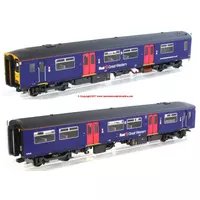
Class 150/2 2 Car DMU number 150 216
-
Bachmann
32-939DS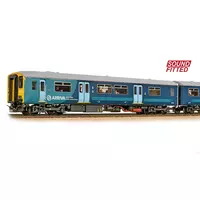
Class 150/2 2-Car DMU 150236 Arriva Trains Wales (Revised)
-
Bachmann
32-931SF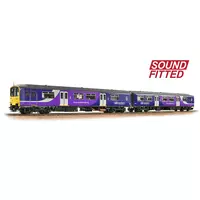
Class 150/1 2-Car DMU 150143 Northern Rail
-
Bachmann
32-931
Class 150/1 2-Car DMU 150143 Northern Rail
-
Bachmann
32-929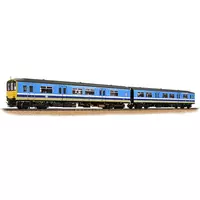
Class 150/1 2-Car DMU 150115 BR Provincial (Original)
-
Bachmann
32-940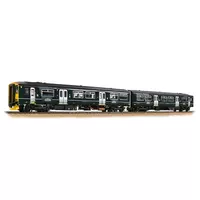
Class 150/2 2-Car DMU 150216 GWR Green (FirstGroup)
-
Bachmann
32-929SF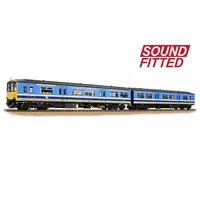
Class 150/1 2-Car DMU 150115 BR Provincial (Original)
-
Bachmann
32-937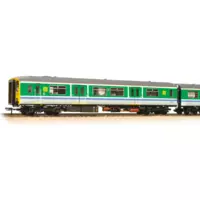
Class 150/2 2 car DMU 150202 in Regional Railways Centro blue stripe livery
-
Bachmann
32-925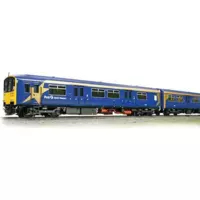
Class 150/1 150144 2-car DMU in First North Western livery - Destinations Preston & Blackpool
-
Bachmann
32-925A
Class 150/1 2 Car DMU in First North Western livery - weathered
-
Bachmann
32-925K
Class 150/1 2 Car DMU 150123 Richard Crane in Silverlink Livery- Collectors club ltd edn
-
Bachmann
32-925Z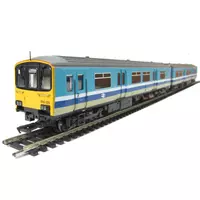
Class 150/1 2 car DMU Original Provincial livery. Limited edition
-
Bachmann
32-926
Class 150/1 Sprinter 2 car DMU 150125 in Central Trains livery - Destination: Dorridge/Snow Hill
-
Bachmann
32-935
Class 150/2 2 car DMU Arriva Trains Wales/Trenau Arriva Cymru livery. Shrewsbury/ Cardiff
-
Bachmann
32-935Y
Class 150/2 Sprinter 2 Car DMU 150252 in ScotRail Blue Red & White Livery
-
Bachmann
32-935Z
Class 150/2 2 car DMU in Merseyrail livery. Hattons Limited edition of 512. Manchester Vic/ Liverpool
-
Bachmann
32-936
Class 150/2 Sprinter 2-car DMU 150270 in Regional Railways livery - Destinations Leeds & York
-
Bachmann
32-938
Class 150/2 2-car DMU 150204 in Northern Rail livery
-
Bachmann
32-928
Class 150/1 2-car DMU 150150 in BR Regional Railways Sprinter livery - weathered
-
Bachmann
32-927
Class 150/1 2 car DMU 150128 in First Great Western livery
Bachmann Branchline OO‑scale model of a British Rail Class 150/2 two‑car diesel multiple unit, running number 150247, in the BR Provincial (Sprinter) livery. The model carries the manufacturer part number 32‑942SF and represents the British Rail sectorisation era.
The model is 540 mm long, with a Bo‑Bo wheel arrangement and a pristine finish. It features the correct British Rail Provincial colours, graphics and logos, and includes destination blinds for Blackpool North and Manchester Victoria as well as NEM coupling pockets.
Key technical features include a five‑pole motor with flywheel, DCC sound fitted via an ESU Loksound V5DDC decoder, interior and directional lighting, and a range of sound functions covering engine start, braking, horn, coupling, AWS and station announcements. The model is fully equipped for both DCC and analogue (DC) operation straight from the box.
The prototype unit was built between 1986 and 1987, operated by British Rail Provincial, and capable of a maximum speed of 75 mph. It belongs to the Class 150/2 subclass of Sprinter DMUs, originally fitted with front‑end corridor connectors for passenger movement between coupled units.