Hornby R3585
RailRoad BR, Class 90, Bo-Bo, 90135 - Era 8
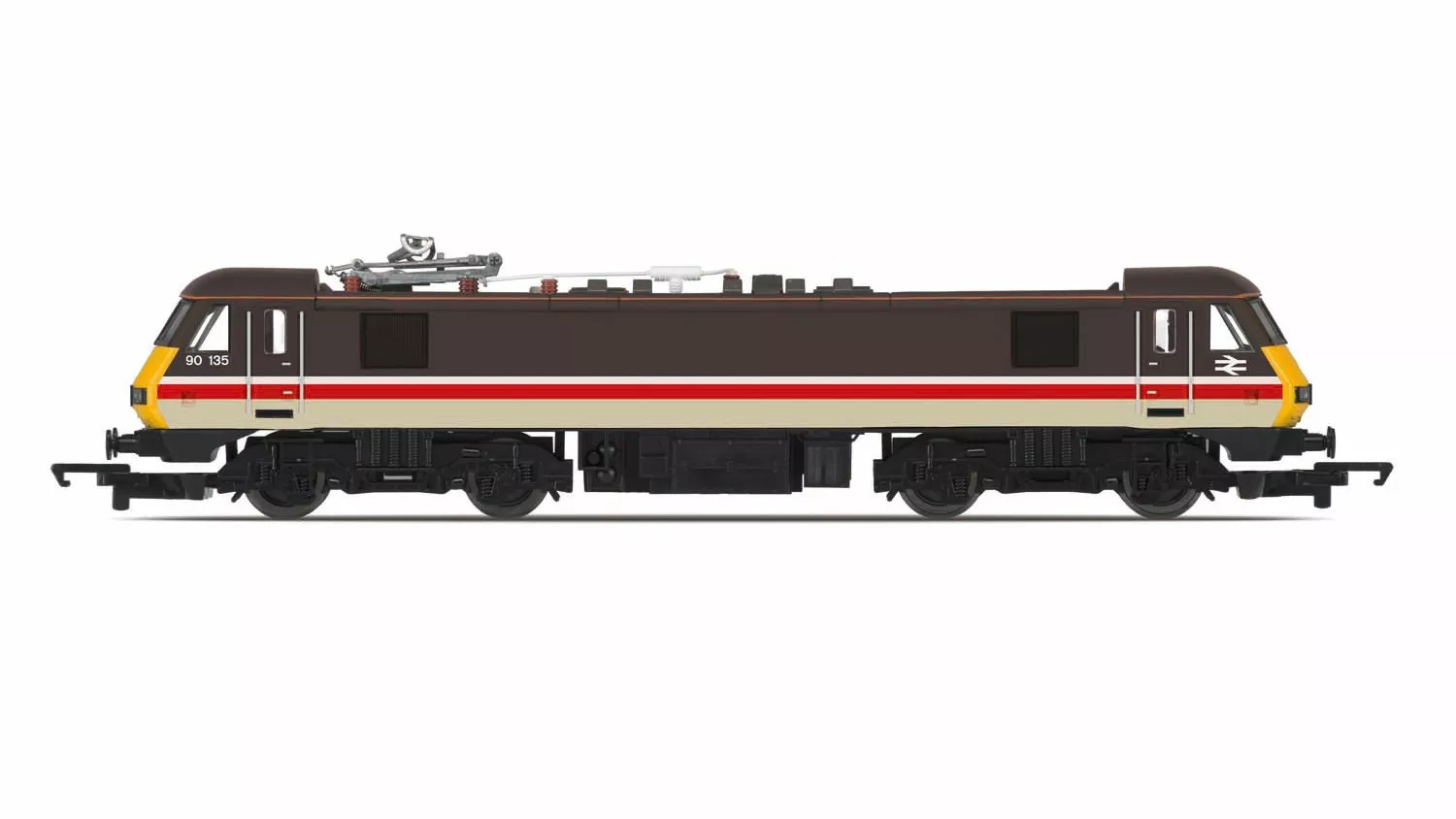
Manufacturer catalogue image - please note that pre-release images may be CAD renders or CGI/AI images rather than photographs
Prototype Eras
Era 6 (1967 to 1972) British Rail Blue (Pre-TOPS)
Era 8 (1983 to 1994) British Rail Sectorisation
Manufacturer description
Developed from the Class 87, the Class 90 locomotives were manufactured and assembled at Crewe Works by BREL from 1985 until their completion in 1990.
Designed as a replacement for locomotives from the Class 81 through to the Class 85, the Class 90 entered service as a mixed traffic locomotive, working both freight and passenger trains. The original fleet size consisted of 50 locomotives, numbered 90001 through to 90050. Although, the original number sequence for the Class took the form of 87/2, a system that was short lived. The first locomotive, 90001, left Crewe Works on October 12, 1987 and went straight to Derby for testing, yet it was July 1988 before the first passenger service was hauled. A Time-Division Multiplexer (TDM) was fitted, enabling two or more locomotives to work as multiple units, this allowed a Class 90 to haul a push-pull passenger train, working with a Driving Van Trailer (DVT).
The original allocation of locomotives saw 90001 to 90025 working passenger services on the West Coast Mainline, along with cross country services from Euston, Manchester/Liverpool and Glasgow, as well as Manchester and Liverpool to Birmingham. As such, the Class 90s were the first new locomotives to carry the InterCity 21st Anniversary 'Swallow' livery. The remainder were assigned to freight duties, although it was not unusual at the time to see freight engines working both passenger duties, or vice versa.
Maximum curve Hornby 2nd radius + / 438mm+.
Catalogue listing
Model details
Prototype information
DB Cargo UK
Freightliner
Greater Anglia
Virgin Trains
EWS
First ScotRail
ONE
GNER
& more
* Class names often change over the lifespan of a locomotive, so this is not necessarily the class name used by the operator in the period modelled.
Supplier Links



Supplier links are provided for your convenience and do not guarantee that the product is currently available. RailwayModels.uk is not a representative of these suppliers, but may receive a commission when purchases are made through links on this page.
Related products
-
Hornby
R3924
Malcolm Rail, Class 90, Bo-Bo, 90024 - Era 11
-
Hornby
R30230
100 Years of Malcolm Rail, Class 90, 1922 - 2022 - Era 11 (Club Exclusive)
-
Hornby
R30529TXS
RailRoad: BR - Intercity Class 90 - 'Royal Scot' 90001 (DCC Sound Fitted)
-
Hornby
R30528TXS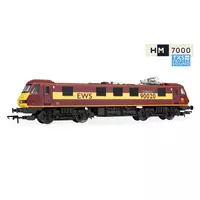
RailRoad: EWS - Class 90 - 'Collingwood 90020' (DCC Sound Fitted)
-
Hornby
R30529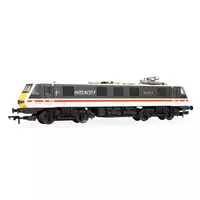
RailRoad: BR - Intercity Class 90 - 'Royal Scot' 90001
-
Hornby
R30528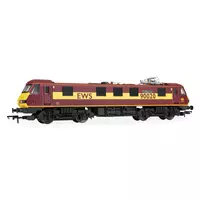
RailRoad: EWS - Class 90 - 'Collingwood' 90020
-
Hornby
R3350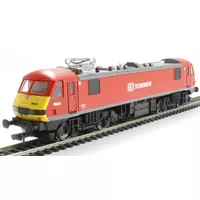
Class 90 90029 in DB Schenker livery
-
Hornby
R3053A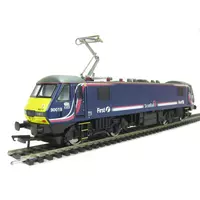
Class 90 90019 First Scotrail with EWS cabside branding.
-
Hornby
R2955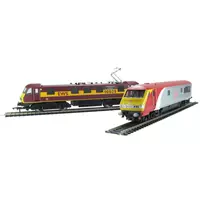
Virgin Charter Relief Train Pack with Class 90 90029 in EWS livery and DVT 82126 in Pretendolino livery
-
Hornby
R3053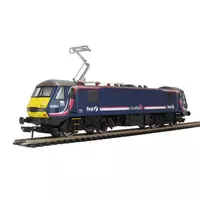
Class 90 90021 in First Scotrail Livery with EWS cabside branding
-
Hornby
R3077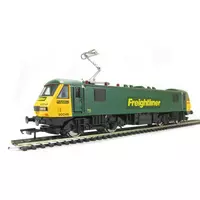
Class 90 90046 in original Freightliner Green/Yellow
-
Hornby
R3474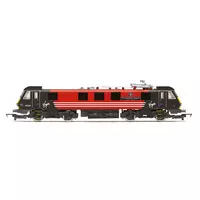
Class 90 90015 The International Brigades in Virgin livery - Planned but not produced
-
Hornby
R3475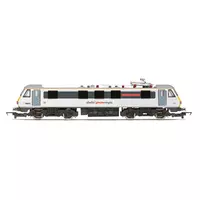
Class 90 90014 Norfolk and Norwich Festival in Greater Anglia livery - Planned but not produced
-
Hornby
R2358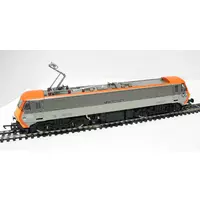
Class 90 90130 Fretconnection in SNCF grey & yellow livery
-
Hornby
R2473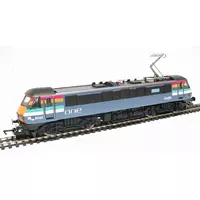
Class 90 90003 Raedwald of East Anglia in Anglia One livery
-
Hornby
R2482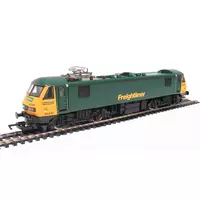
Class 90 90041 in Freightliner green livery
-
Hornby
R2588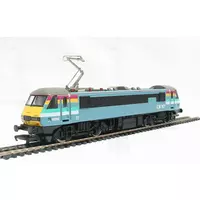
Class 90 90005 Vice Admiral Lord Nelson in Anglia One livery
-
Hornby
R2663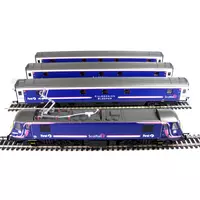
Caledonian Sleeper train pack with Class 90 and 3 Mk 3 coaches in First ScotRail livery
-
Hornby
R2663A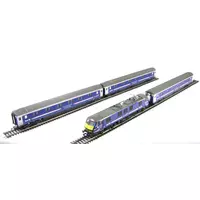
Class 90 and 3 Mk3 sleepers Caledonian Sleeper train pack with First Scotrail
-
Hornby
R2005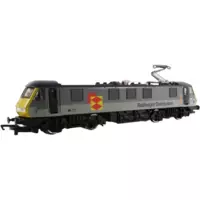
Class 90 90135 in Railfreight Distribution grey
-
Hornby
R2048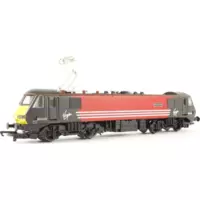
Class 90 90002 Mission Impossible in Virgin Livery - Model Rail special edition
-
Hornby
R2067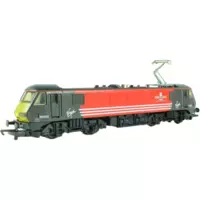
Class 90 90012 British Transport Police in Virgin livery
-
Hornby
R2109A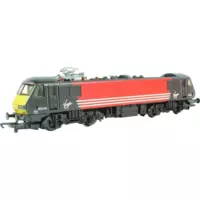
Class 90 90014 in Virgin livery
-
Hornby
R595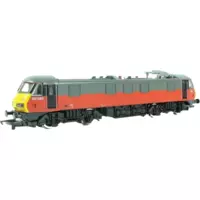
Class 90 90020 Sir Michael Heron in Parcels Sector Red & Black
-
Hornby
R2109B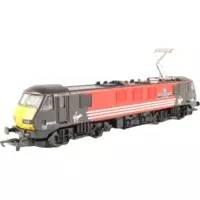
Class 90 90015 The International Brigade Spain 1936-1939 in Virgin livery
-
Hornby
R2110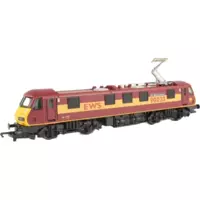
Class 90 90020 Sir Michael Heron in EWS livery
-
Hornby
R2236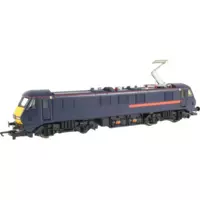
Class 90 90024 in GNER navy blue livery
-
Hornby
R2291A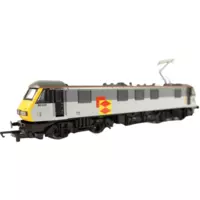
Class 90 90037 in Railfreight Distribution grey
-
Hornby
R2291B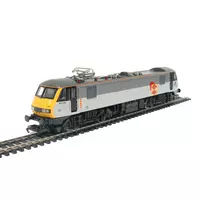
Class 90 90039 in Railfreight Distribution grey
-
Hornby
R2292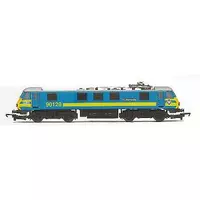
Class 90 90128 Vrachtverbinding in Belgian Railway SNCB livery
-
Hornby
R2330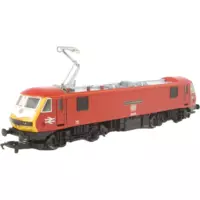
Class 90 90029 Frachtverbingungen in BR/DB red livery
-
Hornby
R270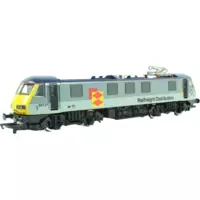
Class 90131 Railfreight Distribution grey
Hornby RailRoad BR Class 90 Bo‑Bo locomotive (model number 90135) is an OO gauge, DCC‑ready model featuring a 5‑pole skew wound motor and a pristine finish in the Main Line livery. The model measures 245 mm in length, is coloured grey and rides on a power‑bogie only. It uses a standard 8‑pin DCC socket, a 2nd radius minimum curve of 438 mm, non‑NEM couplings on the locomotive and NEM/tension‑lock couplings on the tender. The model bears the running number 90135 and is named “W.P. Allen”.
The prototype is an electric mixed‑traffic locomotive built by British Rail Engineering Ltd at Crewe Works between 1985 and 1990. A total of 50 Class 90 locomotives were produced, numbered 90001–90050. The first example left Crewe on 12 October 1987, underwent testing at Derby and entered passenger service in July 1988. Equipped with a Time‑Division Multiplexer, the locomotives could operate as multiple units and haul push‑pull trains with a Driving Van Trailer.
Originally allocated to the West Coast Main Line for passenger duties, the first 25 units also performed cross‑country services from Euston, Manchester, Liverpool and Glasgow, while the remaining locomotives were primarily used for freight. The class was withdrawn in December 1964 after 16 years of service, having reached a maximum speed of 75 mph (110 km/h) and a wheel arrangement of Bo‑Bo. The Hornby model represents the British Rail sectorisation era.