Hornby R3417
BR, K1 Class, 2-6-0, 62065 - Era 5
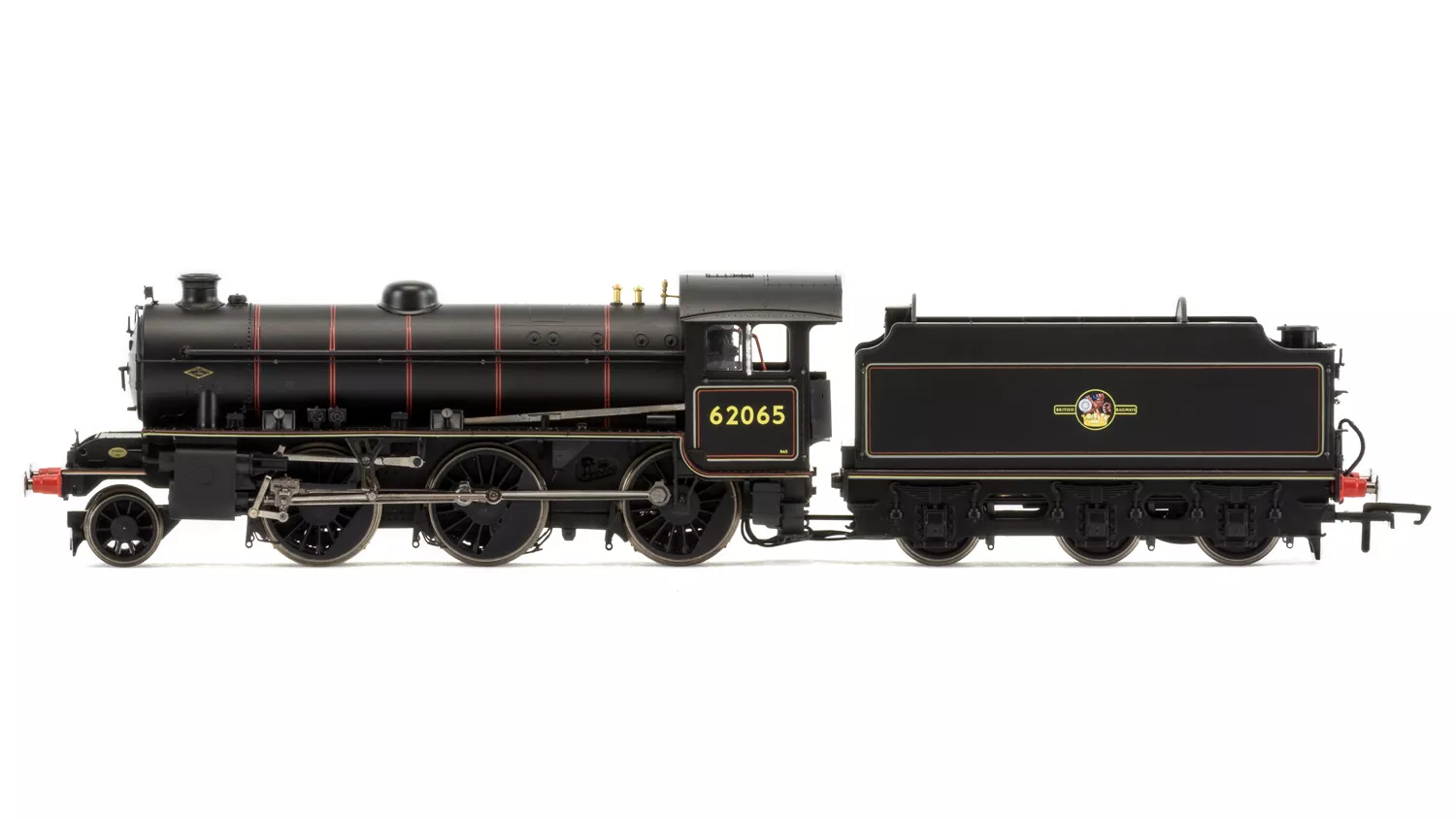
Manufacturer catalogue image - please note that pre-release images may be CAD renders or CGI/AI images rather than photographs
Prototype Eras
Era 4 (1948 to 1956) British Railways Early Crest
Era 5 (1956 to 1966) British Railways Late Crest
Manufacturer description
Inspired by Thompson's rebuilt Gresley K4 in which it was reclassified as a K1/1, the only locomotive in that particular Class, A. H. Peppercorn took advantage of Thompson's retirement in 1946 to develop the design into the K1 Class. The K1 Class, which was made up of 70 locomotives, were all built in Glasgow at the North British Locomotive Company's Park Works over a 10 month period between May 1949 and March 1950. As was the North British Locomotive Company's all of the Class were sent to Eastfield shed, Glasgow for running in before being sent to England where they were used for both freight and express passenger workings. Thirty of the Class were sent to the Eastern Region while the remaining forty were dispatched to the North Eastern Region.
Many of the North Eastern K1s were often seen as far North as Edinburgh and early on in their working life were regularly used on the West Highland line. A significant number of those allocated to the Eastern Region were based at March. All of the Class were fitted with electric lighting and self-cleaning smoke boxes identified with an SC plate situated just beneath the shed plate while some were fitted with AWS (Automatic Warning System). The first 50 K1 locomotives were outshopped in black with 'British Railways' emblazoned on the tender while the remaining twenty were released with the early BR emblem.
From 1957 all of the Class received the BR crest. As described the Class were used throughout the former LNER network as they were proven to be an incredible mixed traffic locomotive with each of the Class being paired with a 4200 gallon tender as used with the LNER/BR Class B1 locomotive. During the early to mid-1950s the K1s were starting to be transferred from the GE Section of the Eastern Region with the result that by 1961 only eight remained at March, however by the middle of 1962 these had been moved to Retford and Doncaster.
Withdrawal of the K1s began in December 1962 but it was a very slow demise as it took a full five years before the last locomotive, 62005 was withdrawn from service on the Eastern Region in 1967. Luckily 62005 survived into preservation and can be seen operating, at the time of writing on the North Yorkshire Moors Railway. Locomotive 62065 entered traffic, allocated to Darlington Shed, on January 23, 1950 and in June that year the engine was transferred to Stockton Shed, where it spent nearly nine years.
A short spell at Low Moor between June and August 1959 was followed by a final allocation to York, where 62065 spent the rest of its service life. Sold for scrap to A. Draper's of Hull on July 4, 1967, the locomotive was finally cut up on August 28, 1967.
Catalogue listing
Model details
Prototype information
LNER
British Railways
* Class names often change over the lifespan of a locomotive, so this is not necessarily the class name used by the operator in the period modelled.
Supplier Links



Supplier links are provided for your convenience and do not guarantee that the product is currently available. RailwayModels.uk is not a representative of these suppliers, but may receive a commission when purchases are made through links on this page.
Related products
-
Hornby
R3418
BR, K1 Class, 2-6-0, 62006 - Era 4
-
Hornby
R3242
BR 2-6-0 K1 Class - Early BR
-
Hornby
BUNDLEH10
Eastern Suburban - K1 + Gresley Era 5 - Bundle
-
Hornby
R3671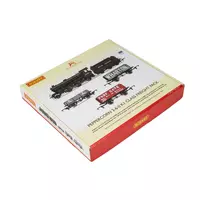
Peppercorn 2-6-0 K1 Class Freight Pack - Era 4
-
Hornby
R3305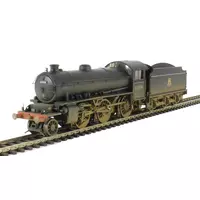
Class K1 2-6-0 62059 in BR Black with early emblem - weathered
-
Hornby
R3242A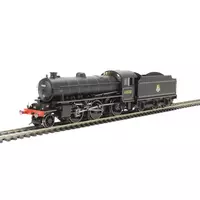
Class K1 2-6-0 62032 in BR Black with early emblem
-
Hornby
R3243A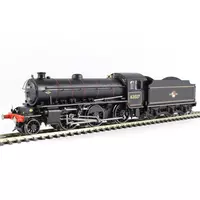
Class K1 2-6-0 62027 in BR Black with late crest
-
Hornby
R3243
Class K1 2-6-0 62024 in BR Black with late crest
-
Hornby
R3243B
Class K1 2-6-0 62064 in BR Black with late crest
Hornby BR K1 Class locomotive 62065 is an OO gauge model in Era 5. It is painted black with the late British Railways crest and carries the running number 62065. The model measures 243 mm in length, features a 3‑pole motor with flywheel, and is fitted with a DCC‑ready 8‑pin socket. Power is collected from the driving wheels and tender wheels, and it uses NEM couplings. The minimum curve radius is 2nd radius (438 mm). The manufacturer part number is R3417.
The prototype K1 Class was designed by Edward Thompson and built by the North British Locomotive Company between May 1949 and March 1950. Seventy locomotives were produced, all with a 2‑6‑0 wheel arrangement and 4200‑gallon tenders. They were allocated to Eastfield shed for running in before being distributed to the Eastern and North Eastern Regions of British Railways, where they performed mixed‑traffic duties on both freight and express passenger services. The class received electric lighting, self‑cleaning smokeboxes and, on some units, the Automatic Warning System. From 1957 the locomotives bore the British Railways crest.
Locomotive 62065 entered service on 23 January 1950, initially allocated to Darlington shed. In June of the same year it was transferred to Stockton shed, where it remained for almost nine years. A brief stint at Low Moor followed in June–August 1959, after which it was allocated to York shed for the remainder of its working life. The engine was withdrawn and sold for scrap to A. Draper’s of Hull on 4 July 1967 and was cut up on 28 August 1967.
The Hornby model reproduces these details in a painted black livery with the late BR crest, offering a historically accurate representation of the K1 Class for collectors and railway enthusiasts. It is compatible with standard OO gauge layouts and ready for digital command control operation.