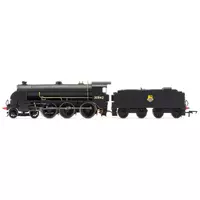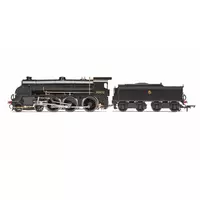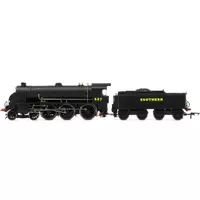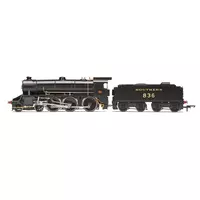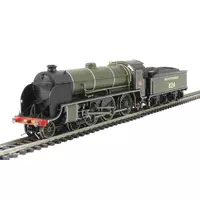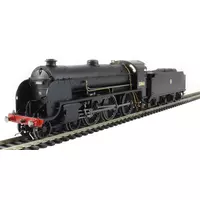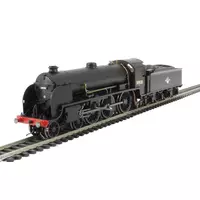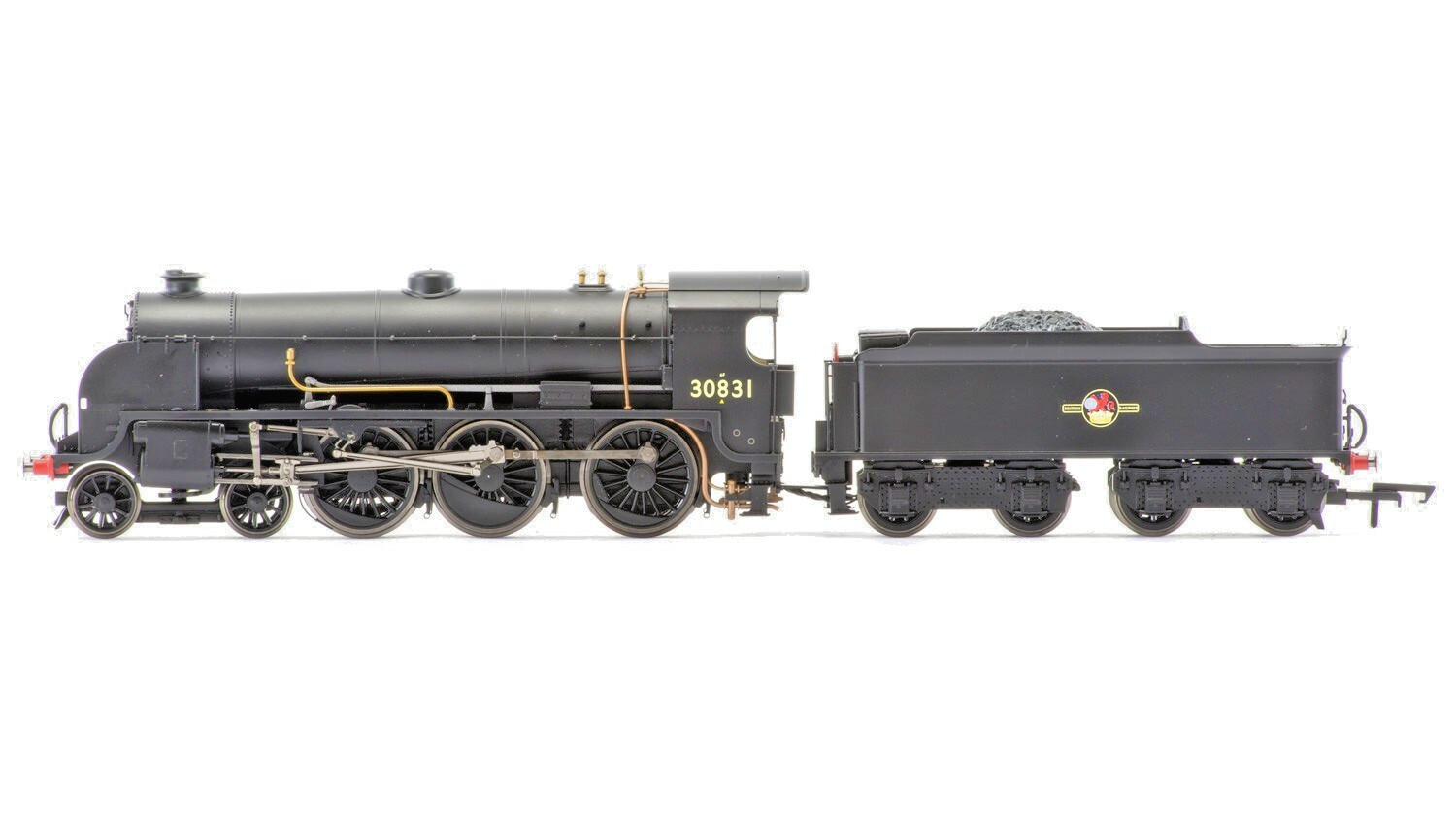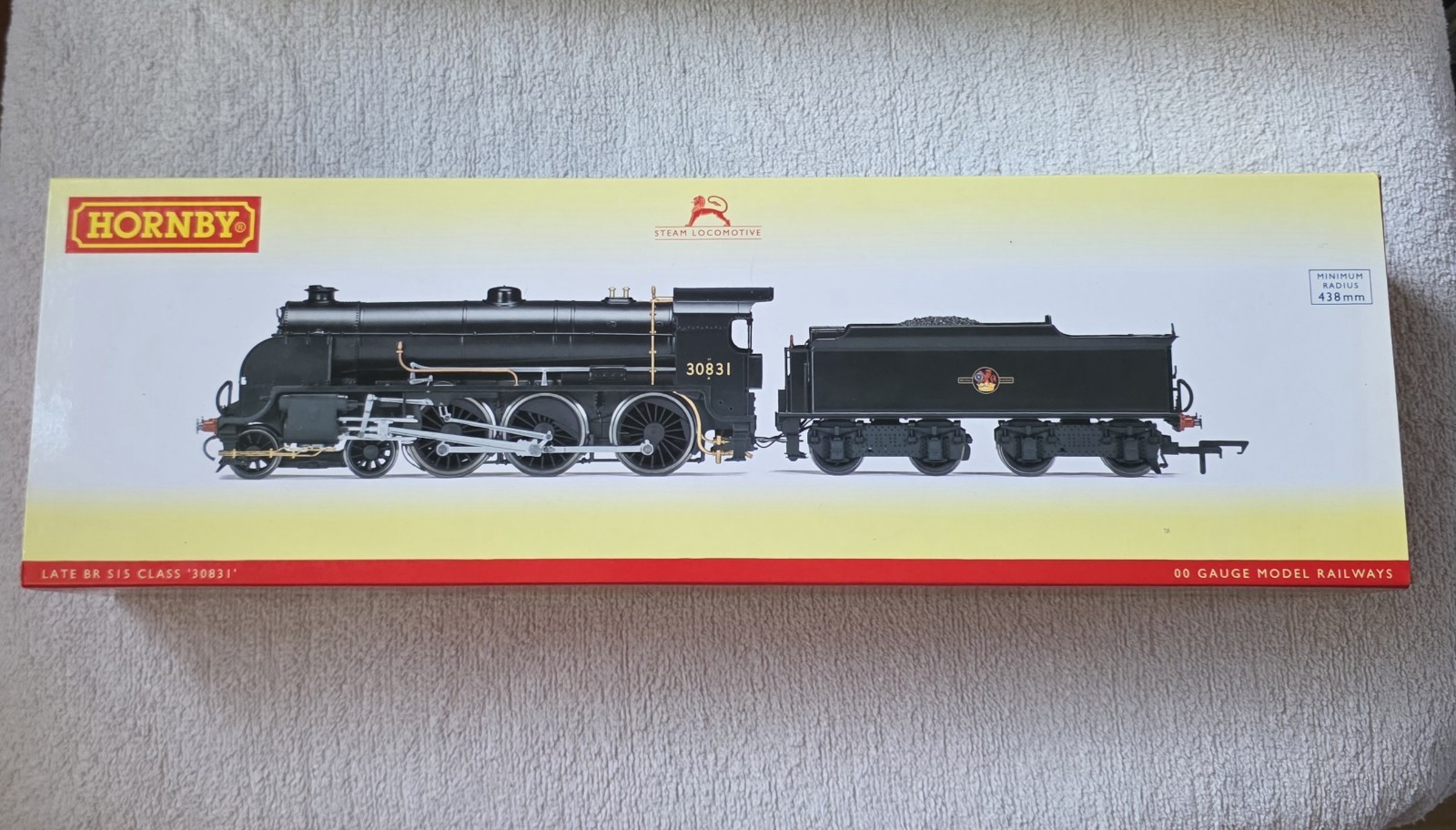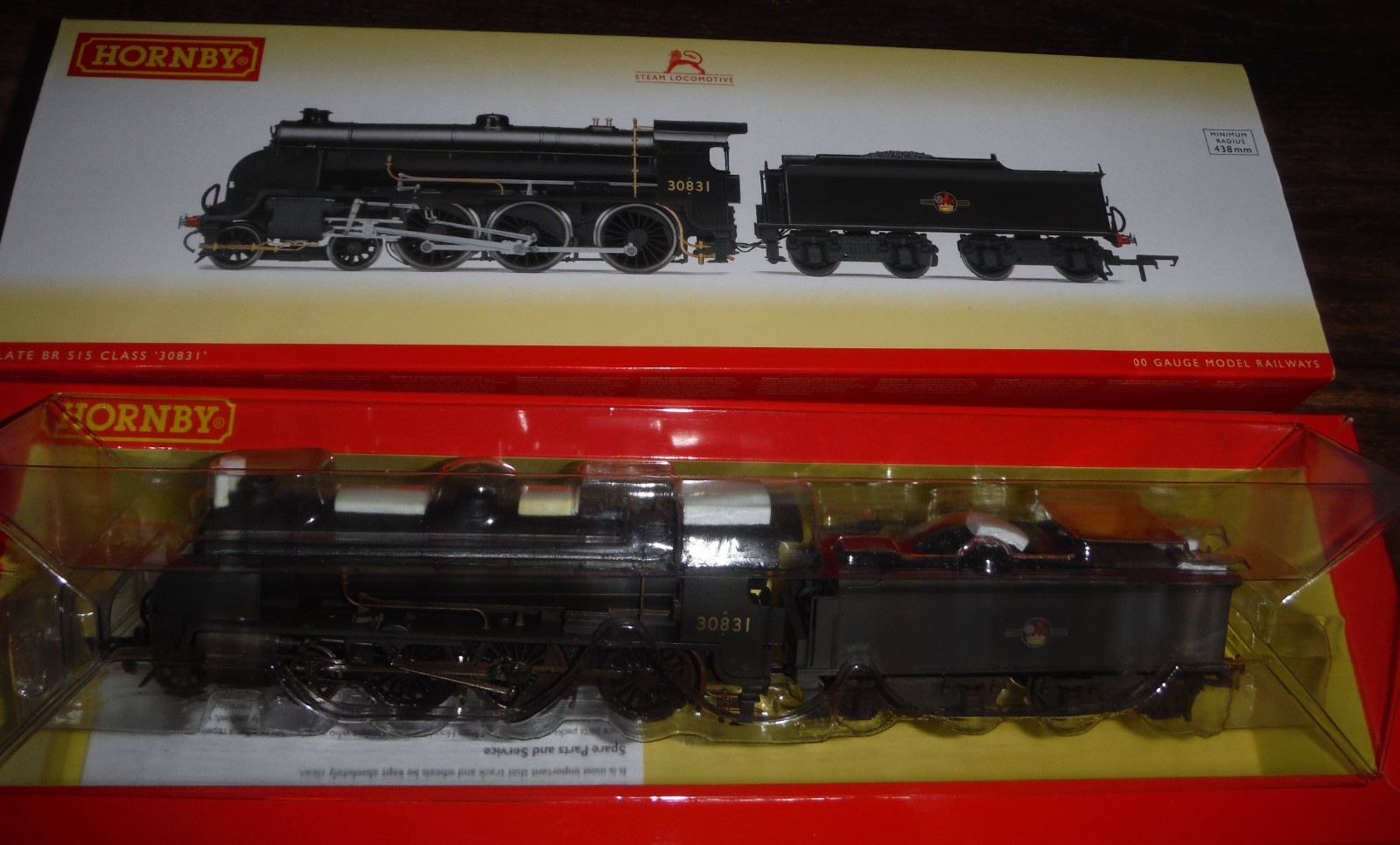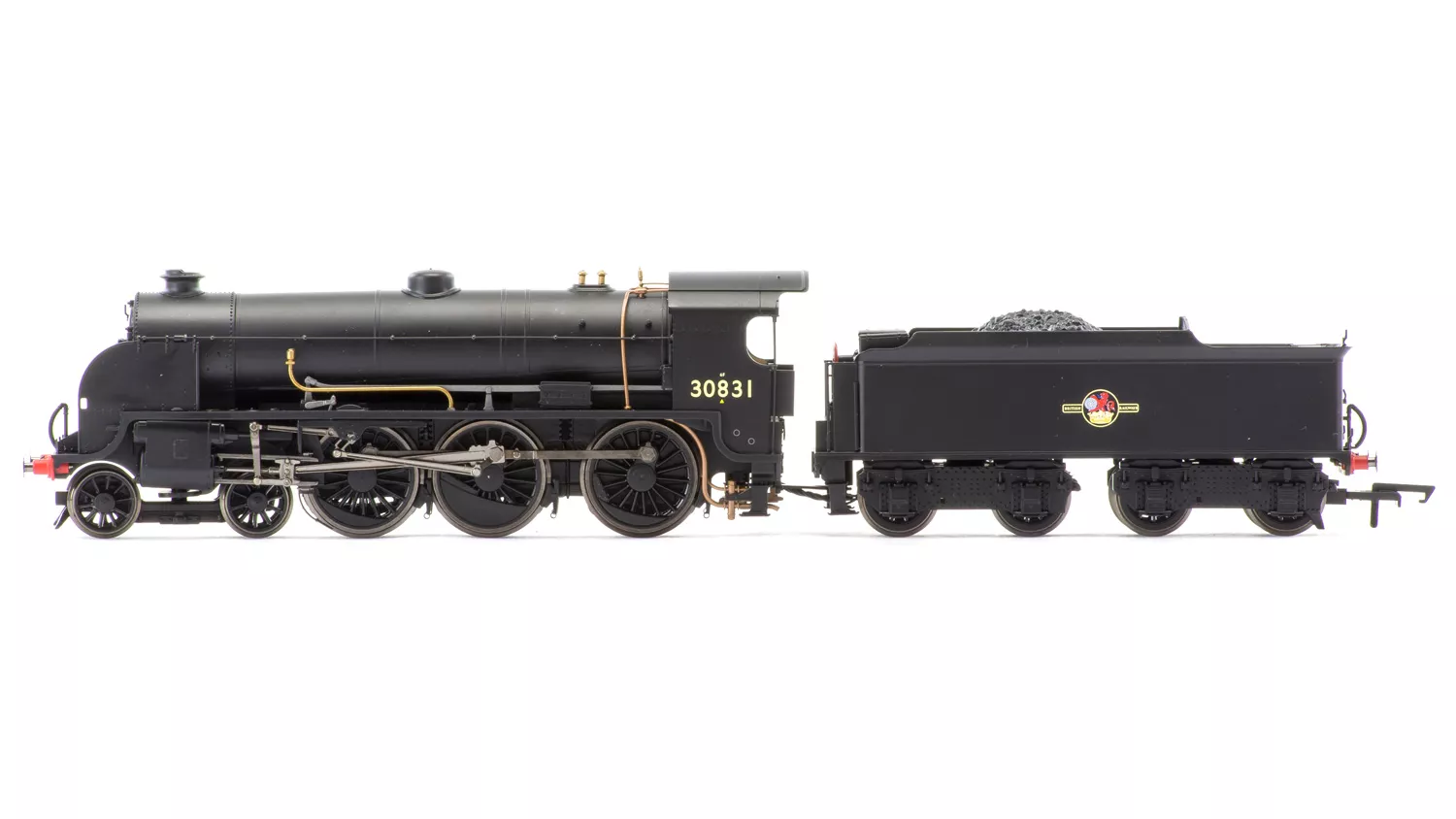
Manufacturer catalogue image - please note that pre-release images may be CAD renders or CGI/AI images rather than photographs
Prototype Eras
Era 4 (1948 to 1956) British Railways Early Crest
Era 5 (1956 to 1966) British Railways Late Crest
Manufacturer description
The third of Robert Urie's 4-6-0 designs for the LSWR and similar in appearance to the N15 class, the S15 shared many of its two predecessor's components such as in the boiler, cylinder, valve gear and tender designs. The only major difference in design for the S15 came in the smaller diameter of the driving wheels. This gave better traction, which was essential for the S15's anticipated heavy freight workings to the south coast ports.
By May 1921, sixteen engines had entered service, mostly in the London area but the 1923 Grouping of Railway Companies coincided with Urie's retirement and further orders of the S15 were delayed as the new CME, Richard Maunsell, sought to improve the design, establishing trials to analyze water/coal consumption of the engines along with their ability to run to a precise schedule. When these trials showed that the S15 was the best available all-round freight locomotive, Maunsell ordered a further fifteen locomotives from the workshops at Eastleigh, the finished locomotives emerging throughout 1927 and 1928.
Maunsell's modifications to the S15 included increasing the boiler pressure and the reduction of the cylinder bore. The footplate was also modified and featured the Ashford style cab, constructed entirely from steel, as previously fitted to LBSCR locomotives. The roof was flush with the cab sides and variants of this became standard for all new Southern Railway locomotives and converted tank engines. Other modifications included lengthening the valve travel and fitting larger outside steam pipes to streamline the flow of steam into the cylinders.
Maunsell's revised design was marginally heavier than that of Urie's, weighing in at 80 tons 14 cwt, against the 79 tons 16 cwt of the latter Six wheeled, 4,000 gallon tenders were paired with some of the locomotives, allowing them to be turned on the shorter turntables found in the central part of the Southern network, the rest of the class being equipped with 5,000 gallon, eight wheel bogie tenders, which allowed the class to operate on the extended freight routes of the Southern Railway's western section. The standardization measures undertaken, by both Urie and Maunsell, resulted in tenders and other parts being swapped with those of other classes on the Southern Railway when locomotives were under overhaul.
A third batch, ordered in 1931, coincided with a downturn in the volume of freight owing to the economic depression which meant that the last of the S15 class was not completed until 1936. These showed some weight saving modifications, as well as the application of smoke deflectors to improve visibility from the footplate when travelling at speed. The S15 proved to be an adaptable class and were capable of putting up a creditable performance when pressed into passenger service during peak holiday periods.
They just outlived the N15 class, the first withdrawals coming in 1962, the last being in 1966. Locomotive 30842 was one of the last batch of S15s, being built at Eastleigh works during August 1936 and spent alternating periods at 70B Feltham shed and 70D Eastleigh shed before disposal in November 1965.
Catalogue listing
Model details
Prototype information
Southern Railway
British Railways
Some Passenger
* Class names often change over the lifespan of a locomotive, so this is not necessarily the class name used by the operator in the period modelled.
Supplier Links



Supplier links are provided for your convenience and do not guarantee that the product is currently available. RailwayModels.uk is not a representative of these suppliers, but may receive a commission when purchases are made through links on this page.