Heljan 2523
BR Hunslet Class 05 Diesel Shunter 'DEPARTMENTAL 88' BR Green with Wasp Stripes - Type B
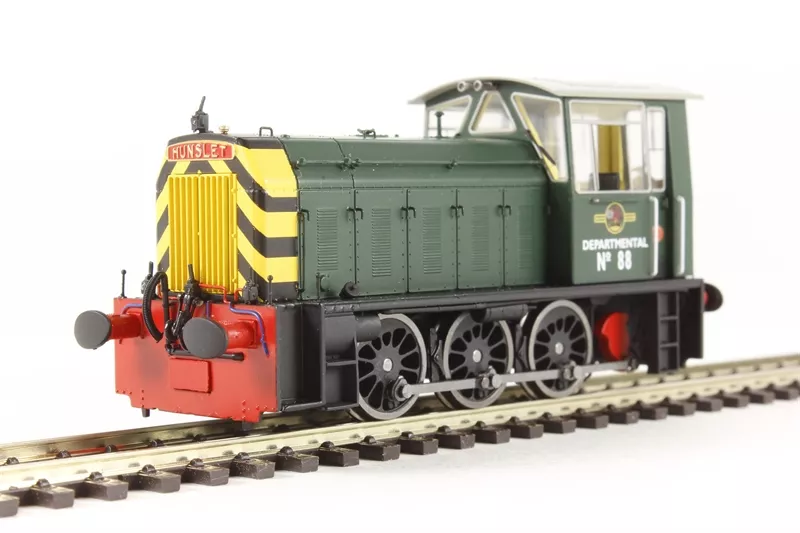
Manufacturer catalogue image - please note that pre-release images may be CAD renders or CGI/AI images rather than photographs
Prototype Eras
Era 4 (1948 to 1956) British Railways Early Crest
Era 5 (1956 to 1966) British Railways Late Crest
Era 6 (1967 to 1972) British Rail Blue (Pre-TOPS)
Era 7 (1972 to 1982) British Rail Blue (TOPS)
Manufacturer description
BR Hunslet Class 05 Diesel Shunter 'DEPARTMENTAL 88' BR Green with Wasp Stripes - Type B. DCC Socket 6 PIN
Catalogue listing
Model details
Prototype information
* Class names often change over the lifespan of a locomotive, so this is not necessarily the class name used by the operator in the period modelled.
Supplier Links


Supplier links are provided for your convenience and do not guarantee that the product is currently available. RailwayModels.uk is not a representative of these suppliers, but may receive a commission when purchases are made through links on this page.
Related products
-
Heljan
2500
Class 05 Hunslet shunter D2574 in BR green
-
Heljan
2522
Class 05 Hunslet shunter D2595 in BR blue with wasp stripes - as preserved
-
Heljan
2501
Class 05 Hunslet shunter D2578 in BR green with wasp stripes - as preserved
-
Heljan
2502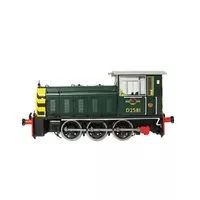
BR Hunslet Class 05 Diesel Shunter #D2581 BR Green with Wasp Stripes - Type A
-
Heljan
2503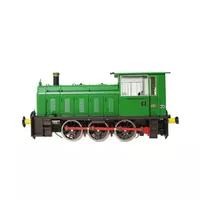
BR Hunslet Class 05 Diesel Shunter 'CIDER QUEEN' Green with Wasp Stripes (Industrial) - Type A
-
Heljan
2520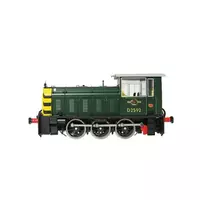
Class 05 Hunslet shunter D2592 in BR green with wasp stripes
-
Heljan
2521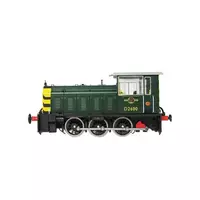
Class 05 Hunslet shunter D2600 in BR green with wasp stripes
Heljan model BR Hunslet Class 05 diesel shunter, marked as DEPARTMENTAL 88, in British Rail green with wasp stripes (Type B). The model is DCC ready with a six‑pin socket and is supplied in OO gauge with a pristine finish.
It carries the running number 88, features NEM couplings, a minimum radius curve of 1st radius (371 mm), directional lighting, and power pickup from all wheels. The locomotive is powered by a diesel motor, has a 0‑6‑0 wheel arrangement, and a maximum speed of 18.8 mph. The manufacturer part number is 2523.
The prototype was built by Hunslet Engine Co for British Rail between 1955‑1961, with a total production of 69 units. The model represents the British Railways late crest period.