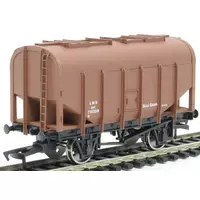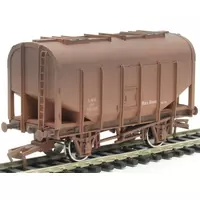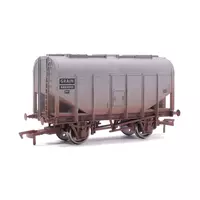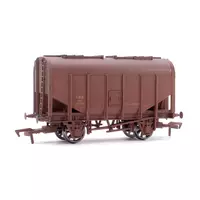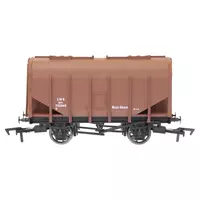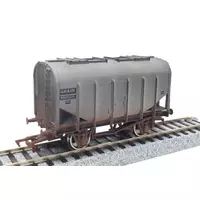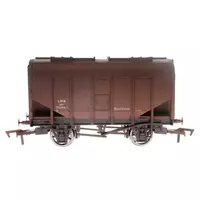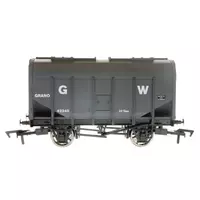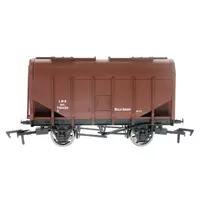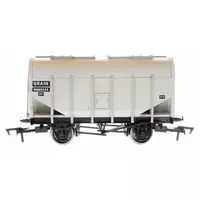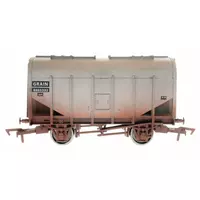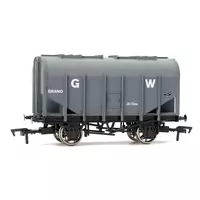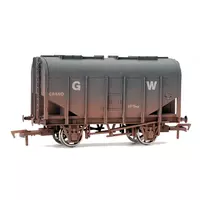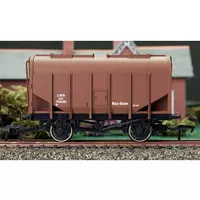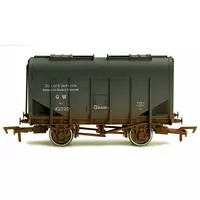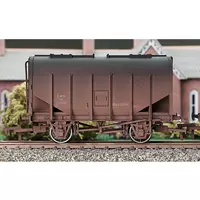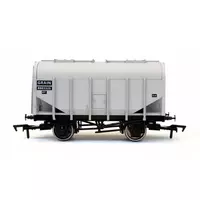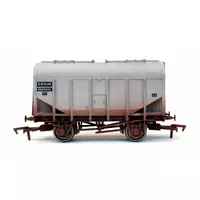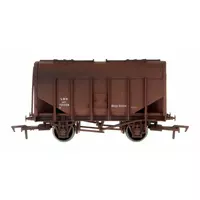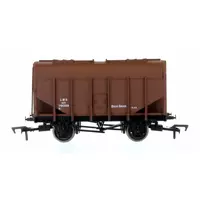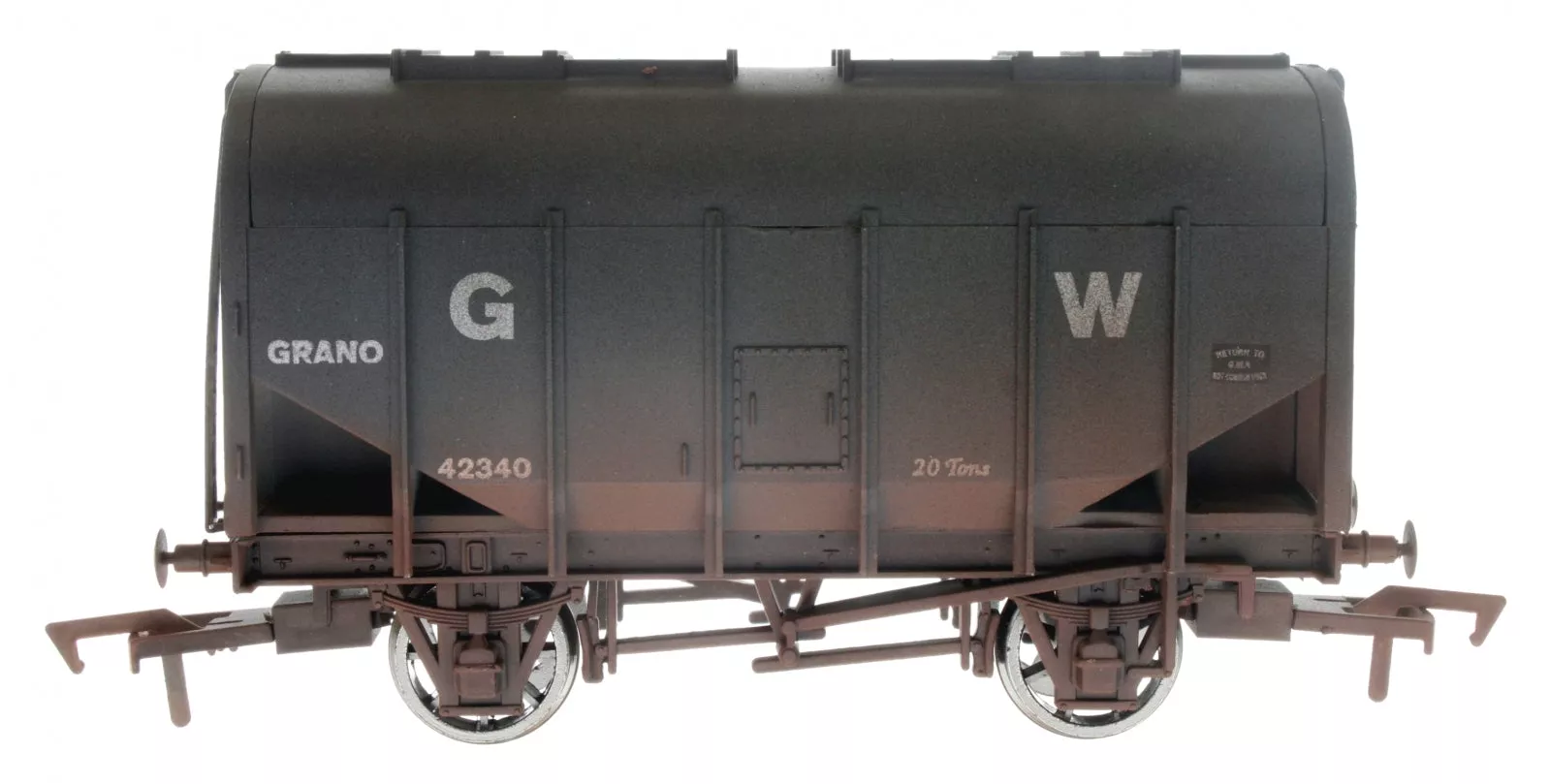
Manufacturer catalogue image - please note that pre-release images may be CAD renders or CGI/AI images rather than photographs
Prototype Era
Era 3 (1923 to 1947) The Big Four (LNER, LMS, GWR and SR)
Manufacturer description
Up to the 1920s most British grain was transported in sacks and it was not until Britain started to import grain that the requirement for bulk grain movements was realised. The early bulk grain wagons were made of wood and were of an open design, with provision for a tarpaulin cover. Design improvements were soon made and at nationalisation BR had inherited a range of hoppers including some closed steel of an LMS design.
As demand for bulk grain movements increased, BR standardised its fleet based on this LMS steel hopper. The design was not without critics, who maintained the design caused undue condensation and spoilage caused by the cold steel. This style of hopper continued into service into the 1970s as, for a short time, Britain became a grain exporter. However, soon after bulk grain exports diminished and road overtook rail as the preferred mode of transport. Currently, very little grain is now bulk transported and we have now reverted to the pre-1920s way, i.e. by sack.
Catalogue listing
Model details
Supplier Links


Supplier links are provided for your convenience and do not guarantee that the product is currently available. RailwayModels.uk is not a representative of these suppliers, but may receive a commission when purchases are made through links on this page.