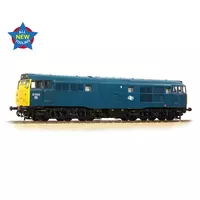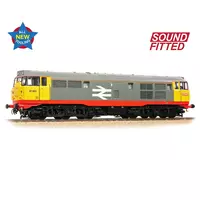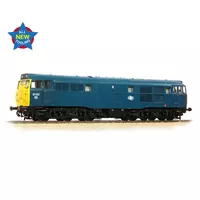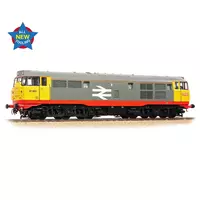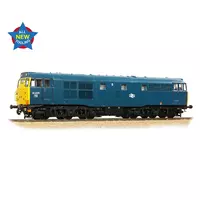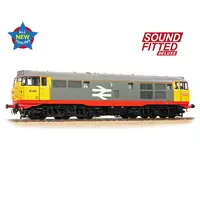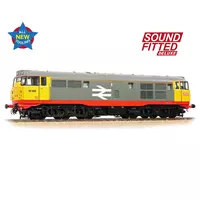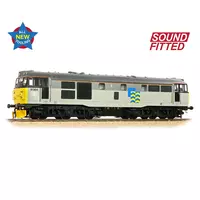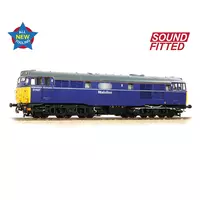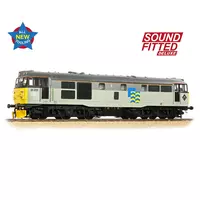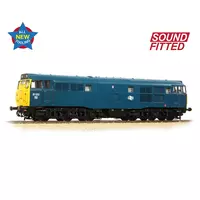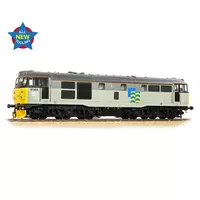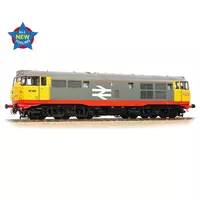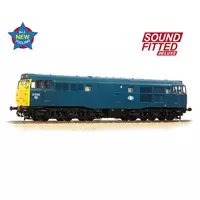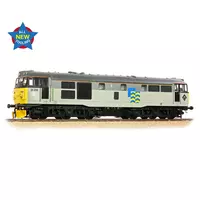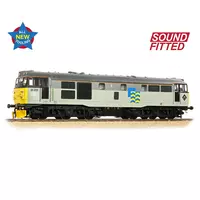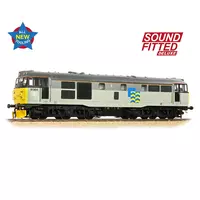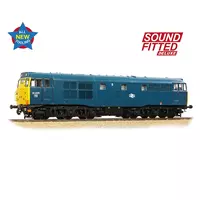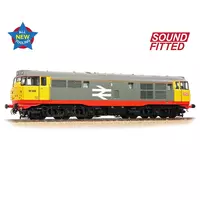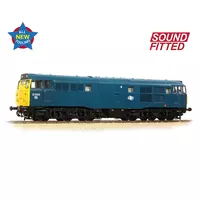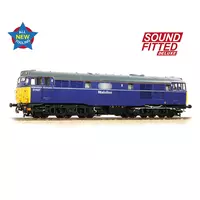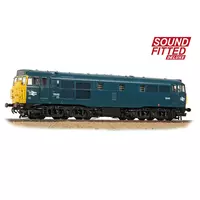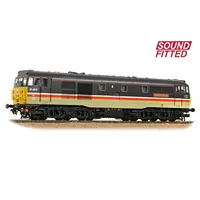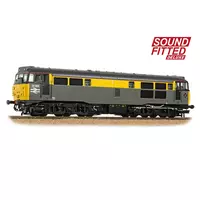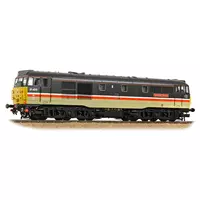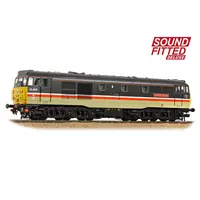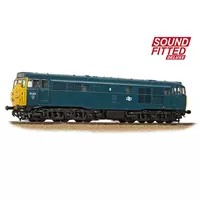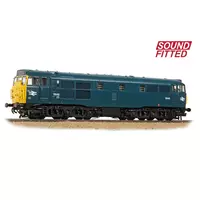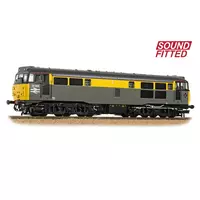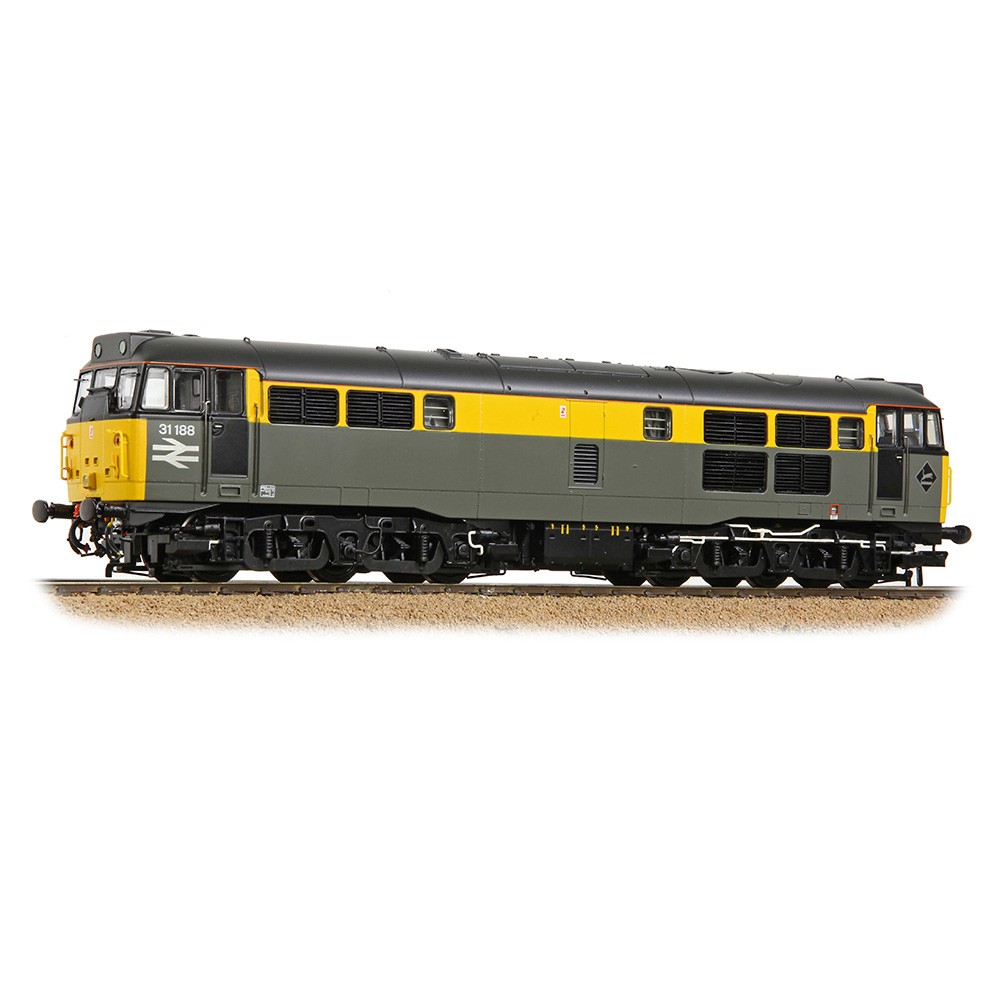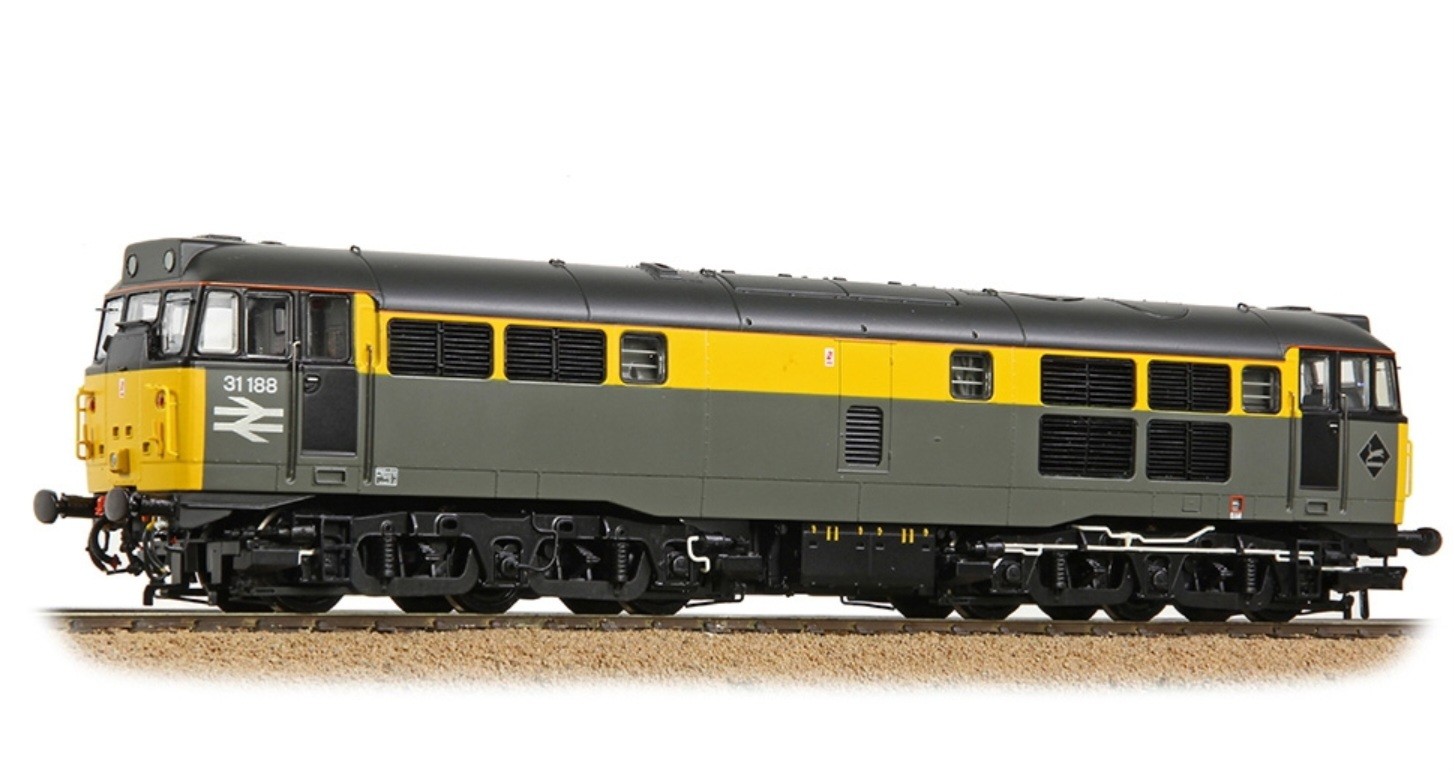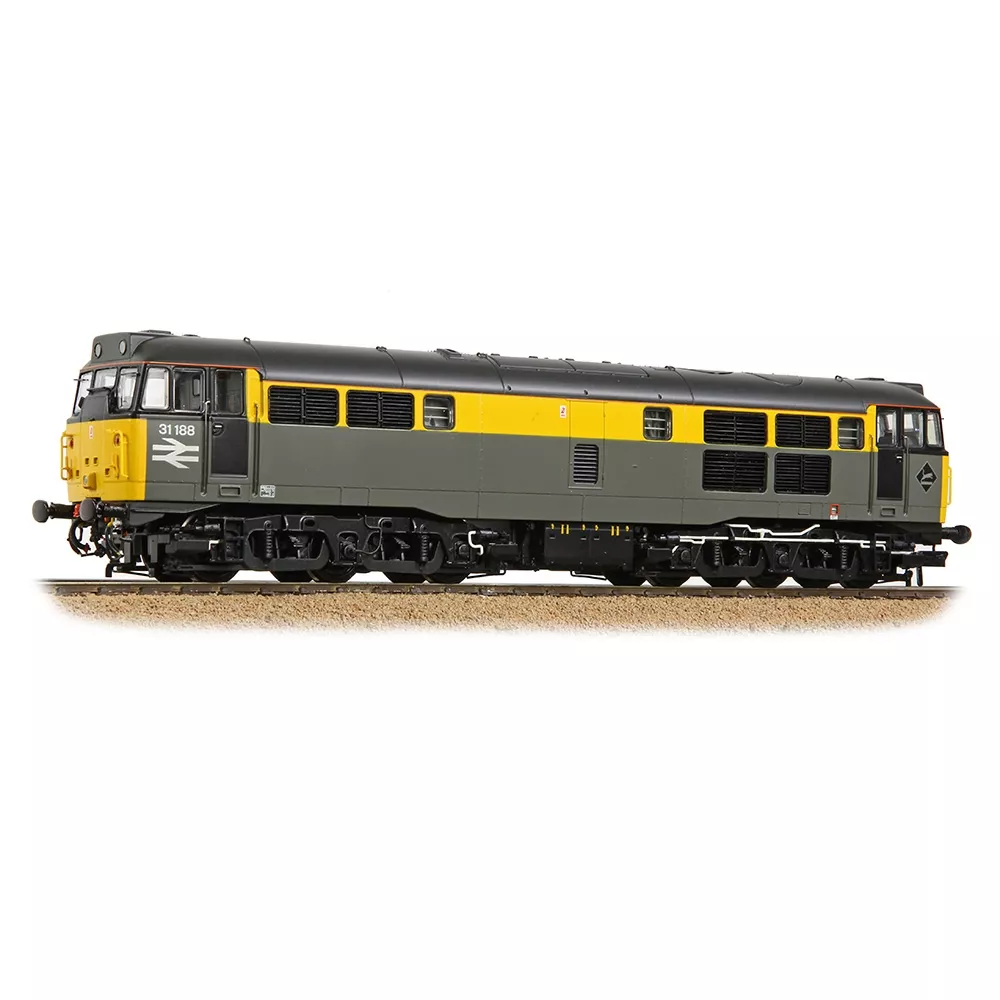
Manufacturer catalogue image - please note that pre-release images may be CAD renders or CGI/AI images rather than photographs
Prototype Era
Era 8 (1983 to 1994) British Rail Sectorisation
Manufacturer description
The Brush Type Twos – Class 30s and Class 31s – by Bachmann Branchline are back and better than ever, now featuring a Bach-Up Stay Alive System fitted as standard and all-wheel electrical pickup assuring the smooth and powerful performance you’ve come to expect from Bachmann Branchline models.
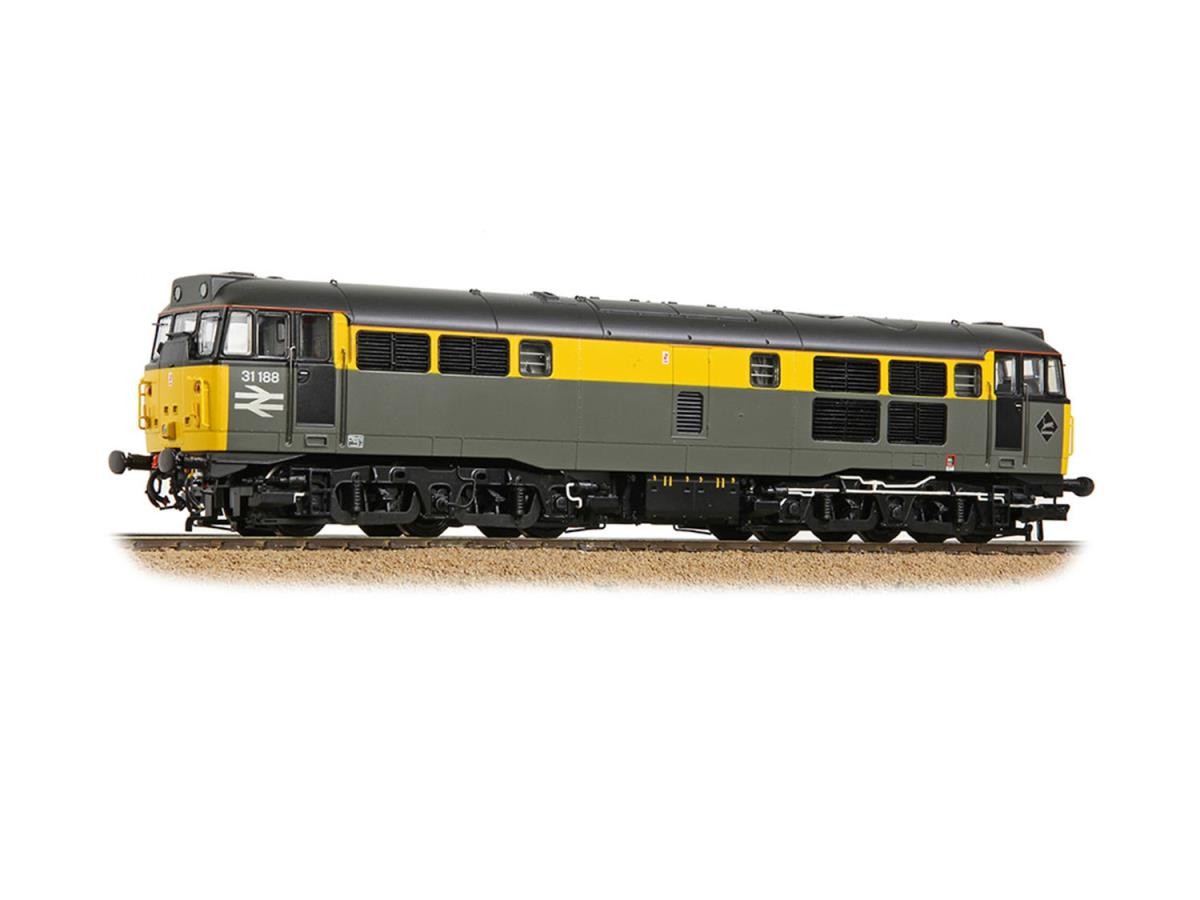
Depicting a Refurbished Class 31/1, this locomotive has had its Mirrlees engine replaced with an English Electric 12SVT and the Branchline model faithfully recreates this, with the correct roof exhaust ports and 12SVT engine block detail visible through the bodyside windows.
With high fidelity mouldings, numerous separately fitted parts and countless tooling variations to capture the minutiae of the real locomotives throughout their lives, our new Class 30 is brought to life with an exquisite livery application using true-to-prototype colours, fonts and logos. Along with an unprecedented array of lighting features, our Dual Fitted speaker system is fitted to all models – bringing to life our SOUND FITTED models. For the ultimate experience, choose one of our SOUND FITTED DELUXE models with their motorised radiator fan, authentic tinted windscreen glazing and hands-free DCC-uncoupling thanks to Bachmann’s revolutionary Auto-Release Coupling System!
- Bachmann Branchline OO Scale
- Era 8
- Pristine BR Engineers Grey & Yellow livery
- Running No. 31188
- Etched Depot Plaque and BR Double Arrow Included
- Equipped with a Plux22 DCC Decoder Socket – recommended Decoder item No. 36-570A
- Length 228mm
DETAIL VARIATIONS SPECIFIC TO THIS MODEL
- Refurbished Body
- Gangway Doors Plated
- Plated Headcode Panels fitted with Marker Lights
- Windscreen Washer Jets with Covers
- Bufferbeam Cowling Removed
- Original Windscreen
- Original Main Fan Grilles with Horizontal Fins
- English Electric Engine Exhaust Ports
- English Electric Engine Block Detail
- Plated Boiler Port
- Plated Water Filler Hatch
- Plated Bodyside Steps
- Battery Boxes with Additional Safety Clips
- NRN Radio Pods
- High Intensity Headlights
BACHMANN BRANCHLINE CLASS 30/31 SPECIFICATION
MECHANISM:
- Five pole, twin shaft motor with two flywheels providing drive to both bogies
- All axle drive
- Electrical pickup from all wheels on each bogie
- Separate metal bearings fitted to each axle
- Diecast metal chassis block and bogie towers
- Diecast metal gearboxes, with gearing arranged for prototypical running speeds and haulage capabilities
- 16.5mm (OO gauge) wheels to NEM310 & NEM311 standards with authentic profile and detailing
- Detachable coupling pockets to NEM362 standards fitted to each bogie
- Auto-Release Couplings fitted at both ends – DCC operated, hands-free uncoupling with the press of a function button (SOUND FITTED DELUXE models only)
- Designed to operate on curves of second radius (438mm) or greater
DETAILING:
- Bogies constructed from multiple components featuring full relief detail
- Rotating radiator fan, driven by an independent motor and gearbox, operated as part of the sound project on DCC and Analogue control (SOUND FITTED DELUXE models only)
- Tinted windscreen glazing (Driver and Second Man windscreens only as per the prototype, SOUND FITTED DELUXE models only)
- Separately applied metal detail parts, including grab handles, windscreen wipers and etched fan grilles
- Sprung metal buffers
- Each model supplied with a full set of decorated, model-specific bufferbeam pipework and accessory parts including three-piece, body-mounted snow ploughs
LIGHTING:
- Directional lighting, including illuminated headcode panels and high intensity headlights where applicable, switchable on/off at either end on DCC or Analogue control
- Cab lighting*, assigned to two DCC functions for separate switching of each
- Separately switched Engine Room lighting*
- Single or twin red tail lights* (*when used on DCC)
- Authentic light colours and temperatures selected for each model based on era and application
DCC:
- Plux22 DCC decoder interface
- Bach-Up Stay Alive Systemproviding uninterrupted power to prevent stalling, light flicker and sound cut-outs (operates on DCC only)
SOUND:
- Two quality speakers employed for optimum sound reproduction, fitted to every model as standard
- Zimo MS450P22 DCC Sound Decoder fitted to SOUND FITTED and SOUND FITTED DELUXE versions
- Two sound projects to accurately capture the sounds of Class 30 (Mirrlees Engine) and Class 31 (English Electric Engine)
- Sound files for each project produced specifically for the Bachmann Branchline Class 30/31 using recordings from real locomotives and archive audio
- SOUND FITTED and SOUND FITTED DELUXE models operate on DCC and Analogue control as supplied. On Analogue, an authentic engine start up sequence and running sounds are produced when power is applied
LIVERY APPLICATION:
- Authentic liveries applied to all models
- Multiple paint applications employed on each model using BR and corporate specification colours
- Logos, numerals and text added as appropriate using multi-stage tampo printing using authentic typefaces, logos and colours
- In addition, where applicable Etched Nameplates and Plaques are also provided
CLASS 30/31 HISTORY
The BR Class 30 and Class 31 Diesel Locomotives, originally known as the Brush Type 2s, were built by Brush Traction from 1957-1962, with a total of 263 locomotives constructed. The first locomotive entered service in November 1957 and the design was one of the Pilot Scheme locomotives ordered by British Railways to replace steam traction. The Class was originally allocated to the Eastern Region, but gradually became common on both the Western and London Midland regions too.
Originally built with Mirrlees engines, these proved unsuccessful and in 1964 an English Electric 12SVT engine was fitted to one example for trails. The trials proved successful and between 1965 and 1969 the entire class was fitted with English Electric engines. Two TOPS classifications were used to distinguish between the two engine types, with the Mirrelees engine locomotives denoted Class 30s, whilst the English Electric examples became Class 31s.
The Class 31/1s were the standard locomotives, distinguished from the first small batch of locos – the 31/0s – which had Red Circle multiple-working control equipment, a non-standard feature that led to them being withdrawn relatively early in the late-1970s. The 31/1s were fitted with Blue Star multiple-working equipment, as found on many other BR classes, and all had steam heating boilers from new, making them ideal for hauling passenger services. The Class 31/1s could be found on a variety of secondary and relief passenger duties as well as parcels and freight traffic. Commonly used in East Anglia, with allocations at Stratford and March depots, they were also found throughout the Eastern Region of BR with Finsbury Park sporting a large allocation, along with the depots at Tinsley, Immingham and Thornaby. Examples were also allocated to Bristol Bath Road and Old Oak Common on the Western Region, where they could be found working passenger trains as far west as Barnstaple and Paignton. In the early 1980s, Healey Mills and Bescot on the Midland Region also gained an allocation as replacements for Class 25s.
During the 1970s some Class 31s were fitted with Electric Train Heating (ETH) and these were reclassified as 31/4s to denote this feature. The 1980s would see BR undertake a programme of refurbishment for much of the fleet, this included the fitting of ETH to more locomotives, but refurbishment was not reserved exclusively for the 31/4s, Class 31/1s were also refurbished without receiving ETH equipment. During refurbishment bufferbeam cowlings were removed along with the bodyside band, headcode boxes were plated over and fitted with two marker lights, and any remaining disc headcodes were removed. Where steam heat boilers remained, these were removed and a concrete block added instead to maintain the weight balance.
As passenger work dried up, many of the 31/4s were displaced and found themselves allocated to the departmental sector. In 1990, to reduce maintenance costs and prevent their ETH-fitted locos being borrowed for passenger work when extra traction was needed, the departmental sector isolated the ETH and removed the jumper cables from some of its 31/4s, resulting in these locos being reclassified as 31/5s. There were also two locomotives classified as 31/6, these had through ETH wiring fitted allowing them to work double-headed with an ETH-fitted loco.
The first withdrawal came in 1975 following accident damage, but most survived until the 1990s when EWS took on 153 examples from BR’s Transrail and Mainline freight divisions, although EWS spent little time running down its inherited fleet. Other operators however kept Class 31s active on the mainline with operations only now dwindling out. The Class has also been popular with the preservation movement, with more than 25 examples now preserved.
Catalogue listing
Model details
Interior lighting
Prototype information
* Class names often change over the lifespan of a locomotive, so this is not necessarily the class name used by the operator in the period modelled.
Supplier Links


Supplier links are provided for your convenience and do not guarantee that the product is currently available. RailwayModels.uk is not a representative of these suppliers, but may receive a commission when purchases are made through links on this page.