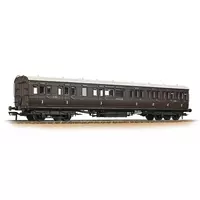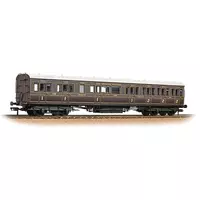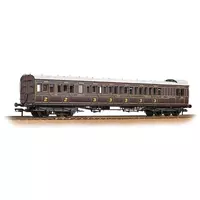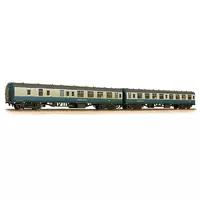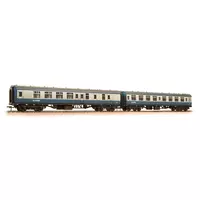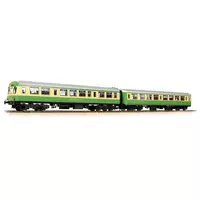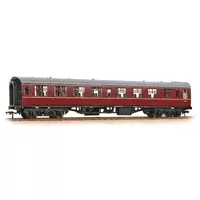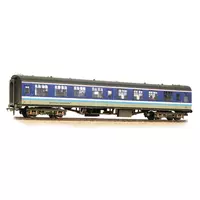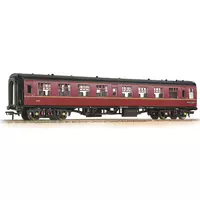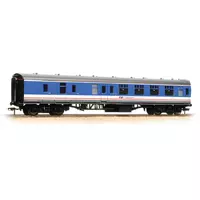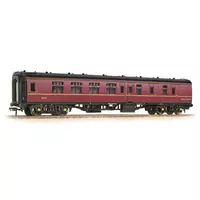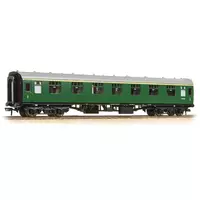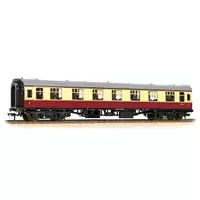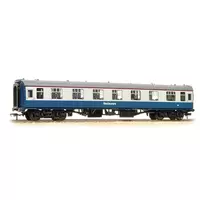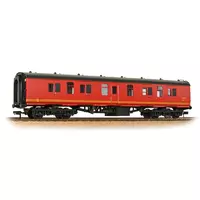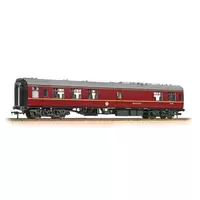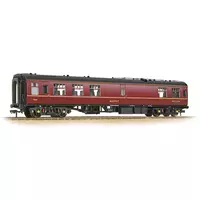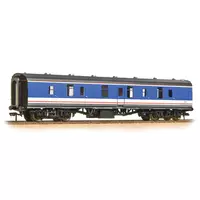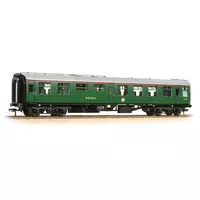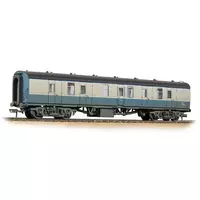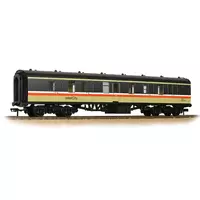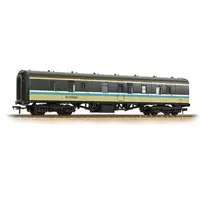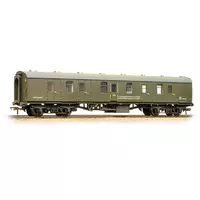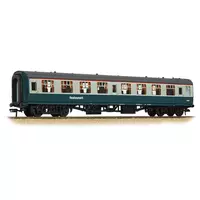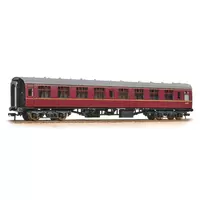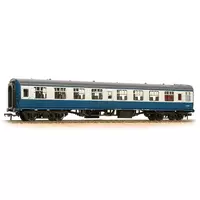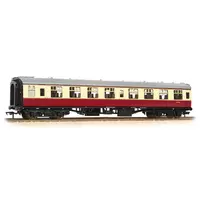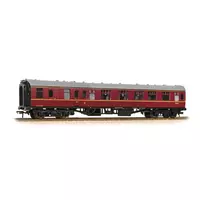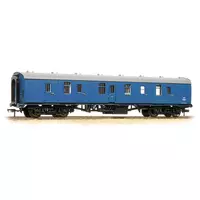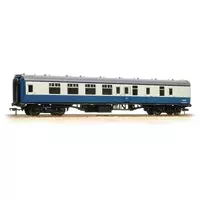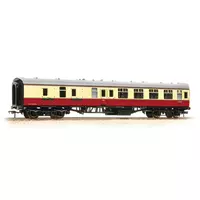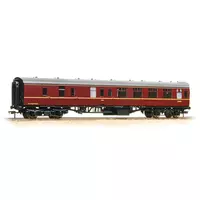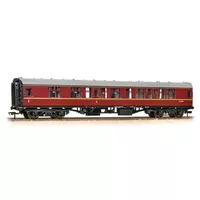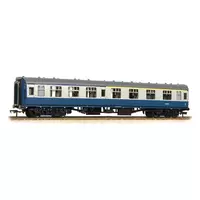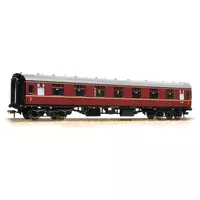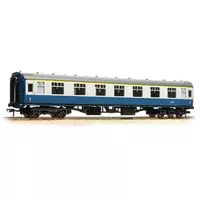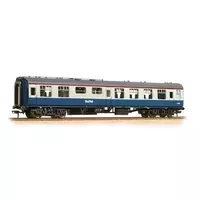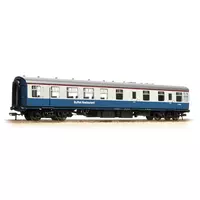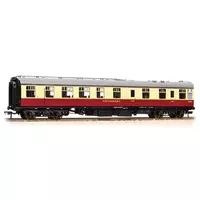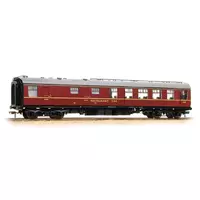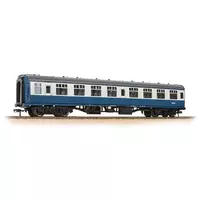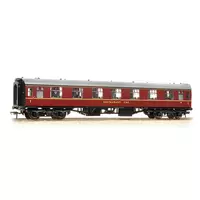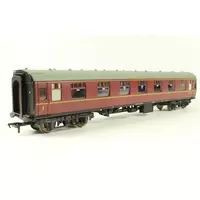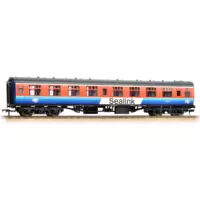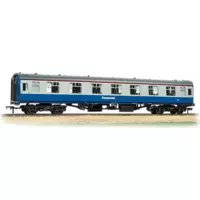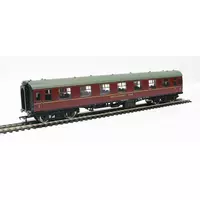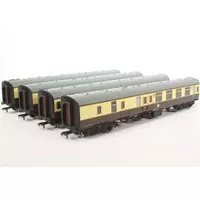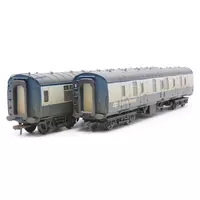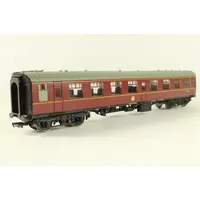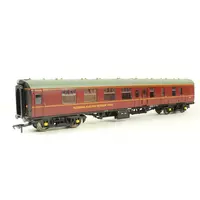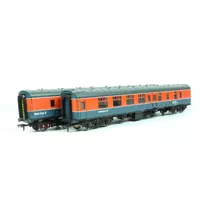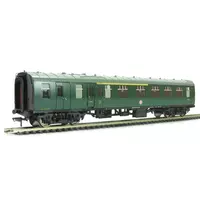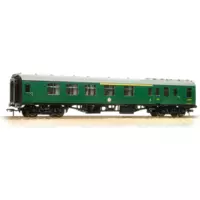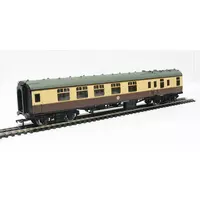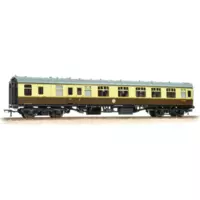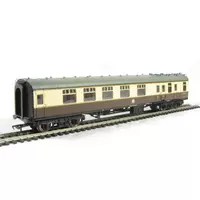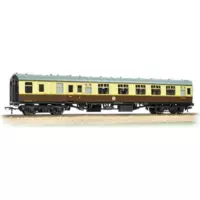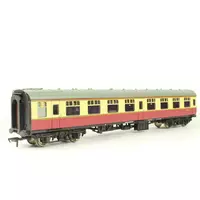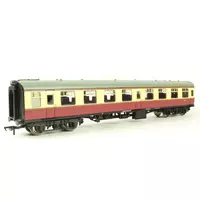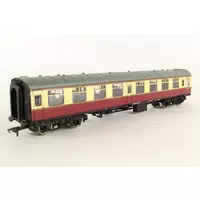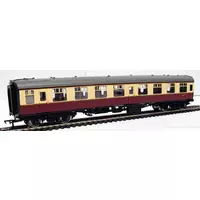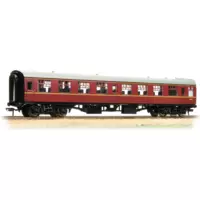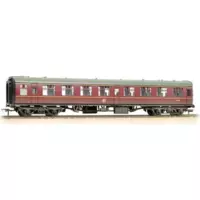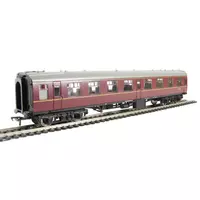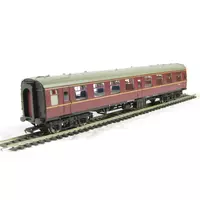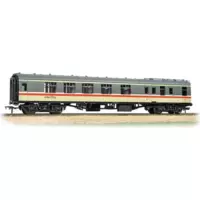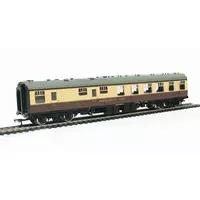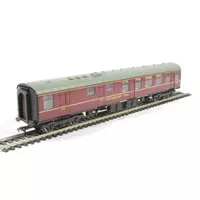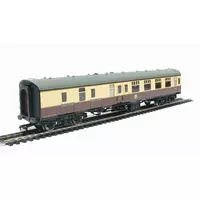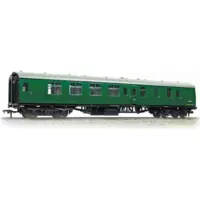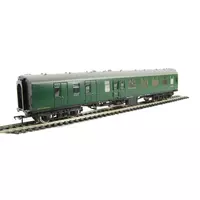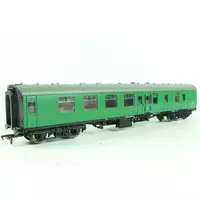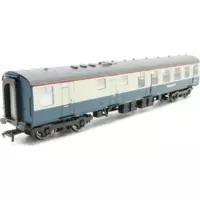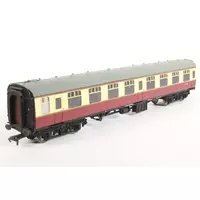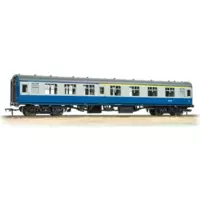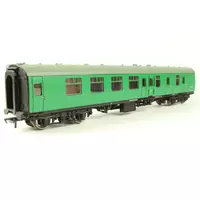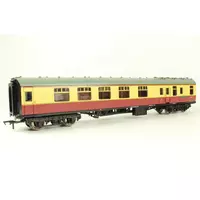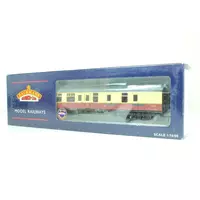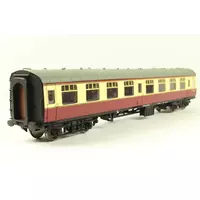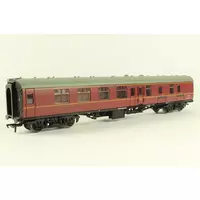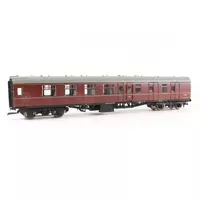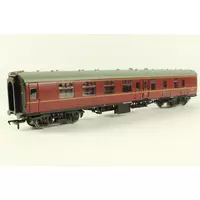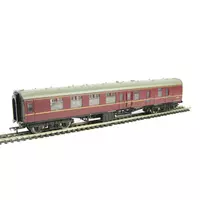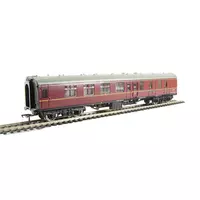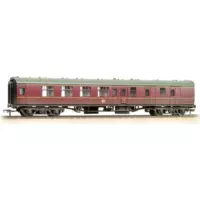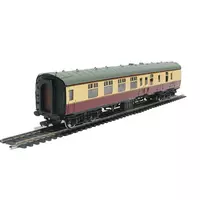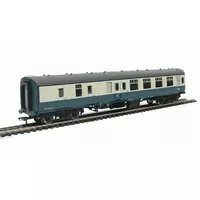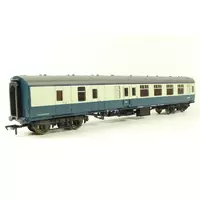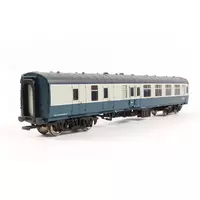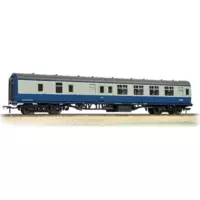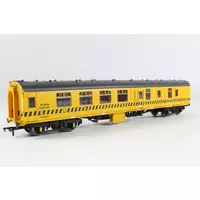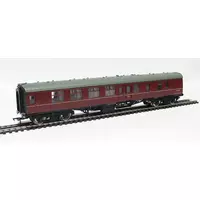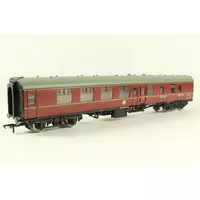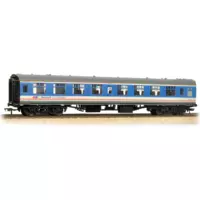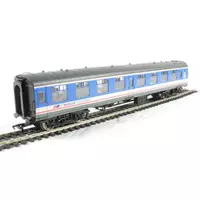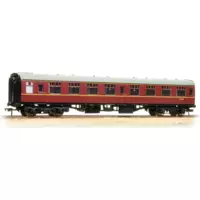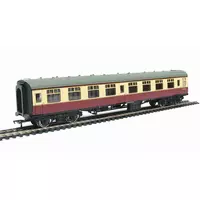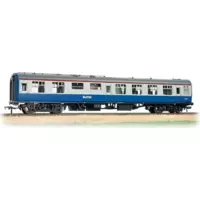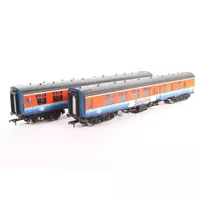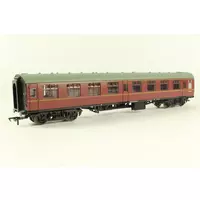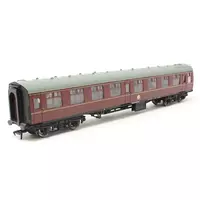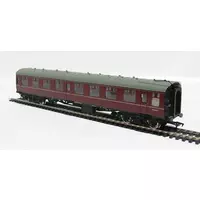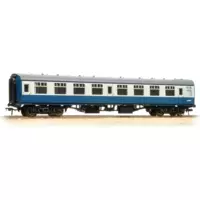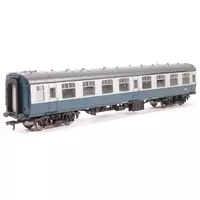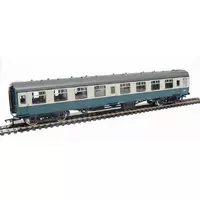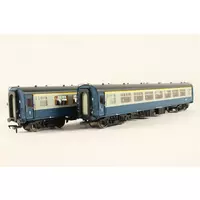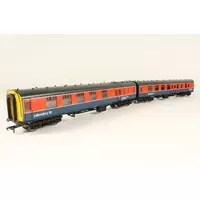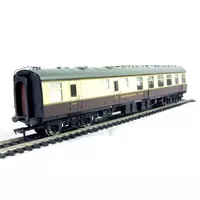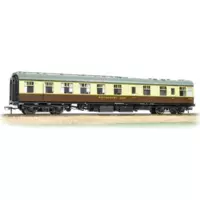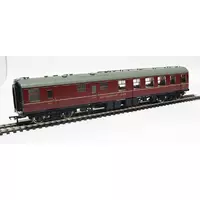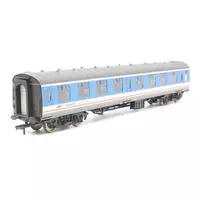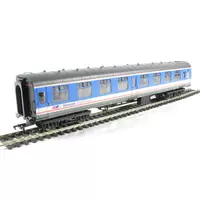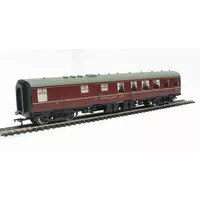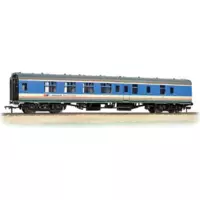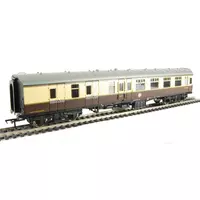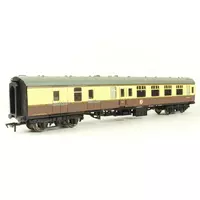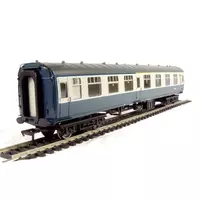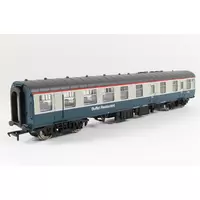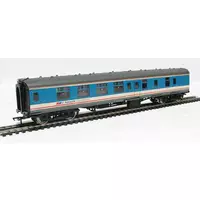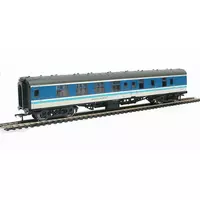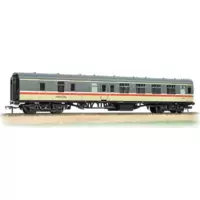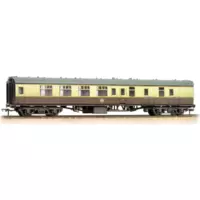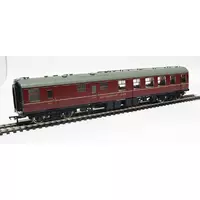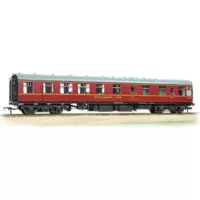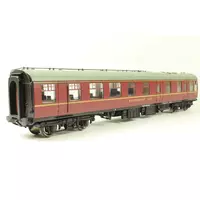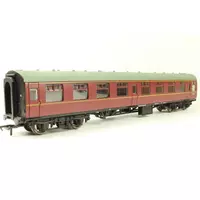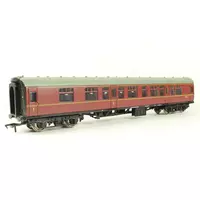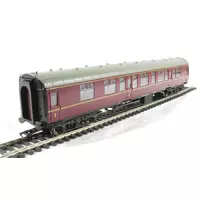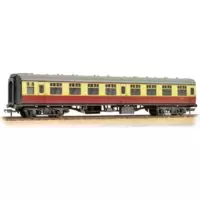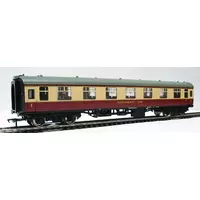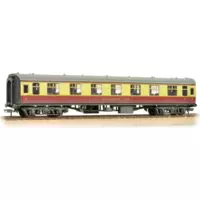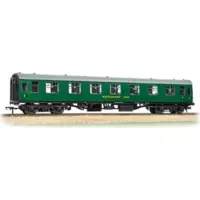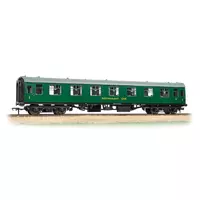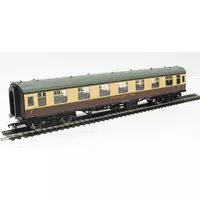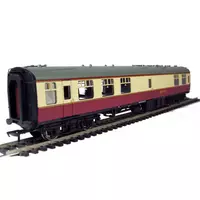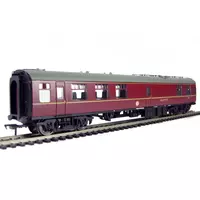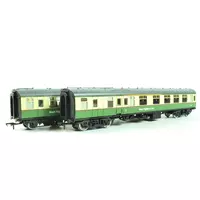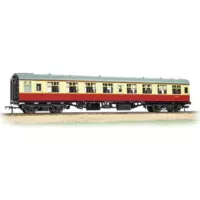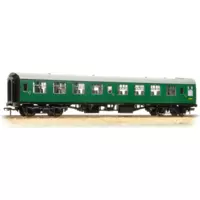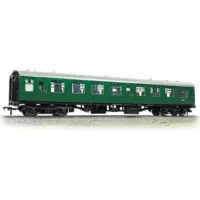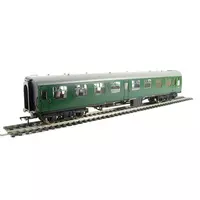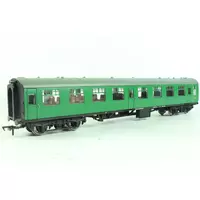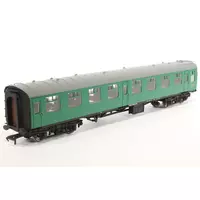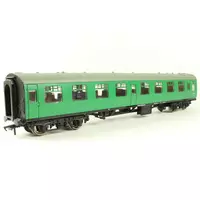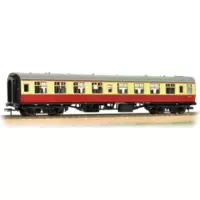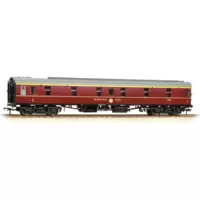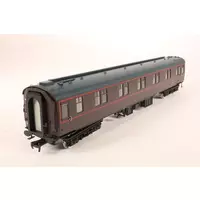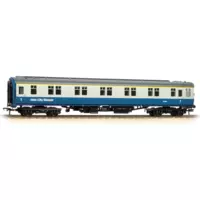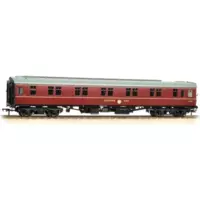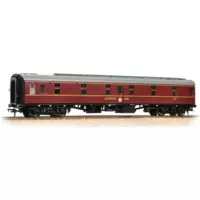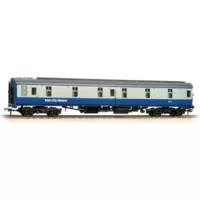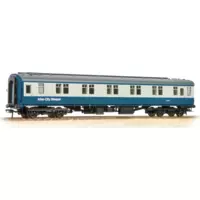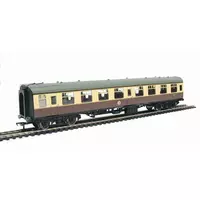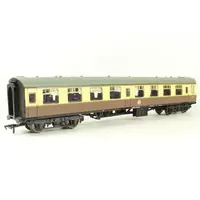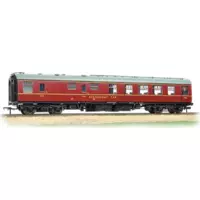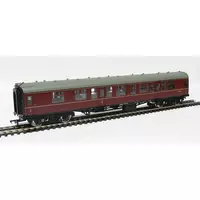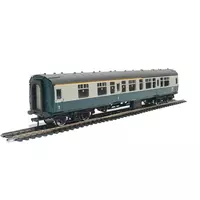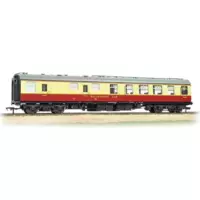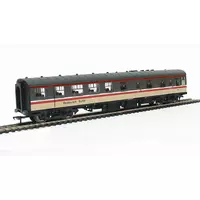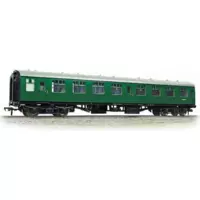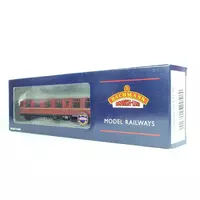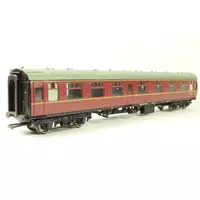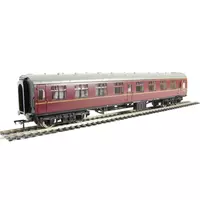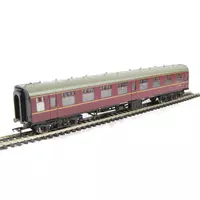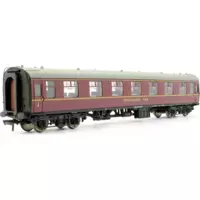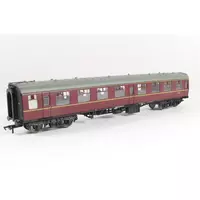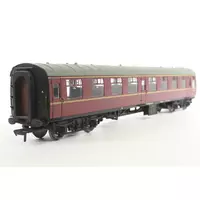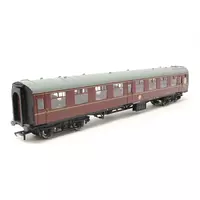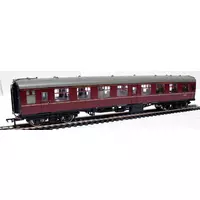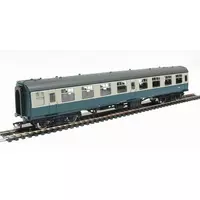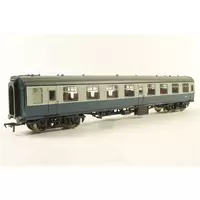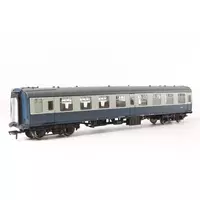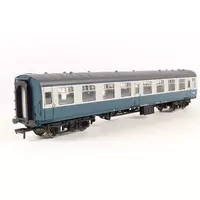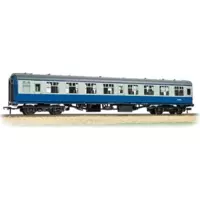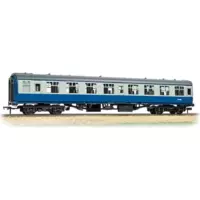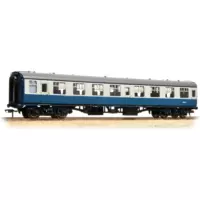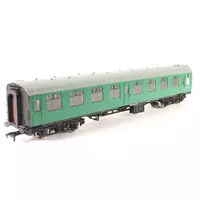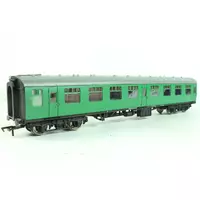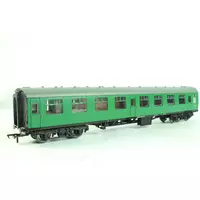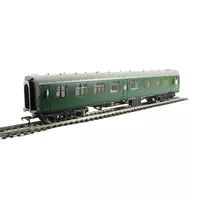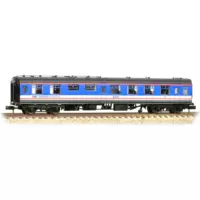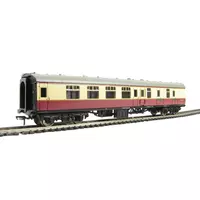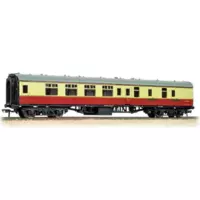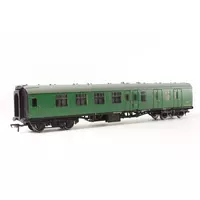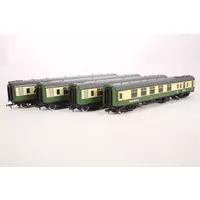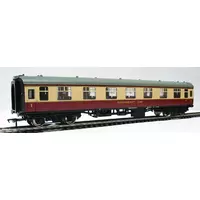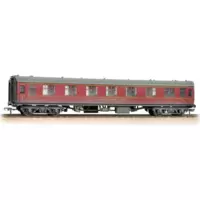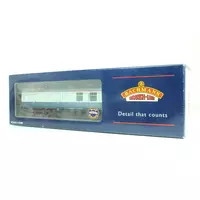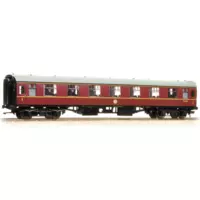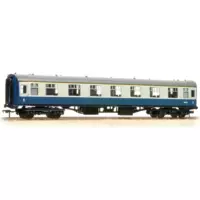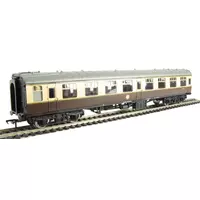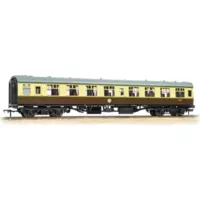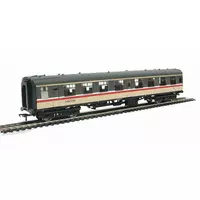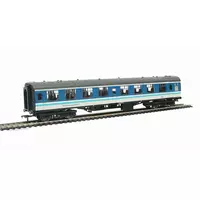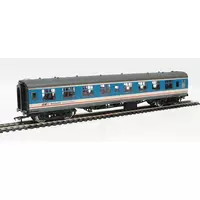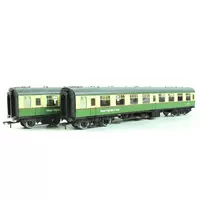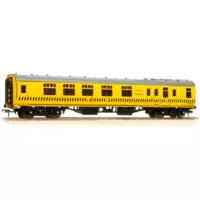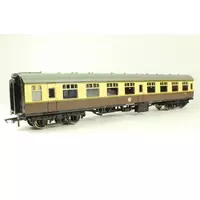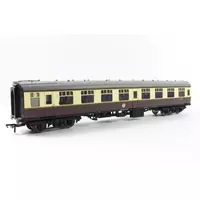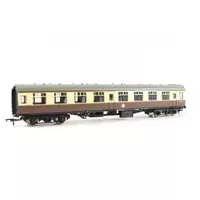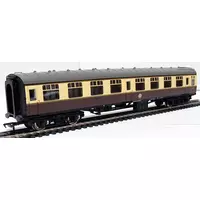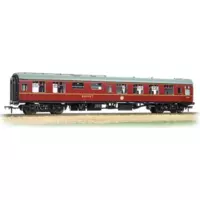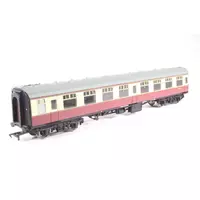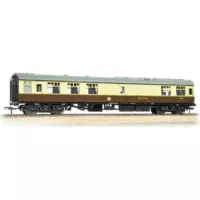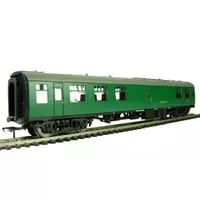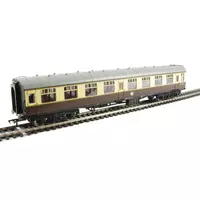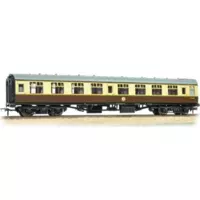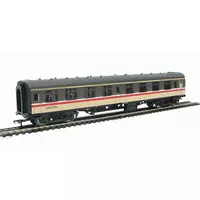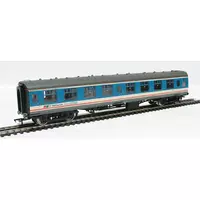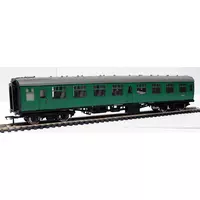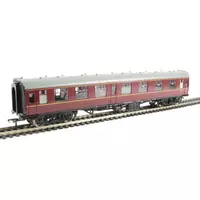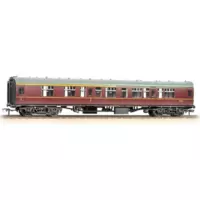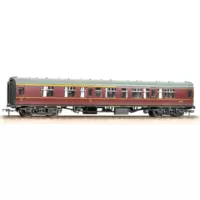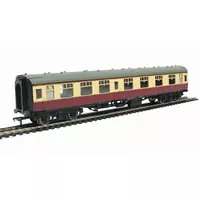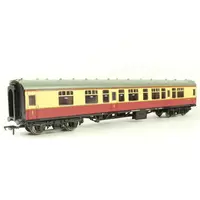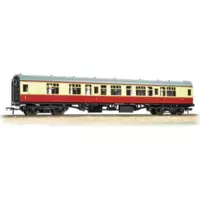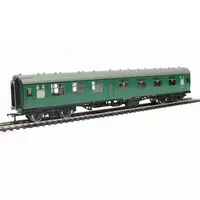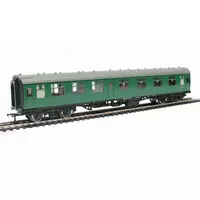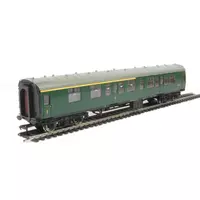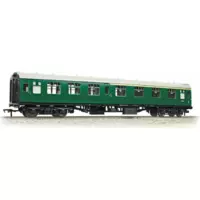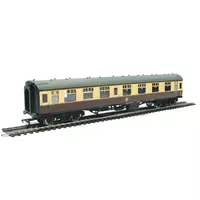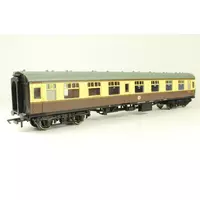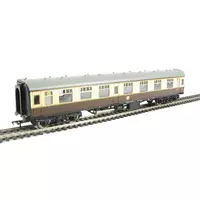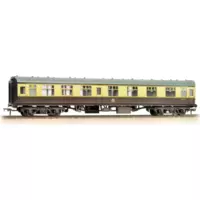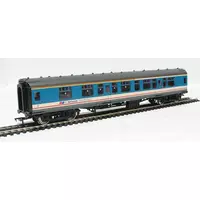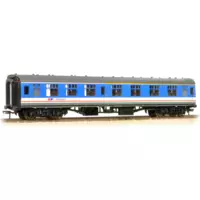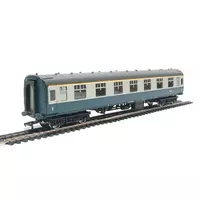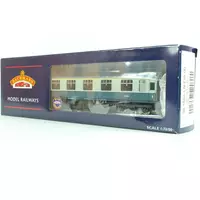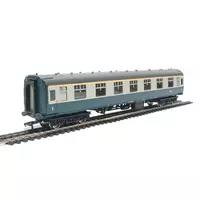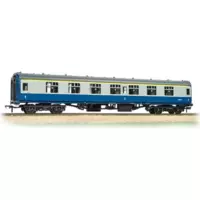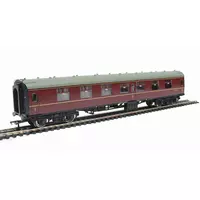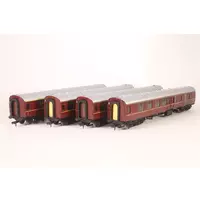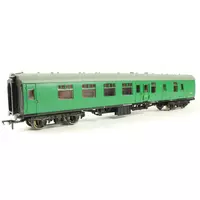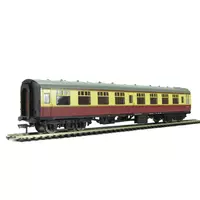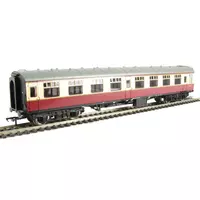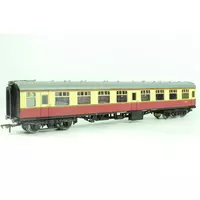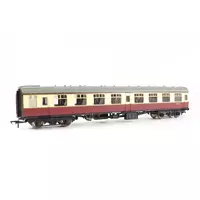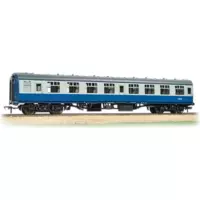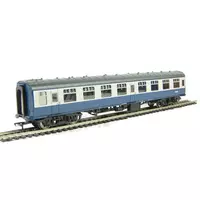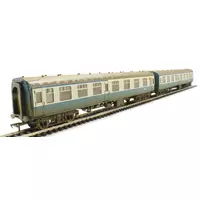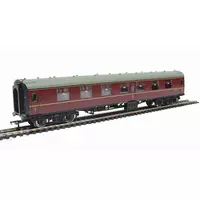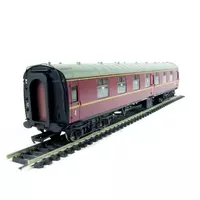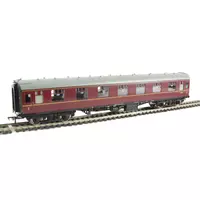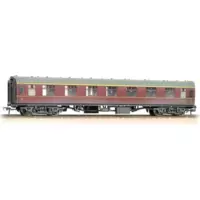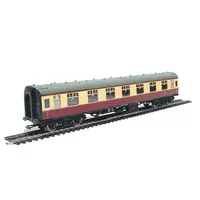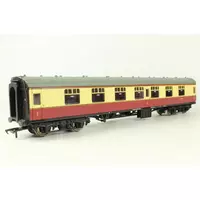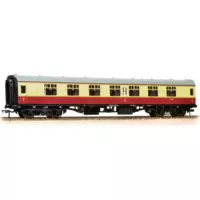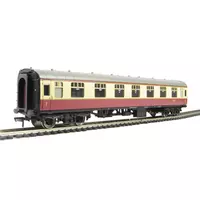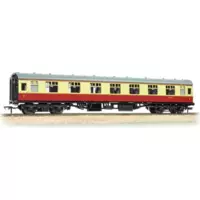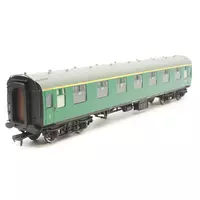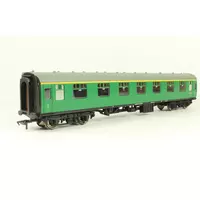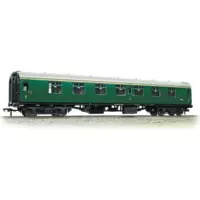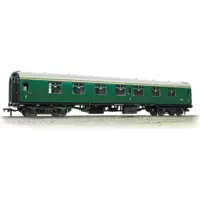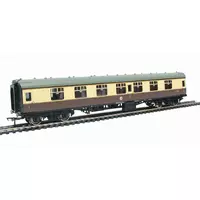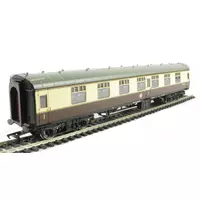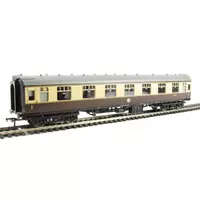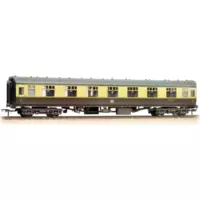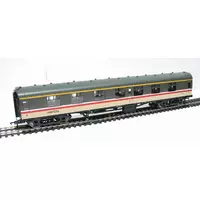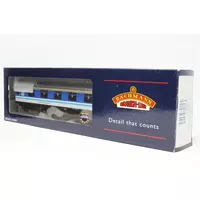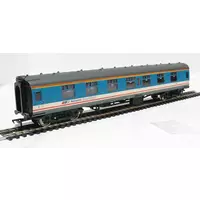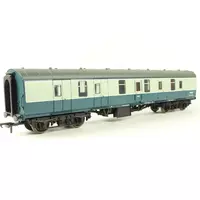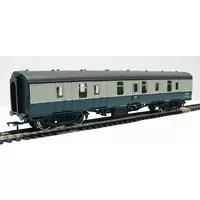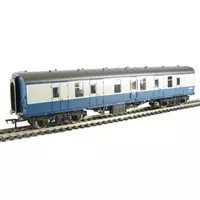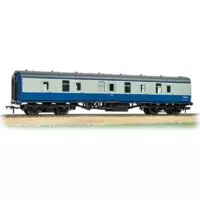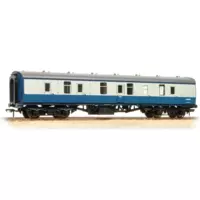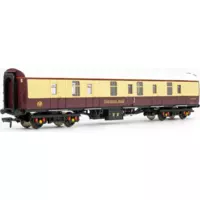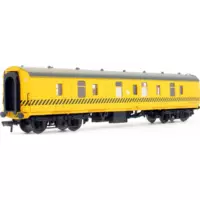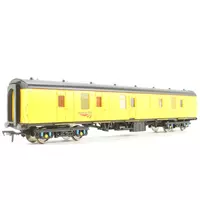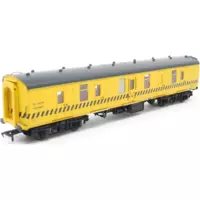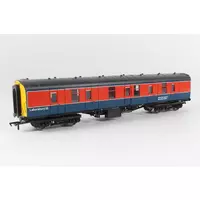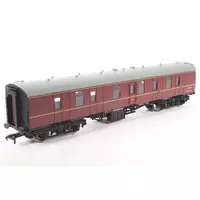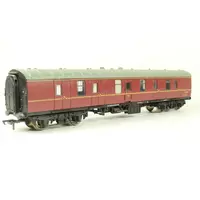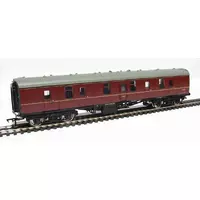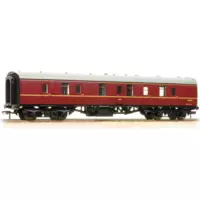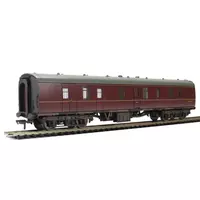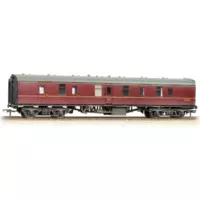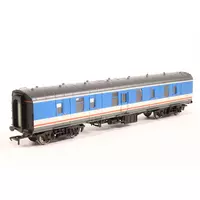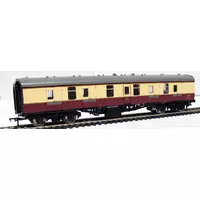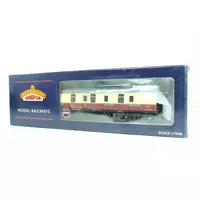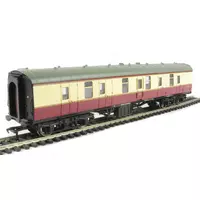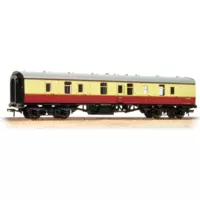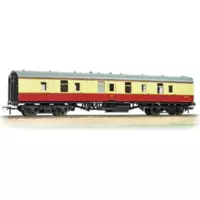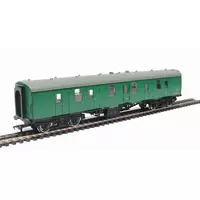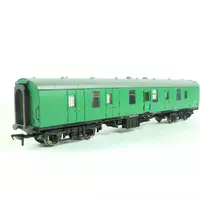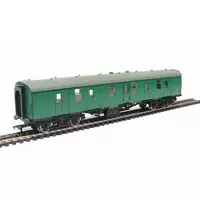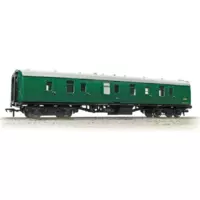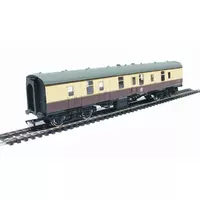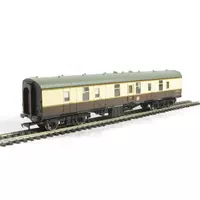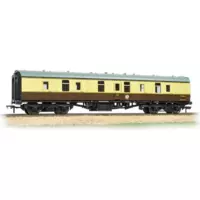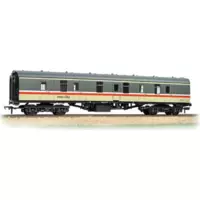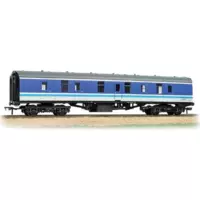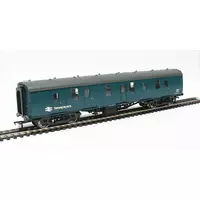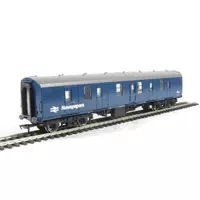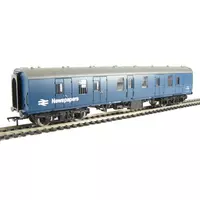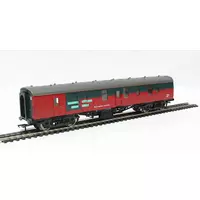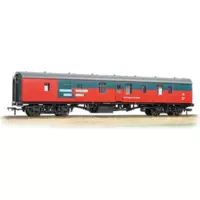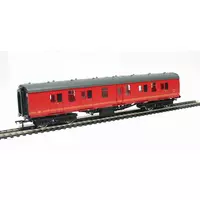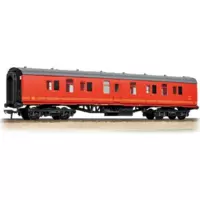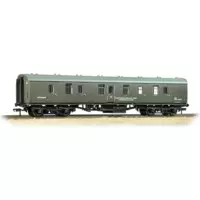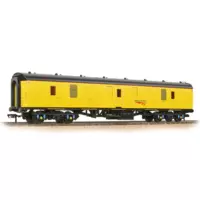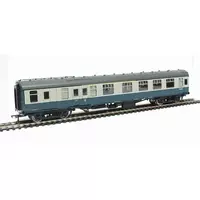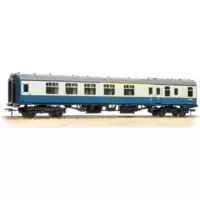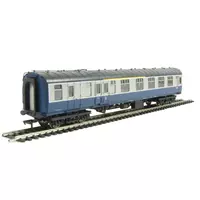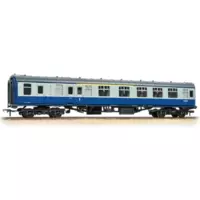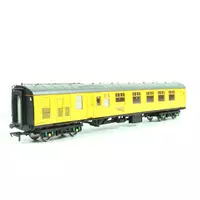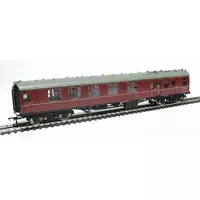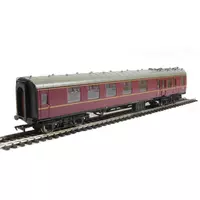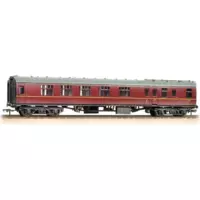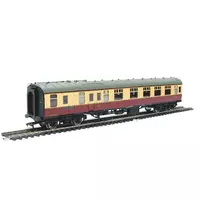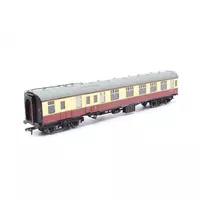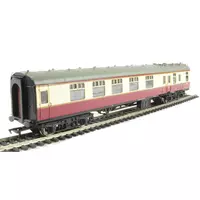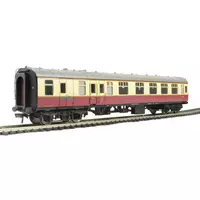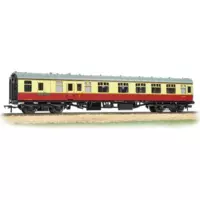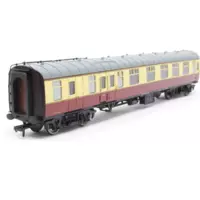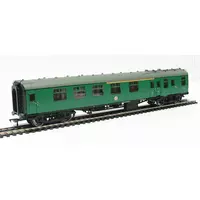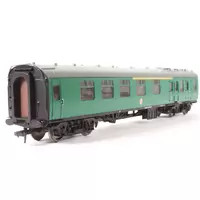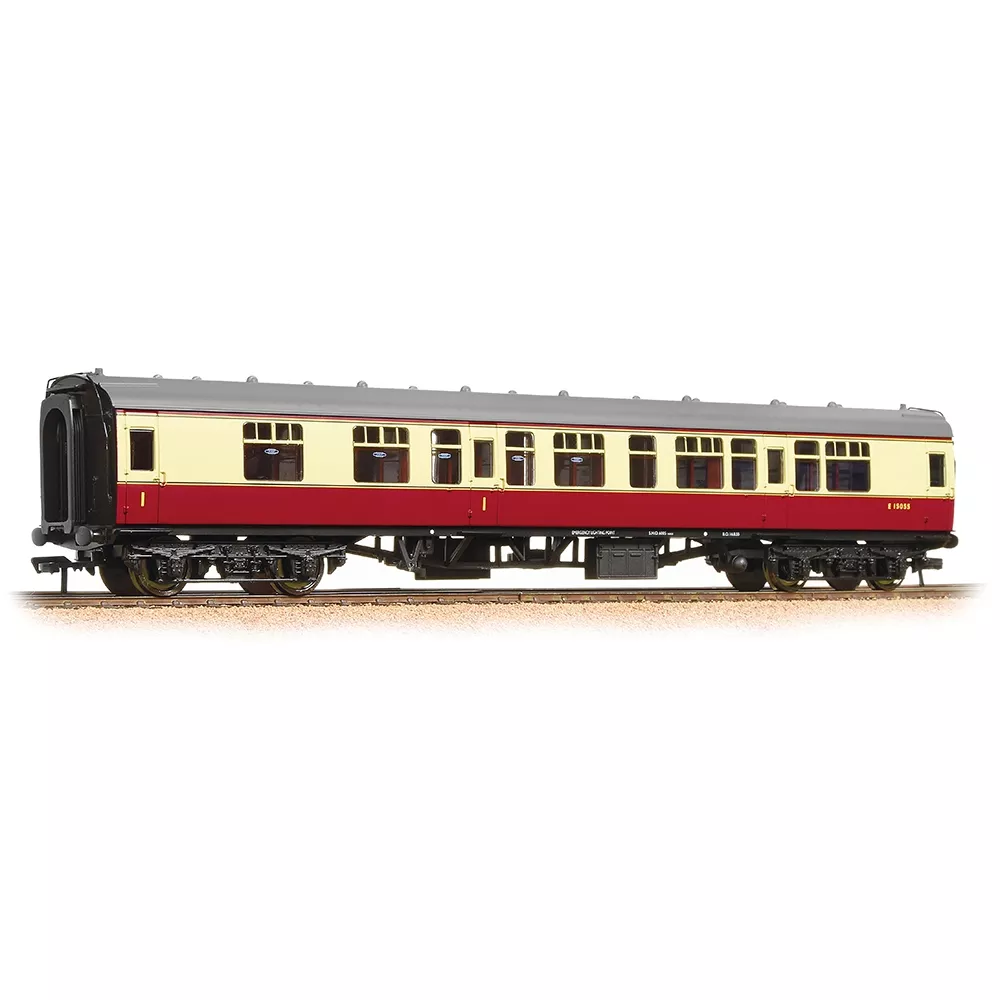
Manufacturer catalogue image - please note that pre-release images may be CAD renders or CGI/AI images rather than photographs
Prototype Era
Era 4 (1948 to 1956) British Railways Early Crest
Manufacturer description
British Railways Mk1 coaches
BR Mark 1 coaching stock was the first standardised design of railway carriages built by British Railways (BR) post-nationalisation in 1948, the family of locomotive hauled passenger coaches being constructed from 1951 until 1963 to augment and replace the array of ‘Big Four’ and earlier ‘pre-grouping’ designs inherited from the LMS, LNER, GWR and SR. Non-passenger carrying Mk1s and multiple units based on the Mk1 concept continued in production until 1974.
Today, Mk1 coaches are used for charter services on the main line, by the likes of West Coast Railway Company, or on preserved railways such as the Severn Valley Railway, West Somerset, North Yorkshire Moors, East Lancashire and Spa Valley lines, to name but a few.
Mk1 coaches were built at many BR workshops as well as by outside contractors including Metro-Cammell, Cravens, and Gloucester RCW. An extensive range of vehicles was introduced to cover all manner of traffic demands and mixed uses that the railway took in its stride in the 1950s: from buffet counter catering to full restaurant service, First and Second Class accommodation including composite vehicles with some of each, guards’ brake vans and luggage/ newspapers/ parcels/ animal space, sleeping cars, various general merchandise and specialised Post Office vans and niche use vehicles constructed in small numbers such as horse boxes. These non-passenger vehicles were shorter in length (usually at 57 feet) than the standard 63 feet of their passenger counterparts.
The more common types that made up the majority of express and secondary passenger trains include First and Second Class, Composite, Open and Corridor, Suburban (compartment only), Brake, Buffet, Restaurant, and Sleeping cars. The study of prototypical train formations is an entire subject, and Bachmann Branchline provides the range of models to create these trains in model form.
During their working lives, Mk1 coaches have formed the backbone of all locomotive-hauled BR services at one time or another, until replacement by later Mk2 coaches, or multiple unit stock, in the case of many of the Mk1 Suburban non-corridor fleet. Many famous named trains such as the Flying Scotsman, Belfast Boat Express (a late steam turn that lasted into 1968), The Cornishman, Irish Mail, Thames-Clyde Express, Atlantic Coast Express (ACE), The Waverley, the Caledonian, Devonian, Mayflower and Master Cutler all comprised Mk1 coaches when newly introduced. In other cases they ran within or alongside train formations such as the Yorkshire Pullman, and made up the then numerous sleeper services that covered the length and breadth of the sixties railway network during the hours of darkness.
Loco-hauled Mk1s were in front line service for half a century, whilst their EMU counterparts and Thumper units lasted until the mid-2000s. As a result, the Mk1 family has carried the widest range of liveries of any passenger rated rolling stock, with only private owner wagons presenting a greater variety in UK railway history. Mk1s have worn BR Carmine and Cream, BR Western Region Chocolate and Cream, BR Southern Green, BR Maroon, BR Blue, Blue and Grey, InterCity Executive, InterCity Charter, Network South East, Regional Railways, ScotRail, Sealink, Departmental, BR Exhibitions, Royal Mail, Travelling Post Office, Rail Express Systems, Provincial Trans Pennine, Parcels Red, West Highland Green and Cream, not to say a myriad of post-privatisation and heritage colour schemes in preservation. Many Mk1s also found further use with the engineers and Research Departments, and these departmental uses are also presented in the range.
Catalogue listing
Model details
Prototype information
(Charter trains & departmental only)
(BR1, BR2, Commonwealth or B4 types used)
Network Rail
Royal Mail
Regional Railways
First Great Western
West Coast Railway Co
Various heritage & mainline charter operators
Mail & Parcels
Departmental
Cravens
Gloucester Railway Carriage & Wagon Company
* Class names often change over the lifespan of a locomotive, so this is not necessarily the class name used by the operator in the period modelled.
Supplier Links


Supplier links are provided for your convenience and do not guarantee that the product is currently available. RailwayModels.uk is not a representative of these suppliers, but may receive a commission when purchases are made through links on this page.