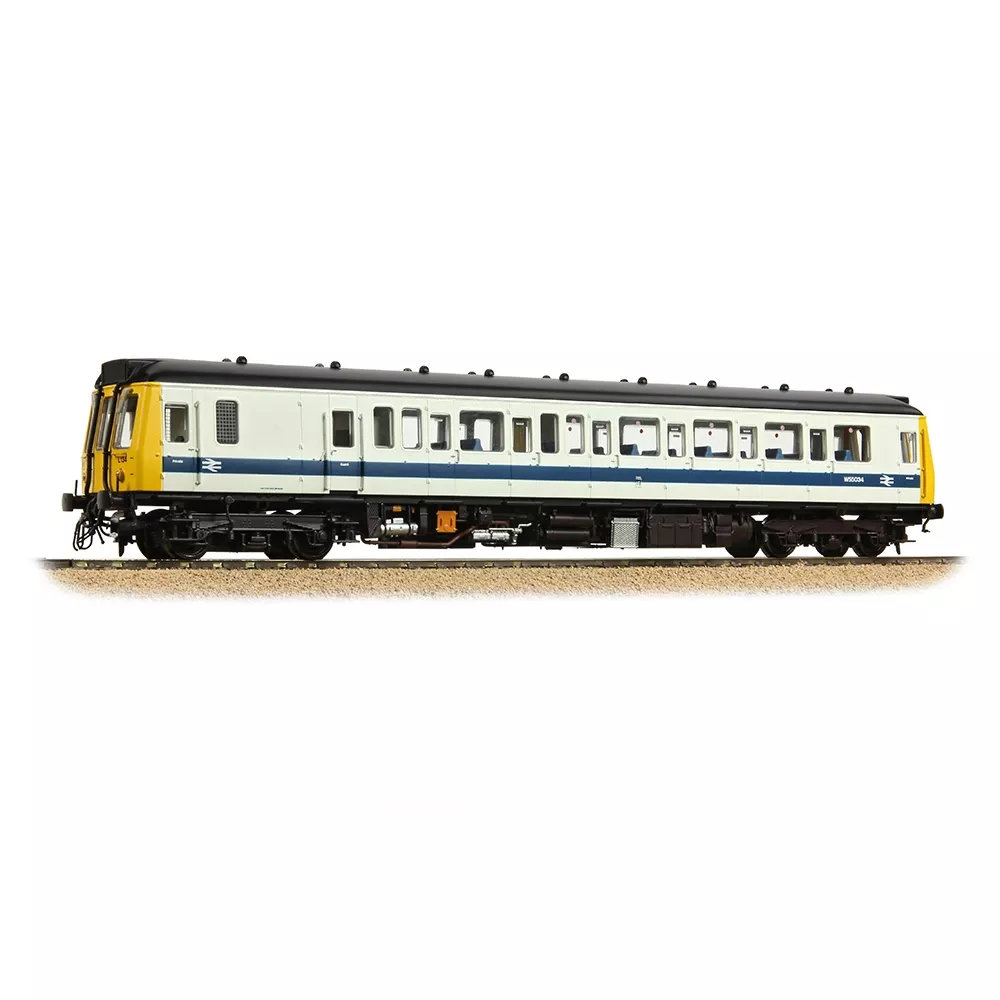
Manufacturer catalogue image - please note that pre-release images may be CAD renders or CGI/AI images rather than photographs
Prototype Era
Era 7 (1972 to 1982) British Rail Blue (TOPS)
Manufacturer description
The Class 121 single-car Diesel Multiple Unit (DMU) is Bachmann Branchline’s flagship First Generation multiple unit, equalled only by its 3-car Class 117 stablemate. Employing cutting edge technology, these high fidelity models boast a wealth of detail and era-specific options to depict specific railcars at various points during their working careers which, for some, extended towards 60 years in service. Returning to the Branchline range in a selection of new liveries, these iconic suburban DMUs will make a fine addition to any model railway set in the steam-diesel transition period onwards.
Capturing the look and character of the prototype, this Class 121 is adorned with many separate detail components whilst underneath the engine, drive gear and auxiliary equipment is all depicted faithfully. It may be hard to believe, but within these components and integrated into the underframe is hidden the drive mechanism, which is totally invisible with no intrusion into the interior of the model. Talking of the interior and the fine detail extends inside the model too, complete with prototypical decoration. The livery application is executed to a high standard both inside and out, using accurate colours and authentic fonts, typefaces and logos to stunning effect.
Driven by the low profile mechanism, the technology continues with the lighting suite which includes directional lights, interior cab and passenger saloon lights, and Illuminated headcode boxes and destination blinds, all of which can be enjoyed by analogue users – controlled with the under-chassis switches – or via dedicated functions on DCC. With a Plux22 DCC decoder socket and pre-fitted speaker, these models are ready for sound or why not opt for a SOUND FITTED which provides authentic sound effects on both DCC and Analogue Control straight out of the box!
MODEL FEATURES:
- Bachmann Branchline OO Scale
- Era 7
- Unit is Preserved
- Pristine BR White & Blue Livery
- Running No. W55034
- Destination Blinds for Oxford and Banbury
- Equipped with a PLUX 22 DCC Decoder Socket – recommended Decoder item No. 36-570A
- Length 278mm
DETAIL VARIATIONS SPECIFIC TO THIS MODEL
- Original Cab Fronts with Marker/Tail Lights
- Plated Headcode Boxes
- Shortened Cab Handrails
- Cut Buffers
- Exhausts with Small Silencers
- Leyland 680 L Engine
BACHMANN BRANCHLINE CLASS 121 SPECIFICATION
MECHANISM:
- Three pole motor and flywheel providing drive to the bogie at the guard’s compartment end
- Two axle drive
- Separate metal bearings fitted to each driven axle
- Trailing axles run in metal pinpoint bearings
- Electrical pickup from all wheels
- Diecast metal, multi-stage gearbox, with gearing arranged for prototypical running speeds and haulage capabilities
- 16.5mm (OO gauge) wheels to NEM310 & NEM311 standards with authentic profile and detailing
- Detachable coupling pockets to NEM362 standards fitted to each bogie
- Designed to operate on curves of second radius (438mm) or greater
DETAILING:
- Separately applied detail parts, including metal lamp irons and cab end handrails, exhaust pipes and windscreen wipers
- Bogies constructed from multiple components featuring brake and suspension detail and steps where prototypically appropriate
- Speedometer with flexible connection between bogie and solebar
- A wealth of separately fitted underframe components including engines, exhaust systems, electrical gear and auxiliary equipment
- Interior detailing including seating, partitions and driver’s chair and control desk in each cab
- Sprung metal buffers
- Each model is supplied with a full set of decorated bufferbeam pipework and accessory parts
LIGHTING:
- Directional lighting, including illuminated headcode panels* and high intensity headlights*, switchable on/off independently at either end via the chassis-mounted switches or via dedicated DCC functions (*where applicable to the prototype being modelled)
- Separately illuminated destination panels, switchable on/off independently at either end via the chassis-mounted switches or via dedicated DCC functions
- Passenger saloon lighting – switchable on/off via the chassis-mounted switches or via a dedicated DCC function
- Cab interior lighting – switchable on/off via the chassis-mounted switches or via a dedicated DCC function
- Authentic light colours and temperatures selected for each lighting application
DCC:
- Plux22 DCC decoder interface
SOUND:
- A quality speaker employed for optimum sound reproduction, fitted to every model as standard
- Zimo MX645P22 DCC Sound Decoder fitted to SOUND FITTEDversions
- Sound files produced specifically for the Bachmann Branchline Class 121 DMU using recordings from real units
- SOUND FITTED models operate on DCC and Analogue control as supplied
LIVERY APPLICATION:
- Authentic liveries applied to all models including interior decoration
- Multiple paint applications employed using BR and corporate specification colours
- Logos, numerals and text added as appropriate using multi-stage tampo printing using authentic typefaces, logos and colours
CLASS 121 HISTORY
Thought to be the UK’s longest serving first generation Diesel Multiple Unit (DMU), the Class 121s were first introduced in 1960. Nicknamed ‘Bubble Cars’, a total of 16 Class 121 Driving Motor Brake Second (DMBS) units were built by the Pressed Steel Company between 1960 and 1961 following the same basic design of the Class 117 3-Car DMU, featuring the standard ‘Derby’ cab and high-density seating. They were similar to the Class 122 DMUs but were distinguished by the presence of the four character headcode box above the cab. The single car units had a cab at each end, plus a guard’s area and seating for 65 passengers. Where additional capacity was required the Class 121s could be coupled with other DMUs that had blue square multiple working equipment.
Delivered to the Western Region, the units were intended for use on branch lines in Cornwall and the Thames Valley. The Class later spread further across the Western Region, whilst also moving to other areas in due course, with several examples ending up with Network SouthEast following Sectorisation. Many of the Class were later repurposed for Departmental work although three remained in passenger service with Silverlink following Privatisation. Chiltern Railways were the final operator of the Class 121s, using two for services between Aylesbury and Princes Risborough, the final unit was withdrawn in 2017. A significant number of the Class survive in preservation.
Catalogue listing
Model details
Directional lighting
Prototype information
British Rail
Chiltern Railways
Silverlink
Network Rail
Railtrack
* Class names often change over the lifespan of a locomotive, so this is not necessarily the class name used by the operator in the period modelled.
Supplier Links


Supplier links are provided for your convenience and do not guarantee that the product is currently available. RailwayModels.uk is not a representative of these suppliers, but may receive a commission when purchases are made through links on this page.
Related products
-
Bachmann
35-525
Class 121 Single-Car DMU BR Green (Speed Whiskers)
-
Bachmann
35-526
Class 121 Single-Car DMU BR Blue & Grey
-
Bachmann
35-527
Class 121 Single-Car DMU BR Network SouthEast (Revised)
-
Bachmann
35-525SF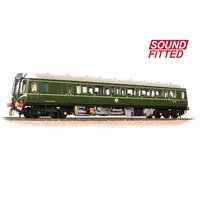
Class 121 Single-Car DMU BR Green (Speed Whiskers)
-
Bachmann
35-527SF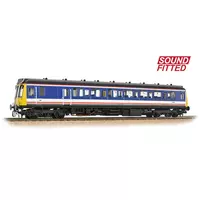
Class 121 Single-Car DMU BR Network SouthEast (Revised)
-
Bachmann
35-526SF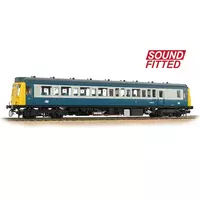
Class 121 Single-Car DMU BR Blue & Grey
-
Bachmann
35-529PF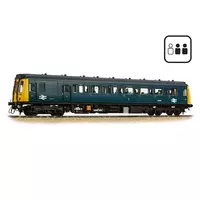
Class 121 Single-Car DMU W55033 BR Blue
-
Bachmann
35-530PF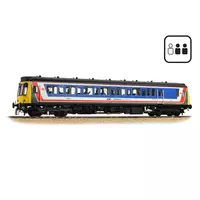
Class 121 Single-Car DMU 55022 BR Network SouthEast (Original)
-
Bachmann
35-528PF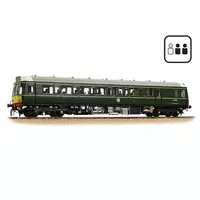
Class 121 Single-Car DMU W55028 BR Green (Small Yellow Panels)
-
Bachmann
35-528SF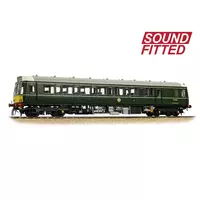
Class 121 Single-Car DMU W55028 BR Green (Small Yellow Panels)
-
Bachmann
35-530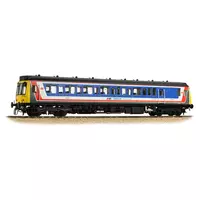
Class 121 Single-Car DMU 55022 BR Network SouthEast (Original)
-
Bachmann
35-529SF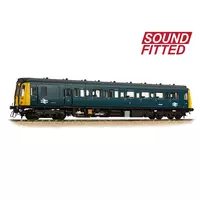
Class 121 Single-Car DMU W55033 BR Blue
-
Bachmann
35-529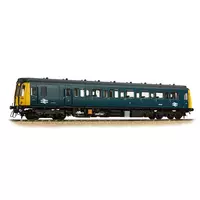
Class 121 Single-Car DMU W55033 BR Blue
-
Bachmann
35-530SF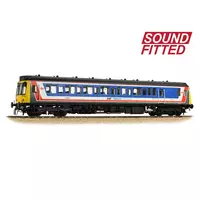
Class 121 Single-Car DMU 55022 BR Network SouthEast (Original)
-
Bachmann
35-531SF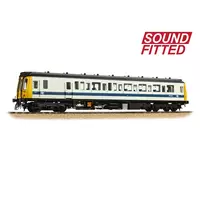
Class 121 Single-Car DMU W55034 BR White & Blue
-
Bachmann
35-528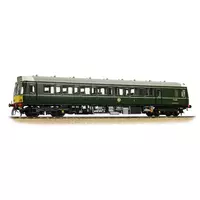
Class 121 Single-Car DMU W55028 BR Green (Small Yellow Panels)
-
Bachmann
35-525Z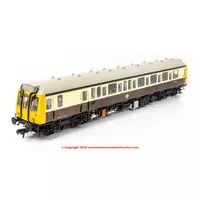
Class 121 Single Car DMU Set number 120 GW 150
Current best online offers

Online offers are generated automatically based on brand name and product code, and may not necessarily be this precise item.
Bachmann's Branchline OO scale Class 121 single-car Diesel Multiple Unit is a highly detailed model of a British Rail DMU. The model is available in a White and Blue livery with a running number of W55034. It features a 3-pole motor and flywheel for a smooth running performance and is DCC ready with a Plux 22 socket.
The model measures 278mm in length and has a minimum radius curve of 438mm. It is equipped with directional lighting, interior cab and passenger saloon lights, and illuminated headcode boxes and destination blinds. The lighting can be controlled via the chassis-mounted switches or via dedicated DCC functions.
The model features a wealth of detail, including separately applied parts such as lamp irons, exhaust pipes, and windscreen wipers. The bogies are constructed from multiple components with brake and suspension detail. The interior detailing includes seating, partitions, and a driver's chair and control desk in each cab.
The model is supplied with a pre-fitted speaker and is available with or without sound. The sound version features a Zimo MX645P22 DCC sound decoder and operates on both DCC and analogue control. The model is also available with a Plux 22 DCC decoder socket and a recommended decoder item number 36-570B.
The Class 121 was a single-car Diesel Multiple Unit built by the Pressed Steel Company between 1960 and 1961. A total of 16 units were built, with the Class being thought to be the UK's longest serving first generation DMU. The units were initially delivered to the Western Region and were used on branch lines in Cornwall and the Thames Valley before spreading to other areas and eventually being repurposed for Departmental work. Many units have survived into preservation.