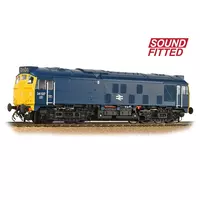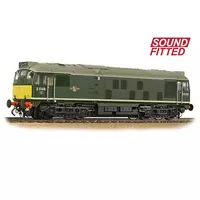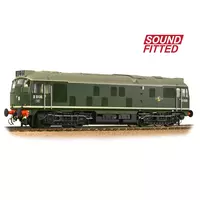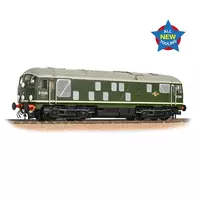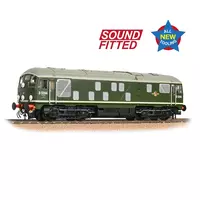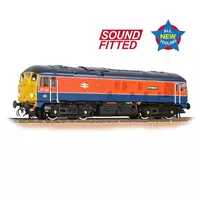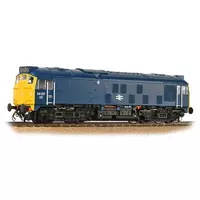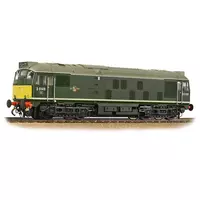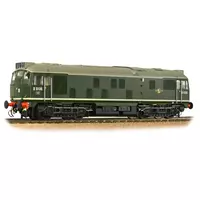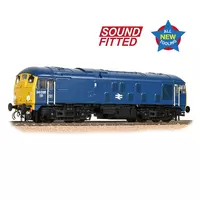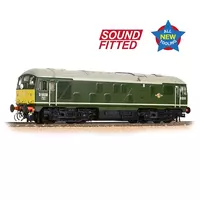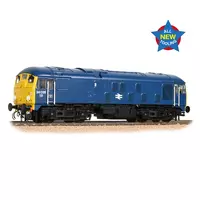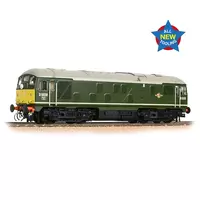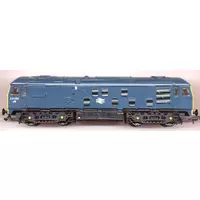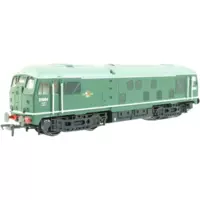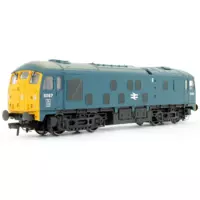
Manufacturer catalogue image - please note that pre-release images may be CAD renders or CGI images rather than photographs
Prototype Era
Era 7 (1972 to 1982) British Rail Blue (TOPS)
Manufacturer description
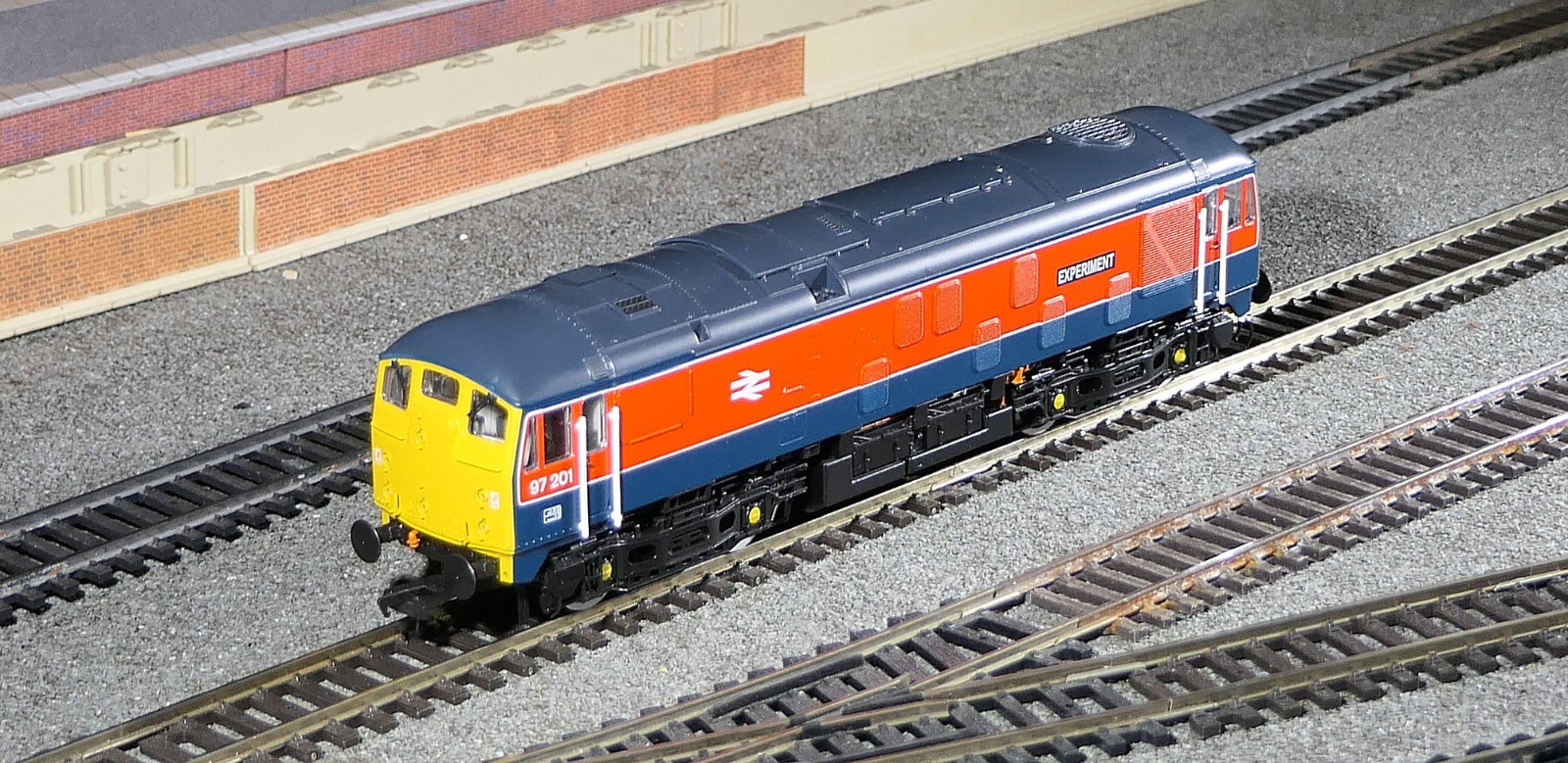
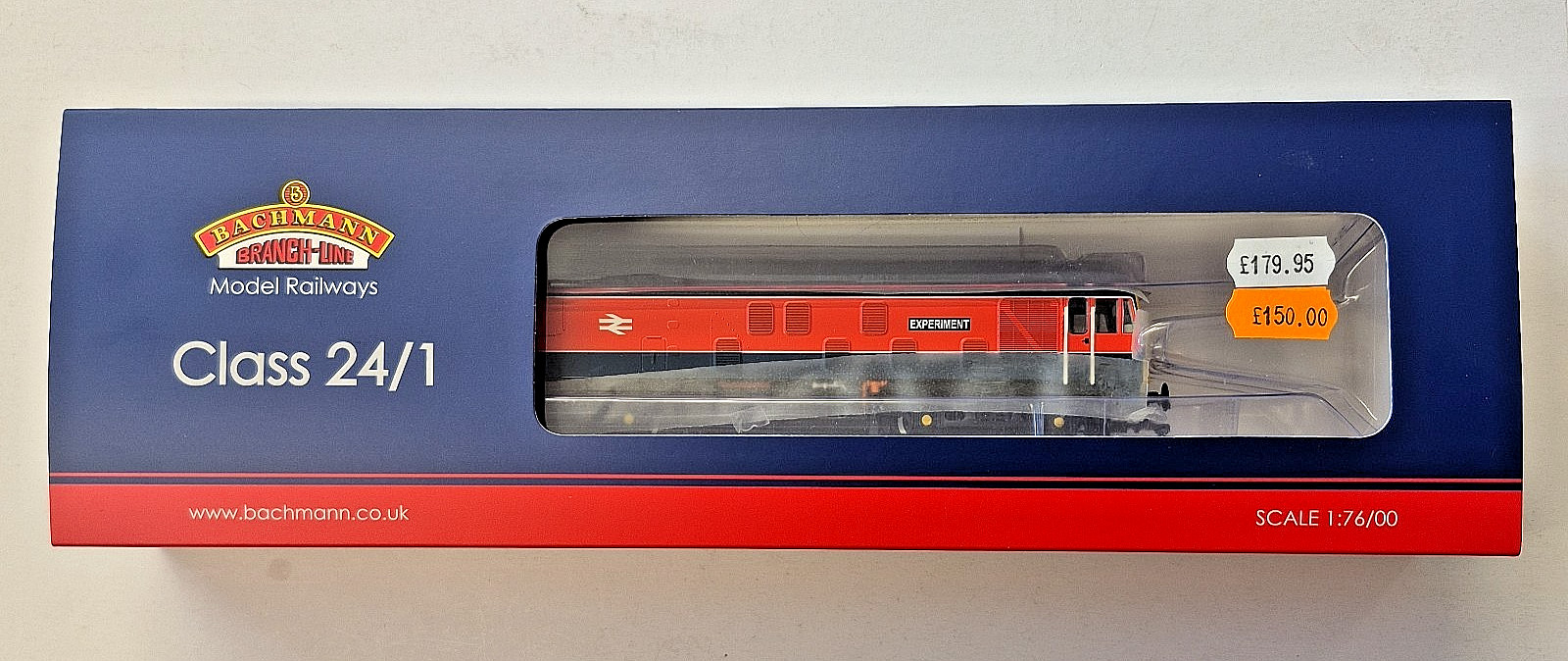
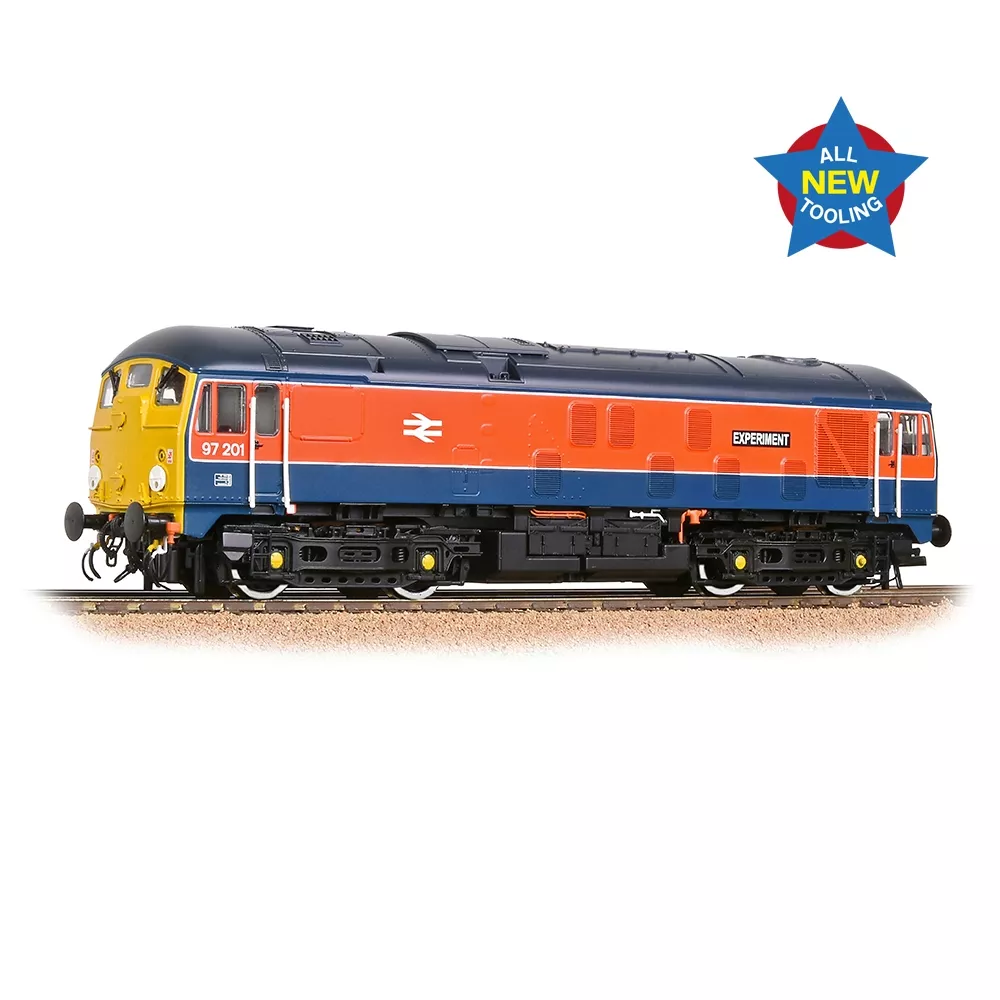
We are delighted to introduce our all-new Branchline model of Class 24/1 No. 97201 ‘Experiment’ in BR RTC (Original) livery as part of our Summer 2021 British Railway Announcements.
We’ve taken a fresh look at the classic Class 24/1 with Headcode Discs and designed this model from the rails up, developing new tooling to incorporate a wealth of detail coupled with an exquisite livery application. Features include working directional and cab* lighting plus a pre-fitted speaker for easy DCC Sound fitting – or why not choose our SOUND FITTED version instead (item No. 32-444SF)
MODEL FEATURES:
- Bachmann Branchline OO Scale
- Era 7
- Named ‘Experiment’
- Pristine BR RTC (Original) livery
- Accessory Pack included fully decorated Bufferbeam Pipework
- Supplied with a selection of Discs allowing you to choose the headcode arrangement that suits your needs
- NEM Coupling Pockets
- Sprung Buffers
- Powerful 5 Pole Motor with Twin Flywheels
- Detailed and Decorated Cab Interior
- Directional Lighting
- Interior Cab Lighting (*when used on DCC)
- Lighting can be controlled by chassis-mounted switches or via DCC
- Speaker Fitted
- Equipped with a 21 Pin DCC Decoder Socket – recommended Decoder item No. 36-557
- Length 210mm
CLASS 24/1 HISTORY
The Class 24/1 locomotives were a development of the BR Sulzer Type 2 design (later Class 24/0), which had been first introduced in 1958. Built at BR’s Derby, Crewe and Darlington Works from 1960, the Class 24/1 diesel-electric locomotives were produced in various batches until 1961, with a total of 151 Class 24s produced by the BR workshops between 1958 and 1961.
All Class 24s were powered by the reliable 6LDA28-A Sulzer engine which gave an output of 1,160bhp. The Class 24/1s were lighter in weight than the 24/0s, owing to their smaller fuel and water tanks which gave the locomotives wider route availability. Disc headcodes were fitted up to No. D5113 (24113), after which the remaining 24/1s were built with headcode boxes.
Examples were allocated to both the London Midland Region and Eastern Region, and with the Class becoming familiar to crews and staff around London they were used on freight trains over the Metropolitan Widened Lines. Locos allocated to East Anglia for use on freight soon became redundant due to the rundown of freight in that region, and these were, in turn, moved to Wales and Lancashire.
The batch numbered D5096–D5113 were all allocated to Gateshead depot in 1966 to replace 9F steam locomotives on the Tyne Dock to Consett iron ore trains. These workings used a special design of bogie hopper wagon and with typical loads of around 1,000 tons, the Class 24s were double-headed and continued in this role until taken over by Class 37s in the 1970s, when the 24s were reallocated to Scottish depots.
The first Class 24 was withdrawn in 1967 following fire damage but the last – 24/1 No. 24081 – remained in service until 1980. Class 24/1 No. 24061 survived until 1987 thanks to its transfer to Departmental use and was one of four Class 24s to be preserved (three of which are 24/1s).
The Bachmann Branchline range also includes models of the Class 24/0 and Class 24/1 with headcode boxes.
Catalogue listing
Model details
Interior lighting
Pickup in tender
Prototype information
BR Darlington Works
BR Crewe Works
* Class names often change over the lifespan of a locomotive, so this is not necessarily the class name used by the operator in the period modelled.
Supplier Links


Supplier links are provided for your convenience and do not guarantee that the product is currently available. RailwayModels.uk is not a representative of these suppliers, but may receive a commission when purchases are made through links on this page.