Bachmann 31-168A
L&YR Class 5 Tank 10730 LMS Crimson Lake (LMS)
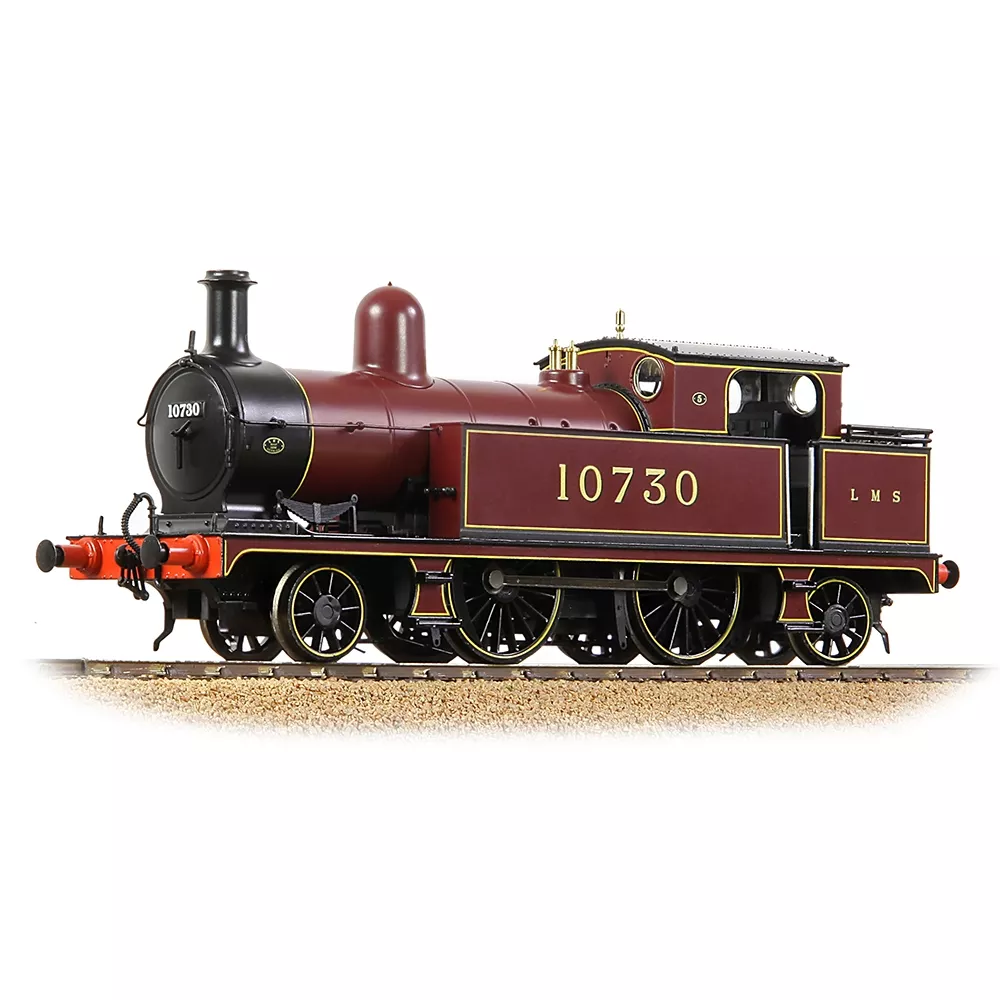
Manufacturer catalogue image - please note that pre-release images may be CAD renders or CGI/AI images rather than photographs
Prototype Era
Era 3 (1923 to 1947) The Big Four (LNER, LMS, GWR and SR)
Manufacturer description
L&YR 2-4-2 Class 5 Tank 10730 LMS Crimson Lake
Built: 1889 – 1910
Built for: L&YR (absorbed by the LMS)
Designed by: Sir John A. F. Aspinall
Duties: passenger
Wheels: 2-4-2T
Highlights
• Our model depicts the short-bunker variant
• Fully detailed and decorated cab interior
• Electrical pick-up from all axles
• Sprung buffers
History
The Lancashire & Yorkshire Railway Class 5 was a class of steam engine designed by Sir John Aspinall. No. 1008 was the first locomotive to be completed at the company’s works in Horwich near Bolton and is the only British standard gauge 2-4-2 tank engine preserved.
Between 1889 and 1911, 330 locomotives of this design were produced by the L&YR for use with passenger trains over steeply graded tracks. The locomotives were fitted with a special type of water scoop (unusual in a tank engine), which operated in both directions and allowed them to pick up water from water troughs between the lines without stopping. The design was progressively enlarged throughout the construction period on the same 24ft 4ins total wheelbase to give the engines greater fuel and water capacity.
Catalogue listing
Model details
Prototype information
Wirral Railway
London, Midland & Scottish Railway
British Railways
* Class names often change over the lifespan of a locomotive, so this is not necessarily the class name used by the operator in the period modelled.
Supplier Links


Supplier links are provided for your convenience and do not guarantee that the product is currently available. RailwayModels.uk is not a representative of these suppliers, but may receive a commission when purchases are made through links on this page.
Related products
-
Bachmann
31-170
L&YR Class 5 Tank 50764 BR Lined Black (British Railways)
-
Bachmann
31-171
L&YR Class 5 Tank 1042 L&YR Lined Black
-
Bachmann
31-167DC
Class 5 L&YR 2-4-2T 50795 in BR lined black with early emblem (weathered). DCC Fitted
-
Bachmann
31-165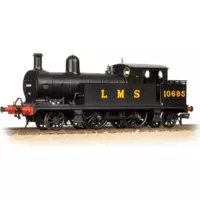
Class 5 L&YR 2-4-2T 10695 in LMS black
-
Bachmann
31-168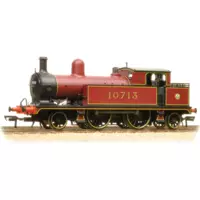
Class 5 L&YR 2-4-2T 10713 in LMS crimson
-
Bachmann
31-169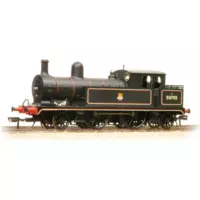
Class 5 L&YR 2-4-2T 50705 in BR black with early emblem
-
Bachmann
31-166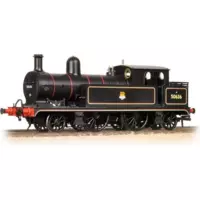
Class 5 L&YR 2-4-2T 50636 in BR lined black early emblem
-
Bachmann
31-166NRM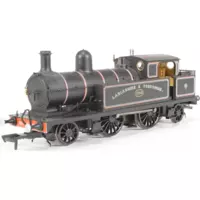
Aspinall Radial Class 5 2-4-2T 1008 in L&YR Lined Black - NRM Special Edition
Bachmann L&YR Class 5 Tank 10730 in LMS Crimson Lake livery is a 2019 Range model finished to a pristine standard. The locomotive is built to a 2‑4‑2 wheel arrangement, measures 151 mm in length and is fitted with a DCC‑ready 6‑pin socket. It can negotiate a minimum radius curve of the first radius, 371 mm, and draws power from electrical pickups on all axles. Sprung buffers and a fully detailed, decorated cab interior are included, and the model represents the short‑bunker variant of the original design.
The prototype was constructed between 1889 and 1910 for the Lancashire and Yorkshire Railway, later absorbed by the London, Midland and Scottish Railway. Designed by Sir John Aspinall, a total of 330 locomotives of this class were produced for passenger duties on steeply graded routes. The original engines featured a bi‑directional water scoop that allowed water to be taken up from troughs without stopping, and they retained a 24 ft 4 in wheelbase throughout their production life.
This model carries the manufacturer part number 31‑168A and represents the period of the British “Big Four” railway companies (LNER, LMS, GWR and SR). It is intended for use on 00 gauge layouts.