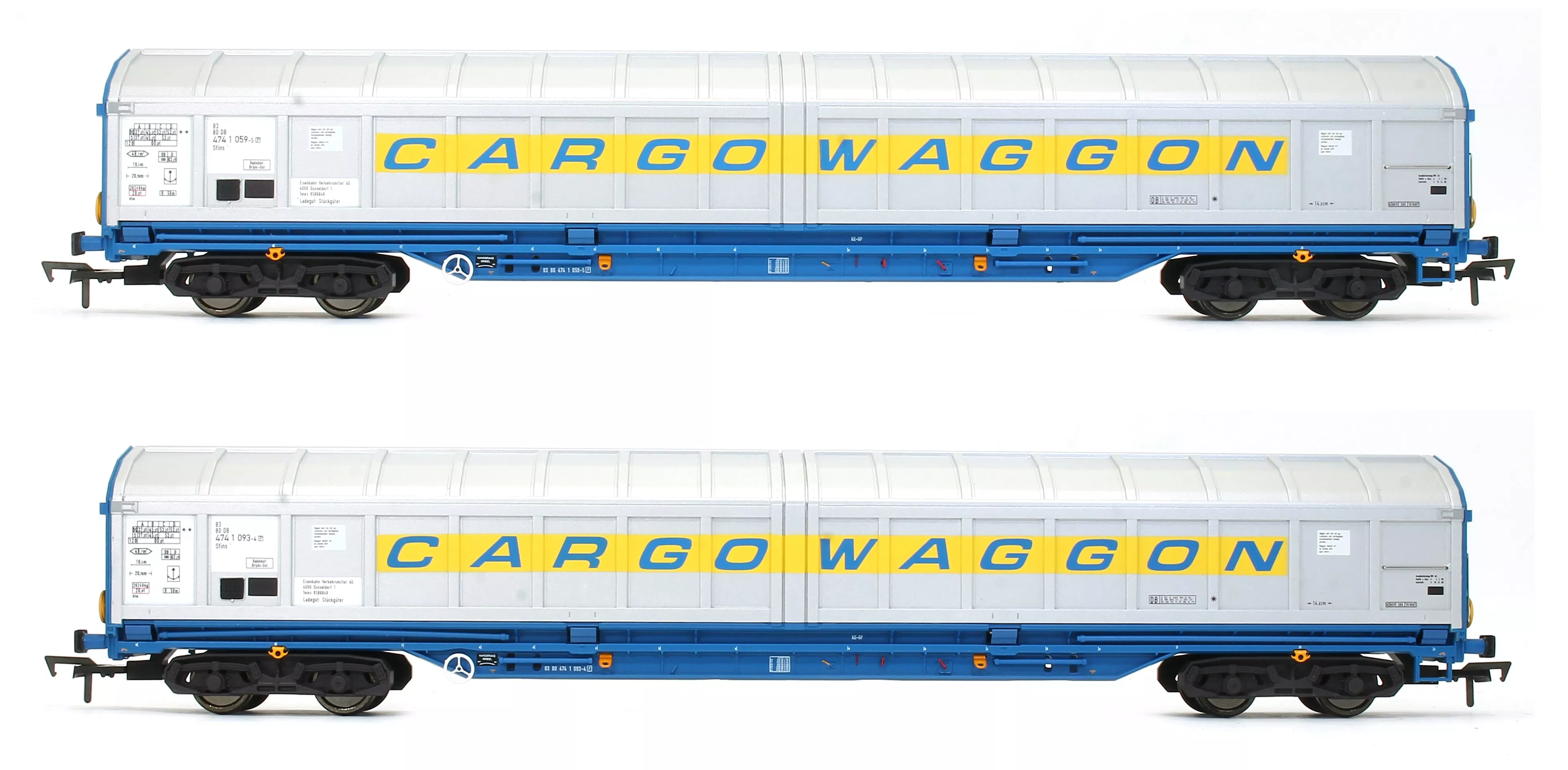
Manufacturer catalogue image - please note that pre-release images may be CAD renders or CGI/AI images rather than photographs
Prototype Era
Era 9 (1995 to 2004) Initial Privatisation
Manufacturer description
This pack contains two IWA Sfins2 holdall van models
160 of these ferryvans were built by Waggon Union from 1987 and their design incorporated integral one-piece sides and roofs so that each complete half can be lifted and slid over the other, using the distinctive handwheels at each end, for unencumbered loading and unloading.
When built they were operated by Cargowaggon GMbH and ISIS/Norsk Hydro. The Hydro wagons were primarily used to transport fertiliser from Immingham to destinations in the Midlands, Scotland and south Wales. Those in Cargowaggon livery saw more varied use on steel traffic, bottled water and newsprint in both block trains and Speedlink wagonload services. Many are still in use on trains carrying aluminium ingots from Ditton Foundry near Warrington to Nievenheim in Germany via the Channel tunnel. 30 of the Sfins2 vans have had the hoods removed and been converted into timber carriers which we are also offering.
Features:
- 4mm/OO (1:76.2 scale) model of the IWA Sfins2 holdall van
- Pack of two wagons, each with individual running number and decoration
- NEM standard coupler pockets with NEM narrow tension lock couplers provided
- Kinemetic close coupling mechanism
- Extra fine factory fitted detail plastic parts and pipes
- Blackened RP25.110 profile wheelsets 26mm over pinpoints
Catalogue listing
Supplier Links


Supplier links are provided for your convenience and do not guarantee that the product is currently available. RailwayModels.uk is not a representative of these suppliers, but may receive a commission when purchases are made through links on this page.