Oxford Diecast 76LTE003
Lotus Elite Sunburst Yellow/Silver - 1:76 Scale
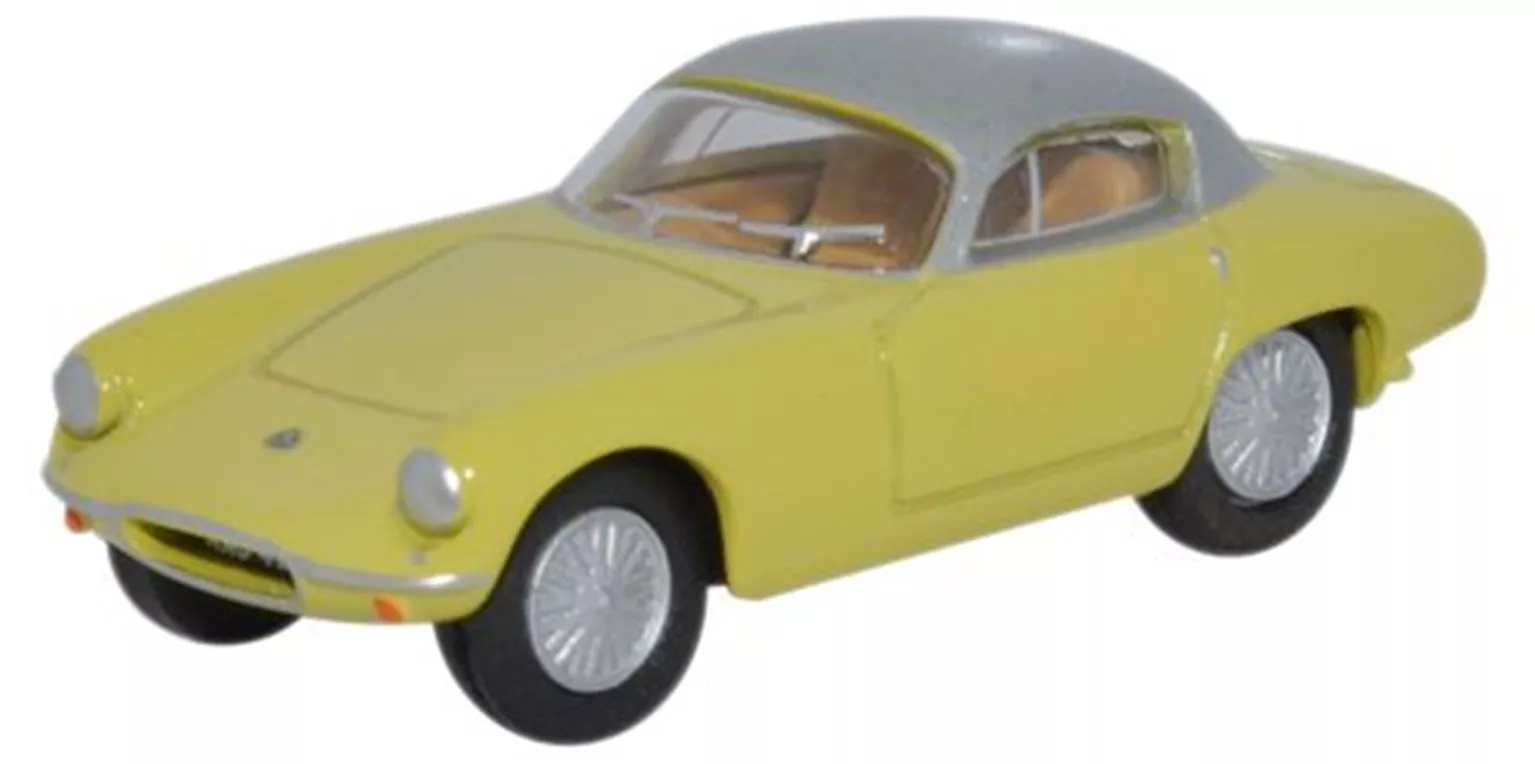
Manufacturer catalogue image - please note that pre-release images may be CAD renders or CGI/AI images rather than photographs
Prototype Eras
Era 5 (1956 to 1966) British Railways Late Crest
Era 6 (1967 to 1972) British Rail Blue (Pre-TOPS)
Era 7 (1972 to 1982) British Rail Blue (TOPS)
Era 8 (1983 to 1994) British Rail Sectorisation
Manufacturer description
The delicate colour scheme on this release of the Lotus Elite is positively springlike with its pale yellow and contrasting silver roof, making for a very pretty result. In real life this Type 14 was the first Elite to come into production in 1958, classed as a two-seater sports coupe. Its revolutionary fibreglass body and resultant light weight had a great effect on its amazing acceleration and speed. This model is registered XAS 403 and comes with spoked wheels, black chassis and light buff interior. There is a mass of chromework in gleaming contrast to the body colour, rounded off with the prestigious Lotus badge at the front edge of the bonnet.
Catalogue listing
Supplier Links


Supplier links are provided for your convenience and do not guarantee that the product is currently available. RailwayModels.uk is not a representative of these suppliers, but may receive a commission when purchases are made through links on this page.
Oxford Diecast Lotus Elite Sunburst Yellow/Silver – 1:76 Scale
Manufacturer part number 76LTE003. The model represents the Lotus Type 14 Elite, first produced in 1958 as a two‑seater sports coupe. It is a 1:76 scale die‑cast replica finished in a pale yellow body with a contrasting silver roof, spoked wheels, black chassis and a light buff interior. The vehicle carries the registration XAS 403 and includes extensive chromework and the Lotus badge on the front edge of the bonnet.
The colour scheme is described as delicate and springlike, with the pastel yellow and silver roof giving a very pretty appearance. The original Elite featured a revolutionary fibreglass body, which contributed to its light weight and notable acceleration and speed.