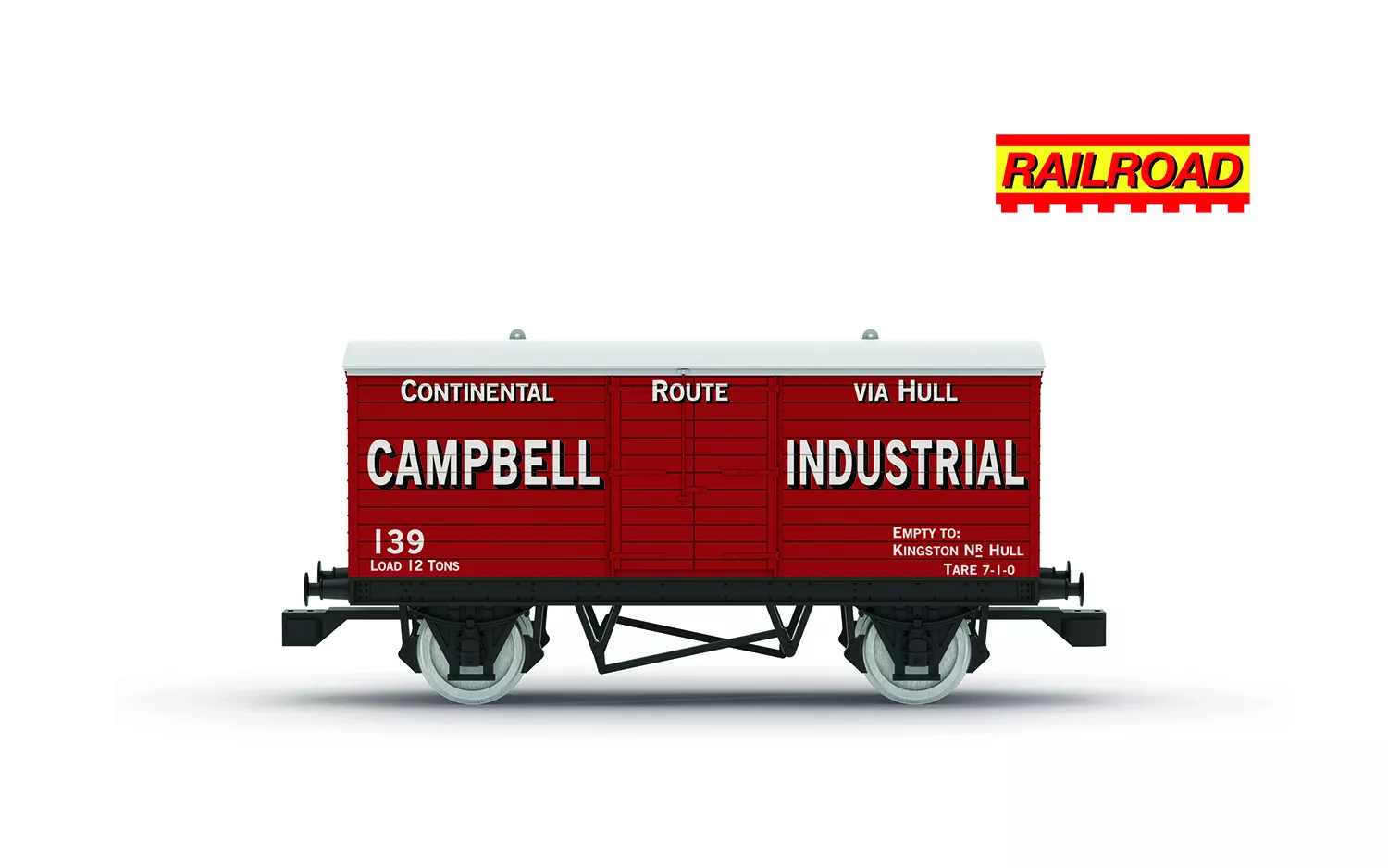
Manufacturer catalogue image - please note that pre-release images may be CAD renders or CGI/AI images rather than photographs
Prototype Era
Era 3 (1923 to 1947) The Big Four (LNER, LMS, GWR and SR)
Manufacturer description
This newly tooled RailRoad vent van, carrying the name ‘Cambell Industrial’, is an ideal model to add to a steam-period freight train. Whilst wooden vent vans were mainly used during the steam era, they remained on the rails into the diesel era and there are many still on preserved railways around the UK today making this a timeless piece to add to a model railway layout.
The vent van was a small multipurpose goods van which transported all manner of items whilst keeping them protected from the wind and rain. The wagon design features a single vent on each end of the structure, allowing air to flow, thereby maintaining a cooler air temperature, beneficial for the transportation of perishable food items. Closed vans were often loaded with all manner of miscellany such as flour, meat, parcels or perhaps scale models.
Catalogue listing
Model details
Prototype information
Supplier Links



Supplier links are provided for your convenience and do not guarantee that the product is currently available. RailwayModels.uk is not a representative of these suppliers, but may receive a commission when purchases are made through links on this page.