Hornby R3616
LMS, Class 5MT, 4-6-0, 5089 - Era 3
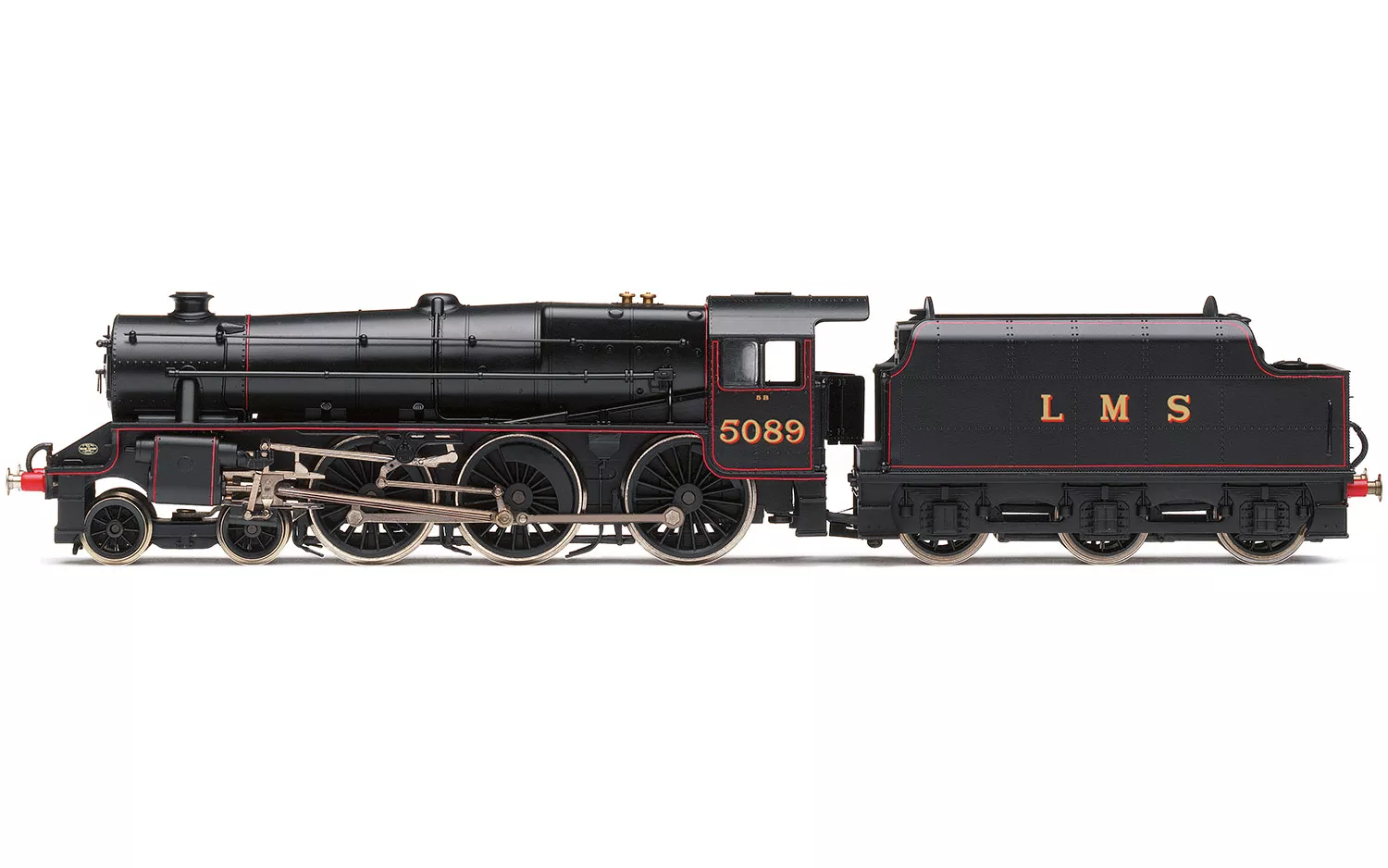
Manufacturer catalogue image - please note that pre-release images may be CAD renders or CGI/AI images rather than photographs
Prototype Era
Era 3 (1923 to 1947) The Big Four (LNER, LMS, GWR and SR)
Manufacturer description
If ever a locomotive deserves the description of 'ubiquitous' it the London, Midland and Scottish Railway's mixed traffic, medium powered Class 5 locomotives which were designed by Sir William Stanier and universally referred to as "Black Fives'.
Stanier, who had previously been the Works Manager at the GWR Works at Swindon, realized that there was a need for larger locomotives with greater pulling power on the LMS and, using his experience gained at Swindon, took inspiration from the GWR Hall Class locomotives. Initially twenty were ordered from the Crewe Works and a further eighty from the Vulcan Foundry with the numbering starting from 5000. The first locomotive to be completed was actually engine No.5020 in 1934 which was built at the Vulcan Foundry whilst locomotive No.5000, the first Crewe built example, did not emerge until 1935.
Construction was carried out at a variety of locations in time; Crewe, Horwich, and Derby works all built numbers of the class and outside contractors, Armstrong Whitworth and the Vulcan Foundry also built considerable numbers. Armstrong Whitworth constructed no less than 327 of them, a huge number for an outside contractor and the firm landed the largest single locomotive order ever given by a British railway company to an outside contractor, when the LMS ordered a block of 227 'Black Fives' from them in 1936. The original examples were built without a dome, with straight throatplace boilers and a low degree superheat but wartime restrictions halted the construction of the Class, with No.5471 being the last produced for five years.
In April 1943 production recommenced with the workshops at Derby, Crewe and Horwich producing batches every year until 1951, these post war examples being built with George Ivatt's forward top feed type boilers. There were a number of additional detail variations in the locomotives during and after manufacture with modifications introduced in 1948 by George Ivatt, which included changes to bearings and the introduction of Caprotti valve gear. A total of 842 Class 5 locomotives were built between 1934 and 1952, of which only five were named, all after Scottish regiments. The class were probably the most widely used steam locomotive to operate in the United Kingdom, operating the S&DJR route from Bath to Bournemouth, the route from Bristol to Birmingham, routes across the LMS region, out along the old Highland Railway's Scottish west coast routes and right up to the tip of Scotland, to Wick & Thurso, on the former Great North of Scotland lines.
Their ability to handle an enormous variety of duties with consummate ease made them popular not only with the traffic departments, but also with the crews who worked on them and it was fitting that, on August 4, 1968, 'Black Five' No.45212 headed up the last steam hauled timetabled passenger train on British Railways. Built as 5089 at the Vulcan Foundry in April 1935, the locomotive entered traffic on April 14th, allocated to Crewe Shed followed six months later by a move to Sheffield.
Like the majority of the 'Black Five' class, 5089 served across the LMS region, but prior to nationalization it spent much of its time in Yorkshire and Cheshire, being renumbered under British Railways to 45089 in October 1948 whilst at Crewe North.
Catalogue listing
Model details
Non-NEM socket
Prototype information
British Railways
Derby & Horwich Works
Vulcan Foundry
Armstrong Whitworth
* Class names often change over the lifespan of a locomotive, so this is not necessarily the class name used by the operator in the period modelled.
Supplier Links



Supplier links are provided for your convenience and do not guarantee that the product is currently available. RailwayModels.uk is not a representative of these suppliers, but may receive a commission when purchases are made through links on this page.
Related products
-
Hornby
R3596
LMS Black 5 Class 4-6-0 No.5000
-
Hornby
R3805
1:1 Collection: BR, Class 5MT, 4-6-0, 45379 - Era 11 - Limited Edition of 1000
-
Hornby
R3385TTS
BR, Class 5MT, 4-6-0, 45116 with TTS Sound - Era 4
-
Hornby
R3453
BR, Class 5MT, 4-6-0, 45274 Black 5, Late BR - Era 5
-
Hornby
R3494
RailRoad, BR, Class 5MT 'Black Five', 4-6-0, 45025 - Era 5
-
Hornby
R3599TTS
BR (Late) Black 5 Class 4-6-0 Steam Locomotive No.45000 DCC with TTS Sound! - OO Gauge
-
Hornby
R30224
LMS, Stanier 5MT 'Black 5', 4-6-0, 5200 - Era 3
-
Hornby
R30227
BR, Stanier 5MT 'Black 5' Caprotti, 4-6-0, 44755 - Era 4 (Web Exclusive)
-
Hornby
R30225SS
BR, Stanier 5MT 'Black 5', 4-6-0, 44726 With Steam Generator - Era 5
-
Hornby
R30226
BR, Stanier 5MT 'Black 5', 4-6-0, 45157 'Glasgow Highlander' - Era 5
-
Hornby
R30393
BR (Late) - Stanier 5MT 'Black 5' - 44907
-
Hornby
R30274
LMS - Stanier 5MT 'Black 5' - 5047
-
Hornby
R30389
BR - Stanier 5MT Black 5 - 44748 'Late Caprotti'
-
Hornby
R3299
Going Home train pack - 70th Anniversary of the end of WWII with Black 5 4-6-0 5156 in LMS Black and 3 x LMS Period 3 Coaches - Limited Edition
-
Hornby
R2881
Class 5 Black 5 5112 in LMS Lined Black (Railroad Range)
-
Hornby
R2257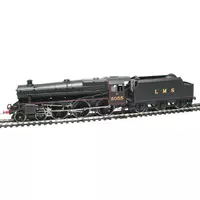
Class 5MT Black Five 4-6-0 5055 in LMS black
-
Hornby
R2250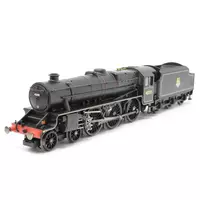
Class 5MT Black 5 4-6-0 45253 in BR black with early emblem
-
Hornby
R2322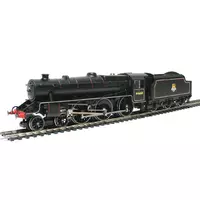
Class 5MT Black Five 4-6-0 44668 in BR Black with early emblem
-
Hornby
R2323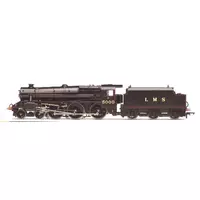
Class 5MT Black Five 4-6-0 5000 in LMS lined black
-
Hornby
R2359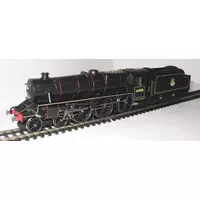
Class 5MT Black Five 4-6-0 44908 in BR black with early emblem
-
Hornby
R2360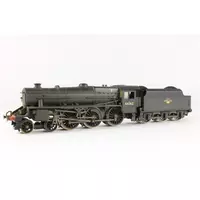
Class 5 Black 5 4-6-0 44762 in BR Black with late crest (weathered)
-
Hornby
R2258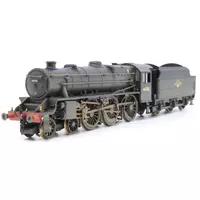
Class 5MT Black 5 4-6-0 44781 in BR black with late crest - weathered
-
Hornby
R2321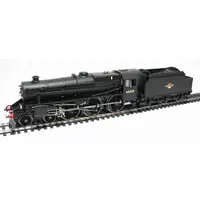
Class 5MT Black Five 4-6-0 45455 in BR Black with late crest
-
Hornby
R2382
Class 5 Black 5 4-6-0 44666 in BR Black with late crest - weathered
-
Hornby
R2449
Class 5MT Black Five 4-6-0 45157 Glasgow Highlander in BR Black with late crest
-
Hornby
R2450
Class 5MT Black Five 4-6-0 45393 in BR black with early emblem - weathered
-
Hornby
R2555
Class 5 4-6-0 45156 Ayrshire Yeomanry in BR Black with late crest
-
Hornby
R2561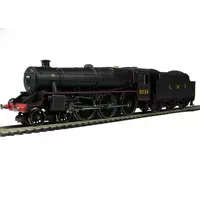
Class 5 4-6-0 5036 in LMS Lined Black
-
Hornby
R2686A
Class 5 4-6-0 44781 in BR Black with late crest. Limited edition of 1004
-
Hornby
R2686B
Class 5 4-6-0 44871 in BR black with late crest
-
Hornby
R2804XS
Class 5MT black five 4-6-0 44875 in BR black with early emblem - DCC sound fitted
-
Hornby
R2857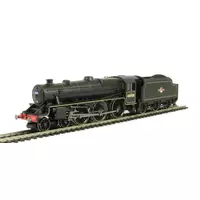
Black 5 4-6-0 45458 in BR black with late crest
-
Hornby
R2887M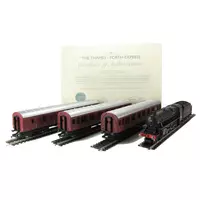
The Thames Forth Express train pack with Black 5 class in LMS black and 3 LMS maroon coaches
-
Hornby
R2895XS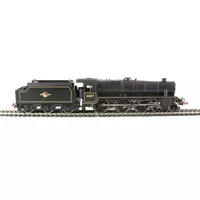
Black 5 Class 4-6-0 45377 in BR Lined Black with late crest (DCC Sound fitted)
-
Hornby
R2979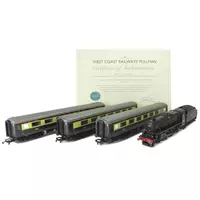
West Coast Railways Pullman with 4-6-0 Black 5 44932 and 3 pullman cars Bassenthwaite, Buttermere, Rydal Water
-
Hornby
R2995XS
Class 5 Black 5 4-6-0 45010 in BR weathered Black with late crest (DCC Sound fitted)
-
Hornby
R3323
Class 5MT Black 5 4-6-0 44694 in BR Black with late crest
-
Hornby
R2904
Black 5 Class 5MT 4-6-0 45190 in BR Black with late logo - Pete Waterman Collection
Hornby LMS Class 5MT model No. 5089 is an OO gauge, Era 3 locomotive. The model is DCC‑ready with an 8‑pin socket and is finished in pristine condition with a lined black livery.
The locomotive is a 4‑6‑0 steam engine, 256 mm long, running on a 5‑pole skew‑wound motor. It uses NEM couplings and picks up power from both the driving wheels and the tender wheels. The minimum curve radius is 2nd radius (438 mm) and it is supplied in black colour.
The real locomotive was designed by Sir William Stanier for the London, Midland & Scottish Railway and built between 1934 and 1951. A total of 842 examples of the Class 5 “Black Five” were produced at Crewe, Derby and Horwich works and by external contractors Armstrong Whitworth and Vulcan Foundry. The model represents the “Big Four” era of British railways.
Locomotive No. 5089 was constructed at the Vulcan Foundry in April 1935, entered traffic on 14 April 1935 and was initially allocated to Crewe shed before moving to Sheffield. Prior to nationalisation it operated mainly in Yorkshire and Cheshire and was renumbered 45089 by British Railways in October 1948.