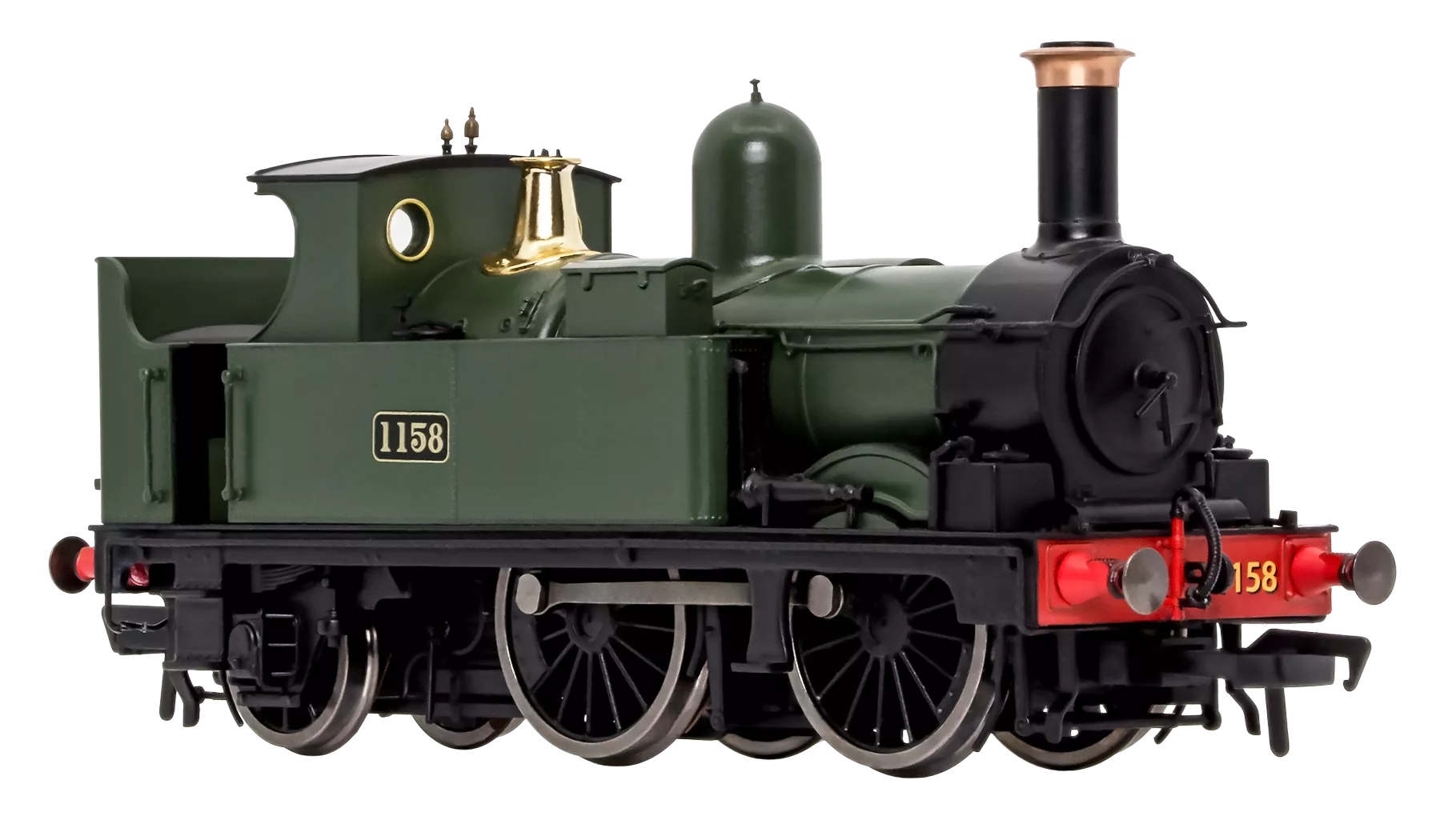
Manufacturer catalogue image - please note that pre-release images may be CAD renders or CGI images rather than photographs
Prototype Eras
Era 2 (1875 to 1923) Pre-grouping
Era 3 (1923 to 1947) The Big Four (LNER, LMS, GWR and SR)
Manufacturer description
The locomotive will have all of the usual refinements that are expected to be found on all Dapol models including:
- Diecast chassis, running plate, wheels (with metal tyres) boiler and fire box (two fire box types)
- Fully compensated chassis
- Three cab types: open, closed and the later Collett design
- Detailed cab interiors
- Removable cab roof (held in place with magnets)
- Tall and short chimney types
- Churchward sprung tapered shank buffers
- High level of separately added detail
- Representation of internal motion
- Expertly applied liveries
- Printed number plates with etched plates in the accessory pack
Technical Specification
- A slide in PCB offers simple ‘tool-free’ installation of a NEXT-18 DCC decoder and a ’no-solder’ speaker connection. This board slides
- through the smoke box door and connects directly to the locomotive mother board.
- Firebox glow (synchronised with sound*)
- Coreless Motor
- Next-18 DCC Socket
- DCC Ready, DCC fitted & DCC sound fitted options will be available.
- Enhance your driving experience with our feature RealDrive*
- * Factory fitted models only
The 517 Class were small 0-4-2T tank engines designed by George Armstrong for local passenger work on the Great Western Railway. 144 were built at Wolverhampton Works in 13 lots and were outshopped between 1868 and 1885. During the late 1880’s and early 1890’s most had their wheelbases lengthened to 15 foot 6 inches and from 1904 onwards several were converted to auto train working which scattered them over the system. When Charles Collett became CME, during 1924 he widened the tanks and provided a new cab with extended bunker which became the Swindon rebuild and outwardly looked very similar to the later 48xx class he designed in 1932. The last of the class 1159 was withdrawn in August 1947 just missing out on nationalization. All members of the class were disposed of with none making it into preservations Dapol will be making models having the later modified chassis with longer wheel base and side tanks replacing the saddle tanks including open and closed cab versions.
Catalogue listing
Model details
Supplier Links


Supplier links are provided for your convenience and do not guarantee that the product is currently available. RailwayModels.uk is not a representative of these suppliers, but may receive a commission when purchases are made through links on this page.