Dapol 4S-027-002S
D Class Southern Lined Maunsell Olive Green 1730 DCC Sound fitted
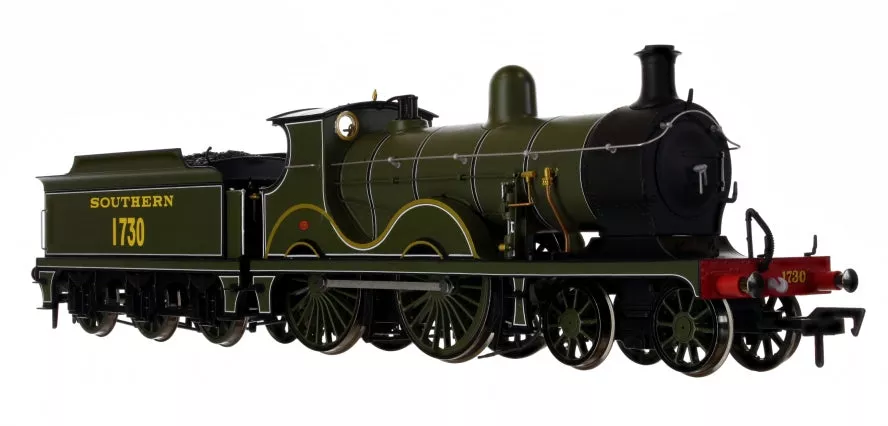
Manufacturer catalogue image - please note that pre-release images may be CAD renders or CGI/AI images rather than photographs
Prototype Era
Era 3 (1923 to 1947) The Big Four (LNER, LMS, GWR and SR)
Manufacturer description
51 D Class 4-4-0 locomotives were built between February 1901 and March 1907 during the Wainwright period by the South Eastern & Chatham Railway. From delivery these locomotives were used on the prime express trains to the Kent Coast and Hastings including those carrying boat train traffic for the Continent via the Cinque Ports. During the First World War there was a considerable increase in troop and ambulance train traffic between London and the ports of Dover and Folkestone. The D Class were also utilised on trains conveying armoured vehicles to Richborough and other ports as the war advanced in Europe. Twenty-one of the Class were rebuilt between April 1921 and October 1927 as D1 Class 4-4-0s, leaving 30 D Class locomotives in operation. During the first years for the Southern Railway the locomotives continued to appear on front-line express duties. As larger locomotives appeared the D Class locomotives began to appear on South Central services. The outbreak of World War 2 in September 1939 saw many of the class laid up due to the wartime travel restrictions resulting in a reduction of passenger traffic. 28 members of the D Class entered British Railways stock, two of the total class of 30 locomotives being scrapped prior to Nationalisation. The first of the Class (No. 1242) was withdrawn in October 1944 due to wartime damage and the last in December 1956. No. 31737 survives into preservation and resides as a static display at the NRM facility in York.
Technical Specification
• Diecast Chassis
• Low centre of gravity between the wheels
• NEM couplings with removable coupling pocket
• Sprung buffers
• R2 (438mm/17.2”) minimum radius
• Pickup from tender and driving wheels
• Powerful 5 pole motor in boiler
• Pull-out PCB for tool free DCC & Speaker fitting.
• ‘Snap-fit’ conductive tender drawbar
• Options for bass reflex speaker in tender (pre-wired)
• Firebox glow
• Profiled wheels
• Detailed motion
• Removable coal load with internal tender profiling
• Fully detailed back-head and cab interior.
Variations
• Two boiler variations
• Two cab types
• Three Chimney Types
• Two Smokeboxes
• Three tender variations
• Additional detail variations
‘Snap-fit’ tender drawbar—a robust solution for simple mechanical & electrical connection of the tender
Dapol's Toolless DCC & Speaker Installation
Simplifying & Reducing the risk of DCC Installation
Catalogue listing
Model details
Prototype information
Dubs & Co
Sharp, Stewart & Co
Robert Stephenson & Co
Vulcan Foundry
Southern Railway
British Railways
* Class names often change over the lifespan of a locomotive, so this is not necessarily the class name used by the operator in the period modelled.
Supplier Links


Supplier links are provided for your convenience and do not guarantee that the product is currently available. RailwayModels.uk is not a representative of these suppliers, but may receive a commission when purchases are made through links on this page.
Related products
-
Dapol
4S-027-001
Wainwright D Class SECR Green 4-4-0 Steam Locomotive No.488 (Pre Grouping Silk Finish)
-
Dapol
4S-027-006
D Class Southern Sunshine 1734
-
Dapol
4S-027-005
D Class SECR Grey, scraped beading 726
-
Dapol
4S-027-004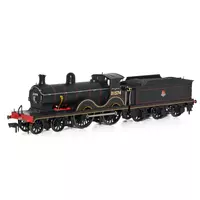
Wainwright D Class BR Lined Black Early Crest 4-4-0 Steam Locomotive No.31574 - OO Gauge
-
Dapol
4S-027-003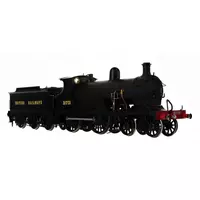
D Class BR Early Crest Sunshine Lettering 31731
-
Dapol
4S-027-002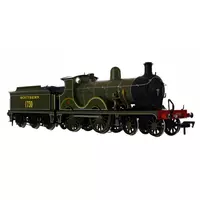
Wainwright D Class Southern Lined Maunsell Olive Green 4-4-0 Steam Locomotive No.1730
-
Dapol
4S-027-006S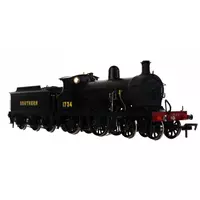
D Class Southern Sunshine 1734 DCC Sound Fitted
-
Dapol
4S-027-003S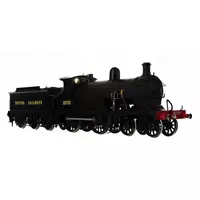
D Class BR Early Crest Sunshine Lettering 31731 DCC Sound Fitted
Dapol D Class Southern Lined Maunsell Olive Green 1730 is a OO gauge model locomotive fitted with DCC sound. It reproduces a 4‑4‑0 wheel arrangement and carries manufacturer part number 4S‑027‑002S. The model represents the Southern Railway’s “Big Four” era.
The prototype locomotives were built by Ashford Works, Dubs & Co, Sharp, Stewart & Co, Robert Stephenson & Co and Vulcan Foundry between February 1901 and March 1907. Fifty‑one D Class 4‑4‑0s were delivered to the South Eastern & Chatham Railway for express services to the Kent coast and Hastings, later serving wartime troop and ambulance trains and, after 1923, the Southern Railway and British Railways. The class was withdrawn between 1 October 1944 and 31 December 1956, with No. 31737 preserved at the National Railway Museum, York.
Technical features include a die‑cast chassis with a low centre of gravity, NEM couplings with a removable coupling pocket, sprung buffers and a minimum radius of 438 mm (17.2 in). Power is supplied by a five‑pole motor in the boiler, with pickup from both tender and driving wheels. Dapol’s tool‑free DCC and speaker installation uses a pull‑out PCB and a snap‑fit conductive tender drawbar; optional bass‑reflex speakers are pre‑wired in the tender. The model also offers firebox glow, profiled wheels, detailed motion, a removable coal load, and fully detailed back‑head and cab interior.
The range includes two boiler options, two cab types, three chimney styles, two smokebox designs, three tender variations and other detail options, allowing owners to customise the appearance of the locomotive.