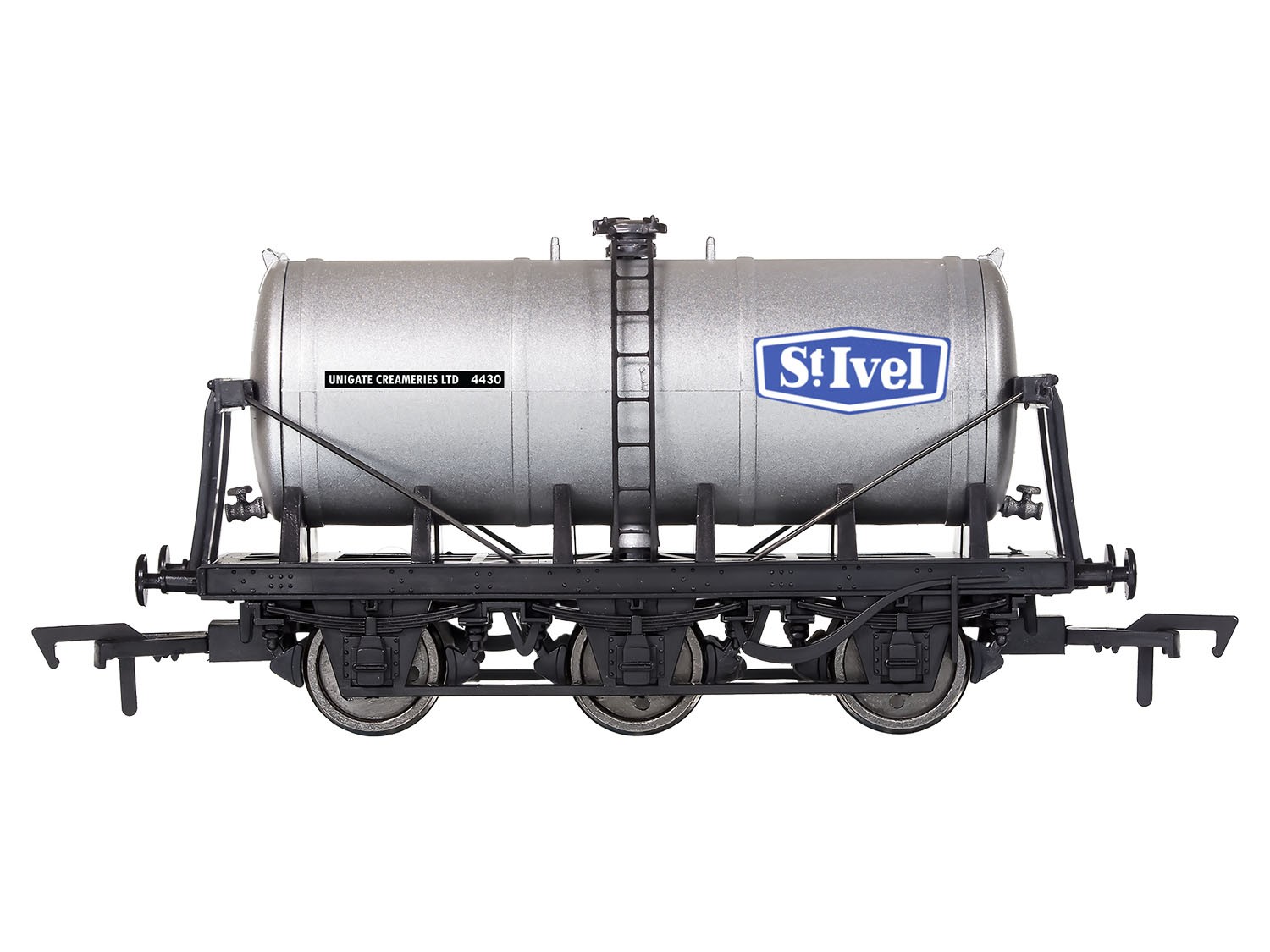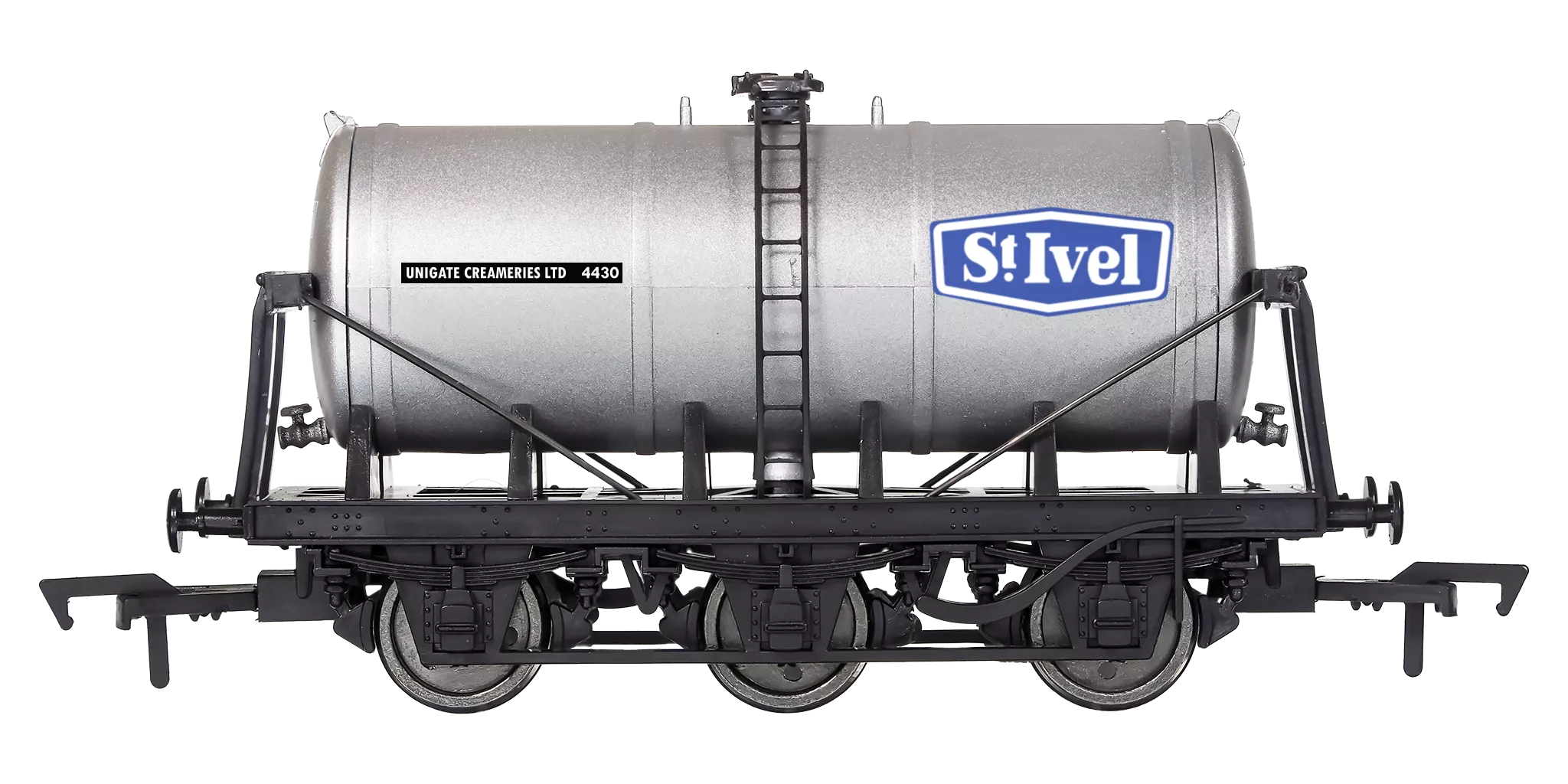
Manufacturer catalogue image - please note that pre-release images may be CAD renders or CGI/AI images rather than photographs
Prototype Eras
Era 3 (1923 to 1947) The Big Four (LNER, LMS, GWR and SR)
Era 4 (1948 to 1956) British Railways Early Crest
Era 5 (1956 to 1966) British Railways Late Crest
Manufacturer description
1:76 Scale model produced by Dapol. This model is ready-to-run and will make a great addition to any model railway collection.
General Specification
- Highly detailed body moulding
- Accurately applied livery
- NEM pockets with self-centring couplings
Details
The British railway milk tank wagon was a specialised freight vehicle used from the early 1930s until the late 1960s to transport raw milk from rural dairies to urban creameries and processing plants. Milk trains became a familiar feature of the UK rail network as railways moved away from milk churns to bulk cylindrical tank designs mounted on railway underframes, improving hygiene and speed of delivery. Early wagons were two-axle, but these were soon replaced by more stable three-axle designs with internal baffles to reduce sloshing at speed. Vacuum-braked throughout, milk tanks remained a striking and essential part of mid-20th-century British freight operations.
Catalogue listing
Model details
Supplier Links


Supplier links are provided for your convenience and do not guarantee that the product is currently available. RailwayModels.uk is not a representative of these suppliers, but may receive a commission when purchases are made through links on this page.