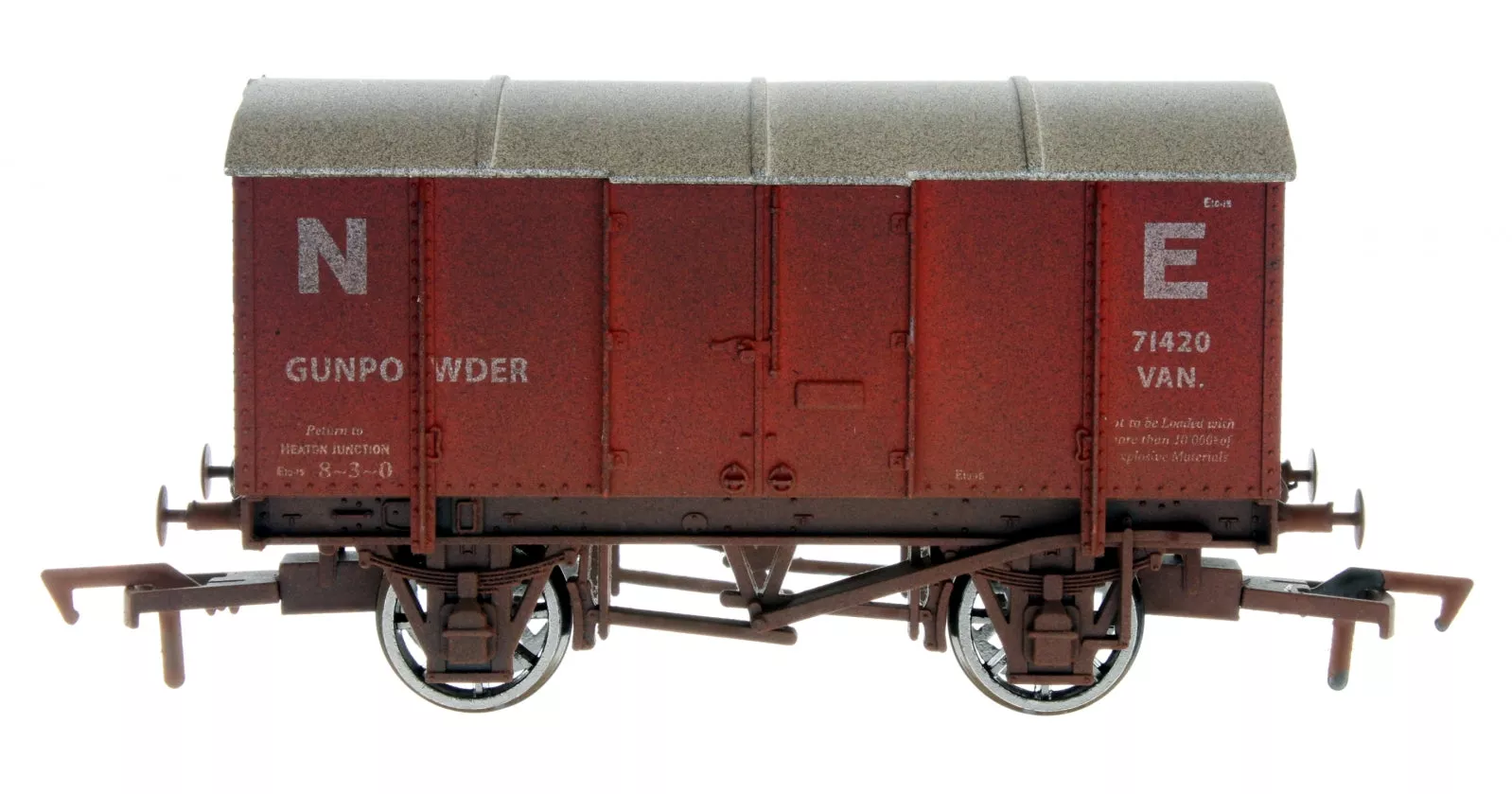
Manufacturer catalogue image - please note that pre-release images may be CAD renders or CGI/AI images rather than photographs
Prototype Era
Era 3 (1923 to 1947) The Big Four (LNER, LMS, GWR and SR)
Manufacturer description
Gunpowder vans were specially constructed vans designed for the safer conveyance of gunpowder and other explosives. In the 1920s the RCH laid down rules governing the construction and running of these vans and these rules were enforced relatively unchanged until the 1980s when gunpowder vans ceased to be used. The rules governed issues such as the number of gunpowder vans allowed on one train (5 in peacetime, but whole trains were known during World War II), what other van could run alongside gunpowder vans (no vans with oil or combustible materials) and where special instructions had to be placed (a metal plate mounted on the door) were all prescribed. As another safety feature, these vans were often painted in distinguishing colours with large crosses painted on the sides to notify rail staff of the possible dangers.
Catalogue listing
Model details
Prototype information
Supplier Links


Supplier links are provided for your convenience and do not guarantee that the product is currently available. RailwayModels.uk is not a representative of these suppliers, but may receive a commission when purchases are made through links on this page.