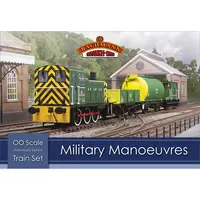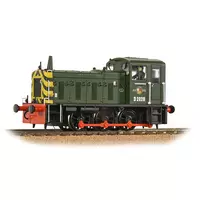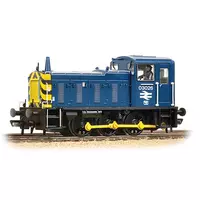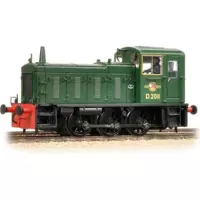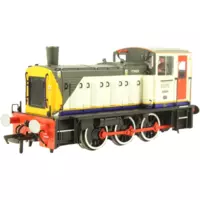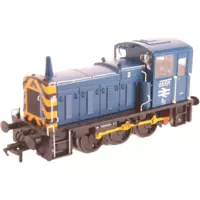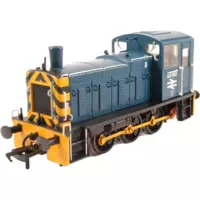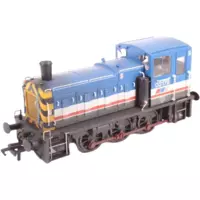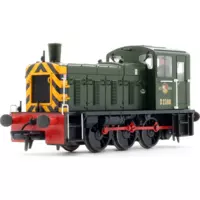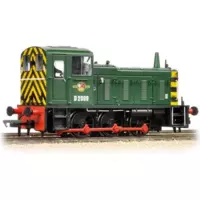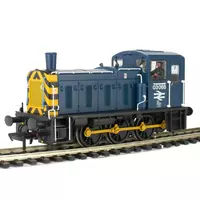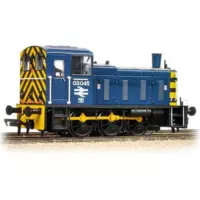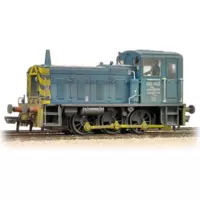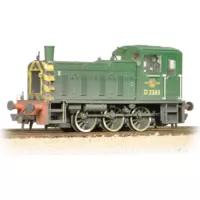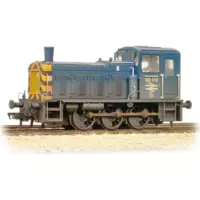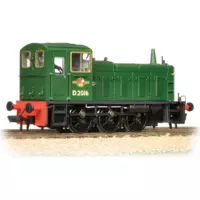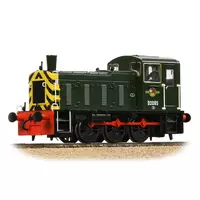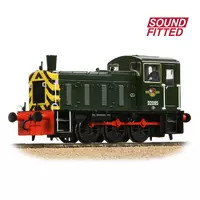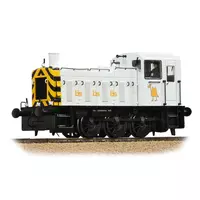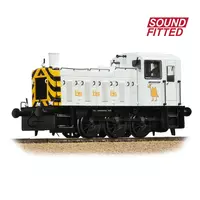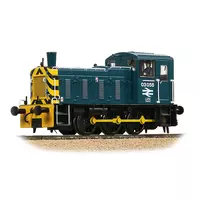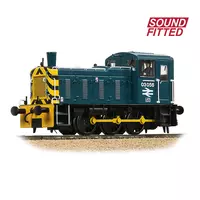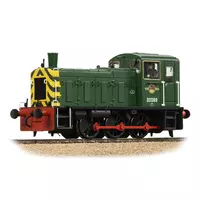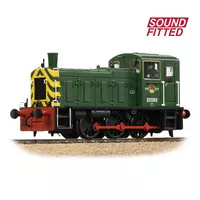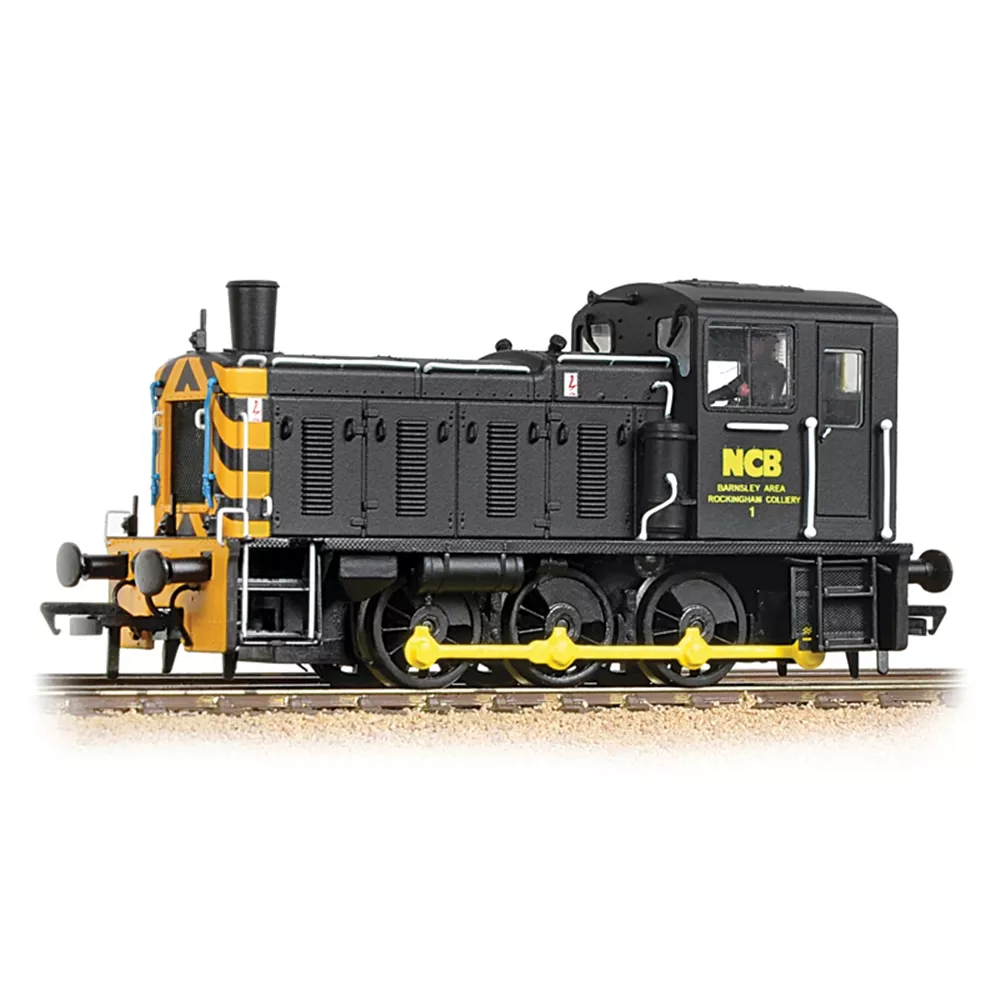
Manufacturer catalogue image - please note that pre-release images may be CAD renders or CGI/AI images rather than photographs
Prototype Eras
Era 7 (1972 to 1982) British Rail Blue (TOPS)
Era 8 (1983 to 1994) British Rail Sectorisation
Manufacturer description
Class 03 D2199 NCB Black
Built: 1957 - 1962
Constructed by: BR Doncaster & Swindon Works
Duties: shunting & station pilot
Highlights
• New chassis with ‘Next18’ DCC decoder interface
• Optional buffer-beam in-fill plate to cover the NEM coupling pocket when not in use
• Flowerpot chimney
• Sprung buffers
• Driver figure fitted
History
The Class 03 diesel shunters were introduced in 1957 and were one of BR's most successful smaller 0-6-0 diesel-mechanical shunters. The 230 shunters were built by British Railways' Swindon and Doncaster works between 1957-1962. Initially, allocation was spread around all regions except Scottish. Like other shunters of this size, the Class 03 was built for light duties where a larger locomotive was not needed, especially for shunting at locomotive and carriage depots and as station pilots.
The Class 03 locomotives survived to work over some lines with limited weight restrictions. The locomotives weighed 30 tonnes, as opposed to the 48 tons of Class 08. They were progressively withdrawn from 1968 onwards, with two examples on the Isle of Wight lasting until 1993. In 1998, one of the Isle of Wight locos, No. 03 179, was re-instated into service by the West Anglia Great Northern Railway Company (WAGN) for service at their Hornsey depot. This remains the last operational Class 03 locomotive on the network. Over 50 locomotives have been preserved. Many 03s went on to see further service in industry, including with the National Coal Board, upon which our model is based.
Catalogue listing
Model details
Prototype information
* Class names often change over the lifespan of a locomotive, so this is not necessarily the class name used by the operator in the period modelled.
Supplier Links


Supplier links are provided for your convenience and do not guarantee that the product is currently available. RailwayModels.uk is not a representative of these suppliers, but may receive a commission when purchases are made through links on this page.