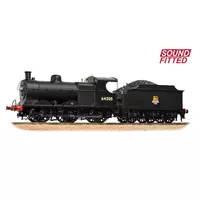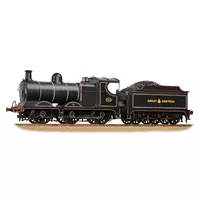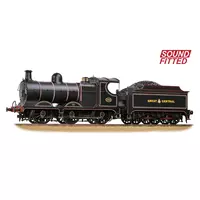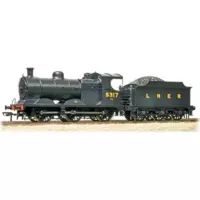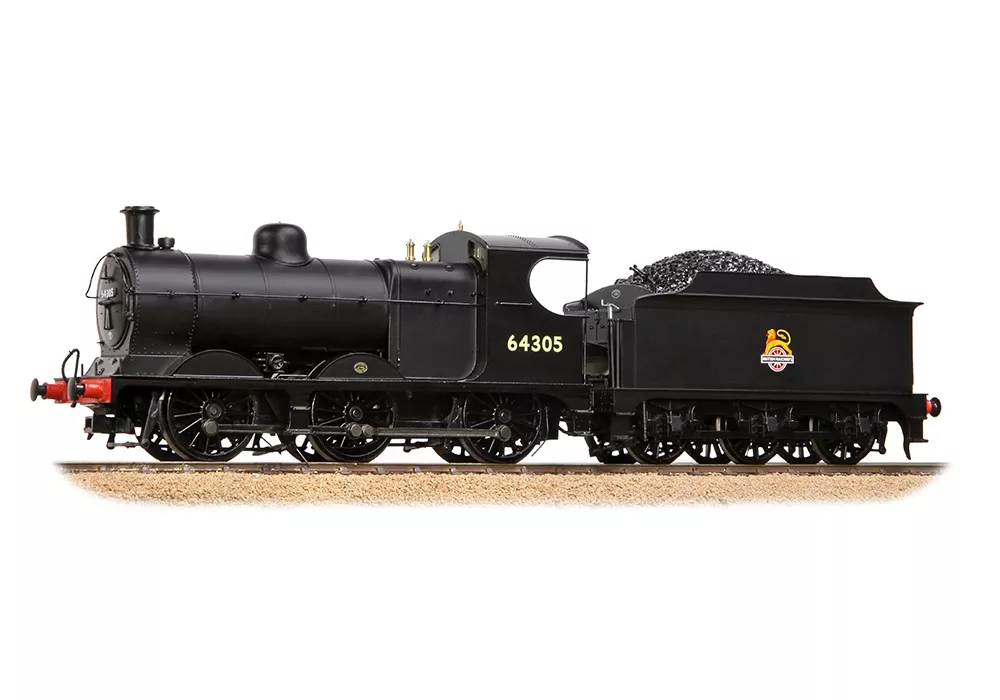
Manufacturer catalogue image - please note that pre-release images may be CAD renders or CGI/AI images rather than photographs
Prototype Era
Era 4 (1948 to 1956) British Railways Early Crest
Manufacturer description
The Great Central Railway was a big mover of goods and amongst the locomotives it built for this purpose were the 9J 0-6-0s. Upon becoming part of the LNER in 1924 the 9Js were reclassified as J11s and this designation stayed remained into British Railways life and until withdrawal. Nicknamed ‘Pom Poms’ because their exhaust noise sounded very similar to the guns of the same name, these freight workhorses are replicated in OO scale by Bachmann Branchline.
The J11s carried all the hallmarks of a locomotive designed by the GCR’s Chief Mechanical Engineer John G. Robinson and these features are replicated on the Branchline model using a precision moulded boiler, smokebox and firebox mounted on a diecast metal running plate. The distinctive Robinson cab is another high-fidelity moulding, within which boiler backhead is replicated using an array of separately fitted pipework, controls and dials, all of which are enhanced further with bespoke decoration.
The GCR tender has a distinctive look too with its high capacity and flared top edges, and again these trademark features are captured in miniature using high-fidelity mouldings. Coupling to the locomotive via a drawbar that is adjustable to suit individual layout conditions, electrical connections are integrated into it and a hinged fallplate is also fitted to the tender. Across the model separate components are added, from the metal handrails and sprung metal buffers, to the lamp irons at the front and rear, to complete the look of this freight machine.
The locomotive’s diecast chassis is enhanced with brake blocks, brake rigging and sandboxes with separate wire sandpipes, whilst between the frames a representation of the inside motion is present. The black colour scheme is replicated with the usual care and attention that you expect from Bachmann Branchline, resulting in a paint finish that is rich and consistent throughout. Details like the running number, plates and plaques are then added using precision printing techniques for full authenticity.
The Branchline J11 runs as well as it looks thanks to a power full three pole motor and diecast metal gearbox. The locomotive driving wheels run in separate metal bearings and all six driving wheels are equipped with electrical pickups, tender pickups are included too. The tender houses a 21 Pin decoder socket and pre-fitted speaker, making it easy to upgrade this model to DCC or DCC sound, or why not opt for our SOUND FITTED model and the work’s done for you.
MODEL FEATURES:
- Bachmann Branchline OO Scale
- Era 4
- Pristine BR Black Early Emblem livery
- Running No. 64305
- Riveted Smokebox Door with Twin Handwheels, Numberplate and Lamp Iron mounted on the Smokebox Door
- LNER ‘Plantpot’ Chimney
- Snifter Valve
- LNER lowered Dome
- Ross Pop Safety Valves
- Parallel Buffer Shanks with End Collars
- Wakefield Lubricator (fitted to the left hand side)
- Powerful 3 Pole Motor
- Tender Pick-ups
- Adjustable Tender Drawbar
- NEM Coupling Pockets
- Sprung Buffers
- Accessory Pack
- Locomotive Ready to Accept a Speaker
- Equipped with a 21 Pin DCC Decoder Socket – Recommend Decoder item No. 36-557A
- Length 220mm (over couplings)
GCR 9J (J11) CLASS HISTORY
The Great Central Railway (GCR) Class 9J was the first goods locomotive to be designed by John. G. Robinson, the railway’s Chief Mechanical Engineer from 1900-1922. Between 1901 and 1910 a total of 174 locomotives were built and during the First World War, 18 were loaned to the Railway Operating Division and were shipped to France before returning home in 1919. The class quickly acquired the nickname ‘Pom-Poms’ as their exhaust noise sounded very similar to the ‘Pom-Pom’ quick-firing guns which were first used in the South African War.
In 1923 the GCR became part of the London and North Eastern Railway (LNER), and the 9Js were re-classified as J11. The LNER quickly began modifying J11s to meet the then-new composite rolling stock gauge, this included using several different boiler and dome modifications to reduce the overall height of the locomotive. Other changes during LNER ownership included the fitting of some group standard components, like Ross pop safety valves, to give increased commonality across the company’s vast locomotive fleet.
Whilst primarily a goods engine, the J11s were used on some passenger services and over time these duties increased. During LNER ownership the distribution of the fleet gradually broadened, with examples allocated to sheds like Retford and Barnsley, and some were even sent to the Midland & Great Northern Joint Railway.
The class survived to Nationalisation in 1948 when British Railways inherited the entire fleet, and it was not until 1954 that the first example was withdrawn. All had gone by 1962 however, and sadly none were saved for preservation.
Catalogue listing
Model details
Prototype information
* Class names often change over the lifespan of a locomotive, so this is not necessarily the class name used by the operator in the period modelled.
Supplier Links


Supplier links are provided for your convenience and do not guarantee that the product is currently available. RailwayModels.uk is not a representative of these suppliers, but may receive a commission when purchases are made through links on this page.