KR Models 10100-Fell-4
BR 10100 "The Fell" Locomotive, BR Black Early Crest (DCC Sound)
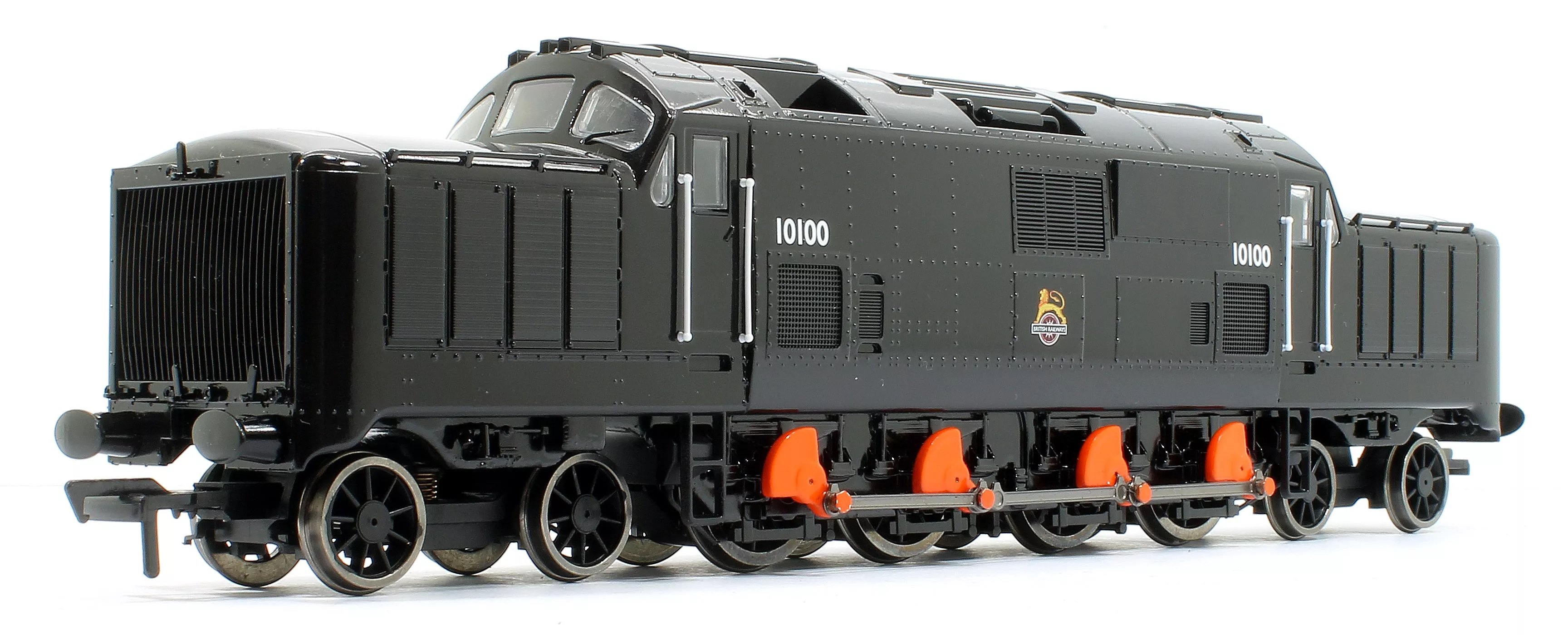
Manufacturer catalogue image - please note that pre-release images may be CAD renders or CGI/AI images rather than photographs
Prototype Eras
Era 3 (1923 to 1947) The Big Four (LNER, LMS, GWR and SR)
Era 4 (1948 to 1956) British Railways Early Crest
Manufacturer description
Features Include:
- DCC Sound Fitted
- Directional LED Lighting
- Heavy die-cast metal chassis with central motor and flywheels giving a powerful performance
- Separately fitted wire handrails.
- Cast spoked wheels
- Sprung buffers
- Flush glazing
British Railways 10100 was an unusual experimental diesel locomotive known informally as The Fell Diesel Locomotive (after Lt. Col. L. F. R. Fell, who was one of the designers). It was the joint production of Davey Paxman & Co, Shell Refining & Marketing Co and Lt-Col L. F. R. Fell, built for them by the London, Midland and Scottish Railway at Derby. Sir Harry Ricardo was also involved. By the time it emerged in 1950, nationalisation had taken place and it carried British Railways livery. The locomotive had six diesel engines, four of them used for traction. There were two auxiliary engines, both of which were 150 hp (110 kW) AEC 6-cylinder units, and these drove the pressure-chargers for the main engines and the purpose of this arrangement was to enable the main engines to deliver very high torque at low crankshaft speed.
Catalogue listing
Model details
Supplier Links


Supplier links are provided for your convenience and do not guarantee that the product is currently available. RailwayModels.uk is not a representative of these suppliers, but may receive a commission when purchases are made through links on this page.
KR Models BR 10100 “The Fell” locomotive (manufacturer part number 10100‑Fell‑4) is a ready‑to‑run model that represents the British Railways Early Crest livery. It is equipped with DCC Sound and is suitable for use on digital command control layouts.
The model includes a heavy die‑cast metal chassis with a central motor and flywheels for strong performance, directional LED lighting, separately fitted wire handrails, cast spoked wheels, sprung buffers and flush glazing.
The prototype locomotive, known as the Fell Diesel Locomotive, was an experimental unit built for the joint venture of Davey Paxman & Co, Shell Refining & Marketing Co and Lt‑Col L. F. R. Fell. Construction was carried out by the London, Midland and Scottish Railway at Derby and the locomotive emerged in early 1950 (01/01/1950) after nationalisation, wearing British Railways livery. It employed six diesel engines – four for traction and two 150 hp (110 kW) AEC six‑cylinder auxiliary engines that drove pressure‑chargers for the main engines, enabling very high torque at low crankshaft speeds.