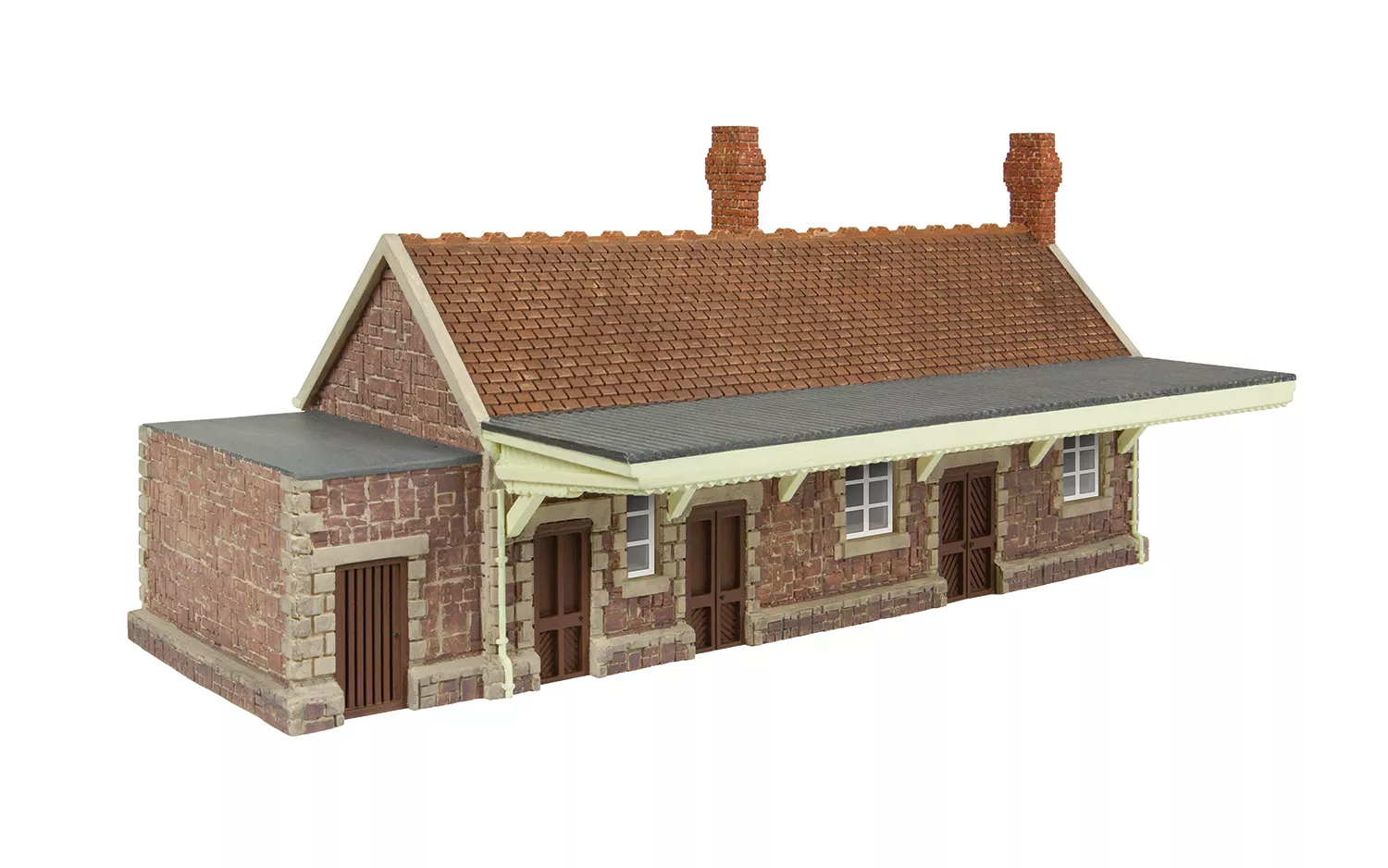
Manufacturer catalogue image - please note that pre-release images may be CAD renders or CGI/AI images rather than photographs
Prototype Era
Era 3 (1923 to 1947) The Big Four (LNER, LMS, GWR and SR)
Manufacturer description
The GWR Dunster Station is a cast resin building that captures the authentic charm of this historic Great Western Railway station. Based on the original structure from the West Somerset Heritage Railway, this detailed model features the distinctive architectural elements of era 3 (1923-1947) station design. Perfect for creating a realistic focal point on your layout, this building represents an essential component of any British railway scene and provides an authentic period setting for your rolling stock to arrive and depart.
History:
Originally part of the Bristol and Exeter Railway, Dunster Station was absorbed into the Great Western Railway network in 1876. The station served passengers and freight throughout the early steam era before passing to British Railways in 1948. In 1976, the preservation society took ownership of the station, ensuring its heritage would be maintained for future generations as part of the West Somerset heritage railway.
Catalogue listing
Model details
Prototype information
Supplier Links



Supplier links are provided for your convenience and do not guarantee that the product is currently available. RailwayModels.uk is not a representative of these suppliers, but may receive a commission when purchases are made through links on this page.