Back to product list

Hornby R3531

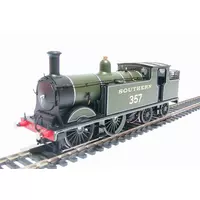
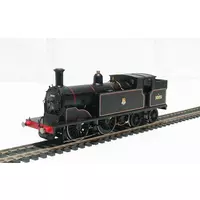
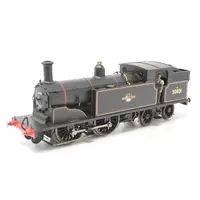
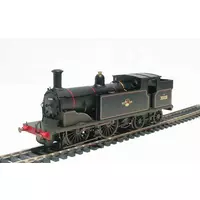
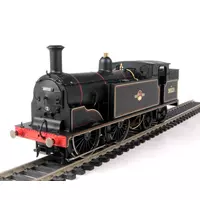
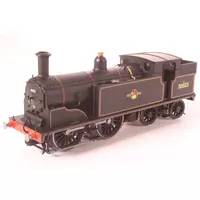
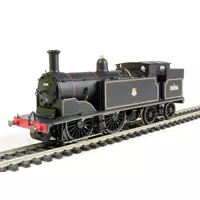
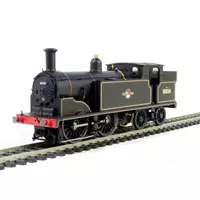
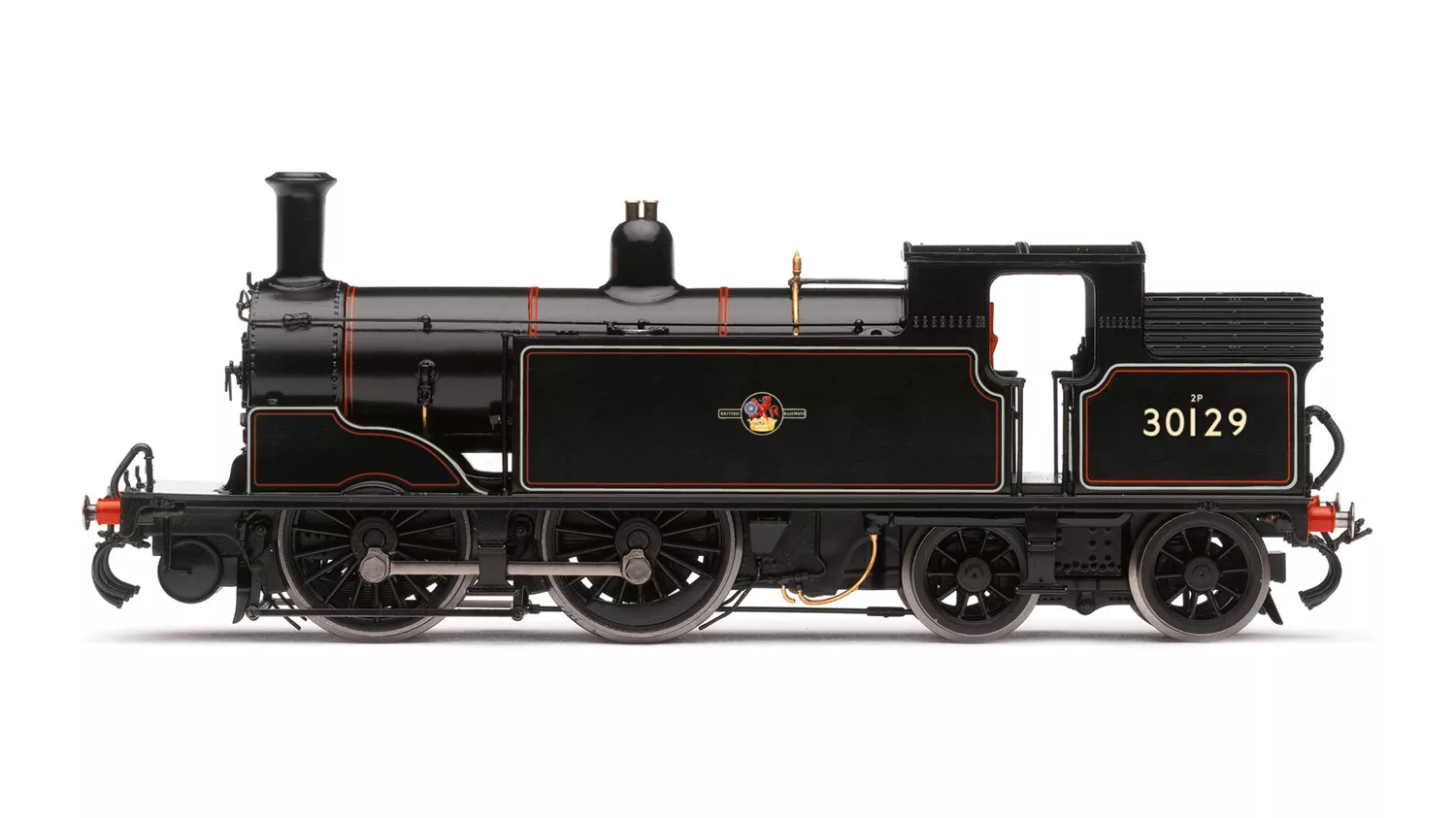
BR, M7 Class, 0-4-4T, 30129 - Era 5

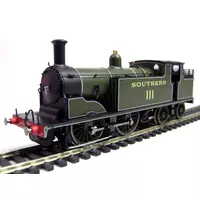
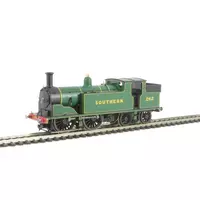
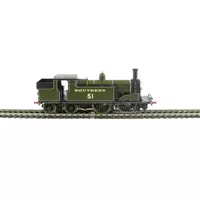
Manufacturer catalogue image - please note that pre-release images may be CAD renders or CGI images rather than photographs

Prototype Eras
Era 4 (1948 to 1956) British Railways Early Crest
Era 5 (1956 to 1966) British Railways Late Crest

Manufacturer description

When Dugald Drummond succeeded William Adams as Locomotive Superintendent of the London and South Western Railway in 1895, his first, all new class was the M7 0-4-4T. Derived from previous 0-4-4T designs of his at the North British and Caledonian Railways, construction commenced in 1897 and continued in batches until 1911 with 105 being built eventually.


Ideally suited to the demands of suburban workings with frequent station stops, the M7 possessed quick acceleration and good tractive power and was equally at home on Branch line workings, or acting as station pilots. Unfortunately, following a major derailment at Tavistock in 1898, the class were withdrawn from fast passenger services, the 0-4-4 arrangement proving inherently unstable at continuous high speeds.


In 1912 the L&SWR introduced cable and pulley equipped push-pull services on some branch lines, but the Southern Railway subsequently adopted the compressed air control system and thirty six of the class were converted to this between 1930 and 1937, with a further four appearing between 1960 and 1962, these conversions being confined to the long framed variants of the class. All but two of the class survived into British Railways days, the last members of the class not being withdrawn until May 1964 and two still exist in preservation. Locomotive 30129 was built at Eastleigh and entered traffic as LSWR No.129 in November 1911.


During its lifetime, the locomotive worked across the Southern region, from Yeovil to Faversham Sheds and was finally withdrawn from service in November 1963, whilst allocated to Bournemouth Shed.


Maximum curve Hornby 2nd radius + / 438mm+.

Catalogue listing

Brand
Hornby
Product Code
R3531
GTIN
5055288636316
RRP
£171.49
Release date
April 2017

Model details

DCC status
DCC Ready 8 pin socket
Finish
Painted
Gauge
OO
Colour
Black
Power pickup
All wheels
Coupling
NEM / Tension lock
Tooling date
2006
Coupling mount
NEM pockets
Coupling type
Tension lock
Chassis construction
Diecast
Scale
OO Gauge (1:76 Scale)
Name
W.P. Allen
Minimum radius curve
1st Radius (371mm)
Motor
5 pole skew wound
Minimum radius
Radius 2
Livery
Lined Black with Late Crest
Running number
30129

Prototype information

In service until
1965
Main duties
Local Passenger
Operated by
London and South Western Railway
Southern Railway
British Railways
Wheel configuration
0-4-4T
Locomotive type
Steam
Build date
1897 to 1911
Total built
105
Tractive effort
16,933 to 19,755 lbf
Builder
LSWR Nine Elms Works
LSWR Eastleigh Works
Locomotive class*
Southern Railway M7
Operator
British Railways
Motive power
Steam
Wheel arrangement
0-4-4
Designer
Dugald Drummond
Built
August 1948
Built by
LSWR Nine Elms Works LSWR Eastleigh Works
Total produced
105

* Class names often change over the lifespan of a locomotive, so this is not necessarily the class name used by the operator in the period modelled.

Supplier Links


Hornby website


Search on Amazon


Search on eBay

Supplier links are provided for your convenience and do not guarantee that the product is currently available. RailwayModels.uk is not a representative of these suppliers, but may receive a commission when purchases are made through links on this page.
Related products

Hornby British Railways model of the Southern Railway M7 class 0‑4‑4T locomotive, running number 30129, in the Late Crest livery. The model is DCC ready with an 8‑pin socket, painted finish, OO gauge, length 138 mm and colour black. Power is collected from all wheels and the motor is a 5‑pole skew wound type. Couplings are NEM with tension lock. The model includes a 2nd radius curve capability of 438 mm and a minimum 1st radius curve of 371 mm.

The M7 class was designed by Dugald Drummond after he succeeded William Adams as Locomotive Superintendent of the London and South Western Railway in 1895. Construction began in 1897 and continued in batches until 1911, with a total of 105 locomotives built at the LSWR Nine Elms and Eastleigh Works. The 0‑4‑4 wheel arrangement gave the class good acceleration and tractive effort, making it suitable for suburban, branch line and station pilot duties. After a derailment at Tavistock in 1898 the class was removed from fast passenger services because the wheel arrangement was considered unstable at high speed. Between 1930 and 1937, and later in 1960‑62, thirty‑six long‑framed members were converted to compressed‑air push‑pull control; all but two survived into British Railways ownership, the last being withdrawn in May 1964, with two preserved examples.

Locomotive 30129 was built at Eastleigh and entered service as LSWR No 129 in November 1911. Throughout its career it operated across the Southern region, from Yeovil to Faversham sheds, and was allocated to Bournemouth Shed at the time of its withdrawal in November 1963. The Hornby model represents this locomotive in the British Railways Late Crest period.

RailwayModels.uk is a Good Stuff website.

Page generated in 1.59 seconds
216.73.217.80
Thu, 04 Jun 2026 05:59:46 +0100
Railway Redemption