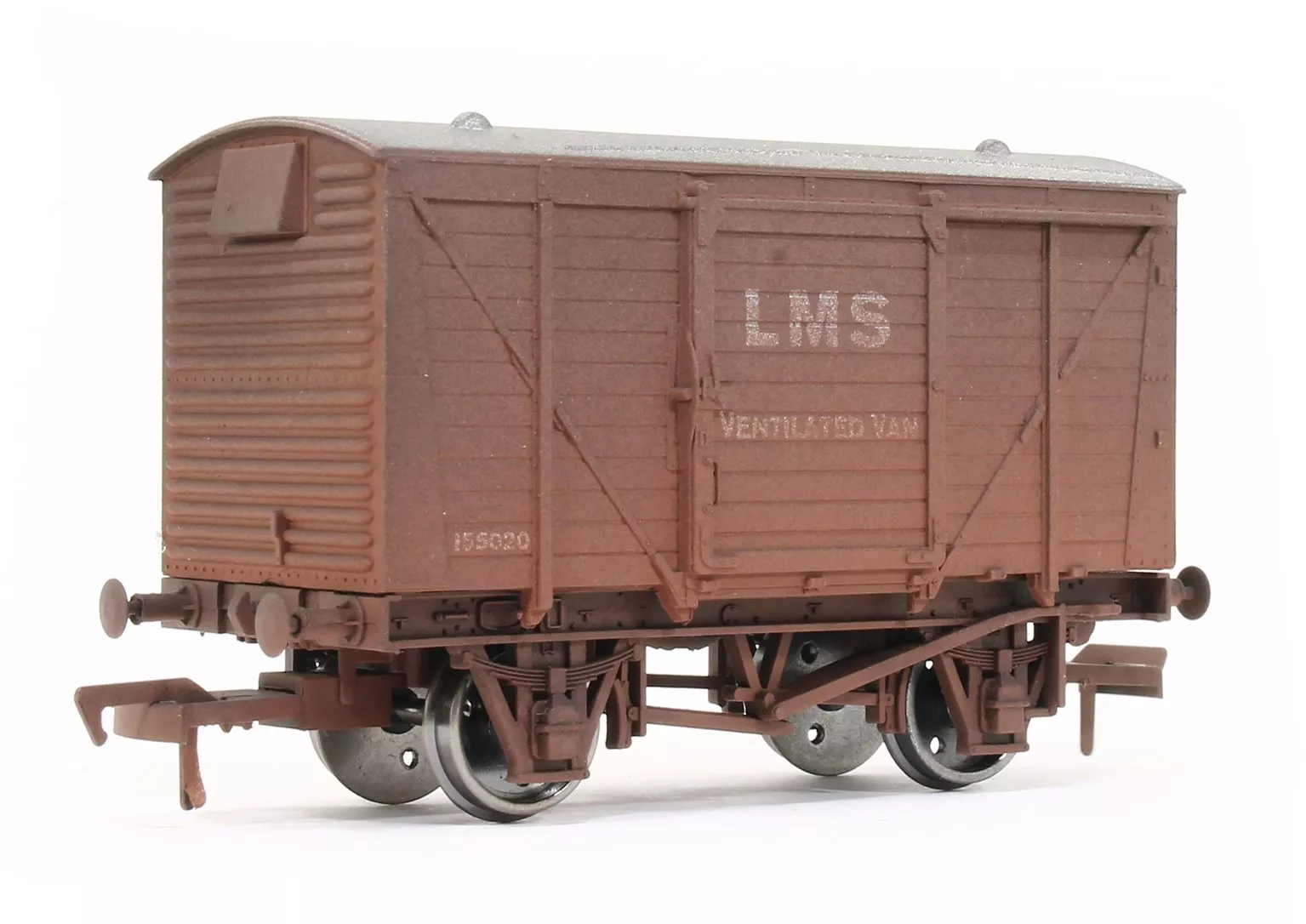
Manufacturer catalogue image - please note that pre-release images may be CAD renders or CGI/AI images rather than photographs
Prototype Era
Era 3 (1923 to 1947) The Big Four (LNER, LMS, GWR and SR)
Manufacturer description
Ventilated vans were the primary way of transporting perishable goods quickly and efficiently and yet maintaining their contents in peak condition. All four of the pre-nationalised rail companies had their own particular designs but each shared the same basic principles of having a wooden body with ventilators, which allowed a constant - ow and circulation of fresh air around their cargo. Dapol have modelled the GWR and LMS ventilated vans, the LMS version had a steel corrugated end, whilst the GWR was traditionally planked. Ventilated vans from all four companies survived into nationalisation until BR eventually standardised its own version and these were in use until the 1960s at which time longer vans with wider door ways to allow pallet access were introduced. Many ventilated vans from all companies survive into preservation. The Dapol models of the LMS and GWR ventilated van feature: • Highly detailed body moulding • Accurately applied livery • Profiled wheels • NEM pockets with self-centring couplings
Catalogue listing
Model details
Supplier Links


Supplier links are provided for your convenience and do not guarantee that the product is currently available. RailwayModels.uk is not a representative of these suppliers, but may receive a commission when purchases are made through links on this page.